
A security engineer configures Microsoft Defender for AI to protect an Azure OpenAI deployment. The engineer wants to ensure that the protection covers both the prompt inputs and the model responses. Which configuration in Defender for AI achieves bidirectional monitoring?
Select an answer to reveal the explanation.
Short Explanation and Infographic
Here's the deal — b is correct because Microsoft Defender for AI, when enabled on an Azure OpenAI resource, automatically provides monitoring for both prompt inputs (detecting jailbreak attempts, prompt injection) and model response outputs (detecting sensitive data disclosure, harmful content) without requiring separate configuration for each direction. A is incorrect because Defender for AI does not have separate toggles for prompt and response monitoring; enabling the plan covers both.
Full explanation below image
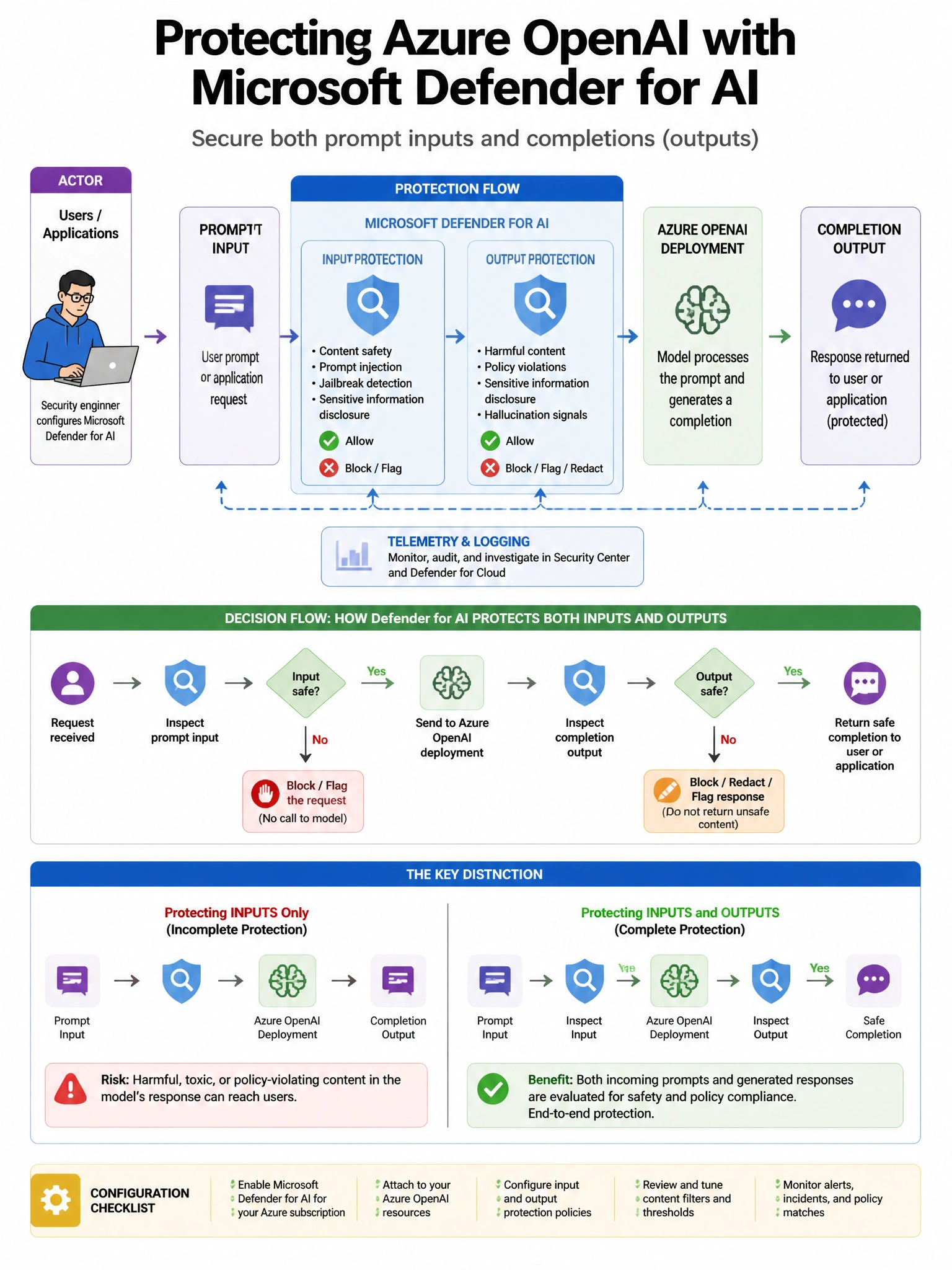
Full Explanation
B is correct because Microsoft Defender for AI, when enabled on an Azure OpenAI resource, automatically provides monitoring for both prompt inputs (detecting jailbreak attempts, prompt injection) and model response outputs (detecting sensitive data disclosure, harmful content) without requiring separate configuration for each direction. A is incorrect because Defender for AI does not have separate toggles for prompt and response monitoring; enabling the plan covers both. C is incorrect because there are no separate inbound/outbound Defender for AI policies; the plan-level enablement covers bidirectional monitoring. D is incorrect because while APIM with Defender for API is a valid defense layer, it does not replace Defender for AI's native bidirectional monitoring at the Azure OpenAI service level.