
A company deploys an AI chatbot on Azure that uses Retrieval-Augmented Generation. The security team wants to implement output validation to prevent the chatbot from responding with content that contradicts the organization's official policies. Which Azure AI Foundry capability enables this output guardrail?
Select an answer to reveal the explanation.
Short Explanation and Infographic
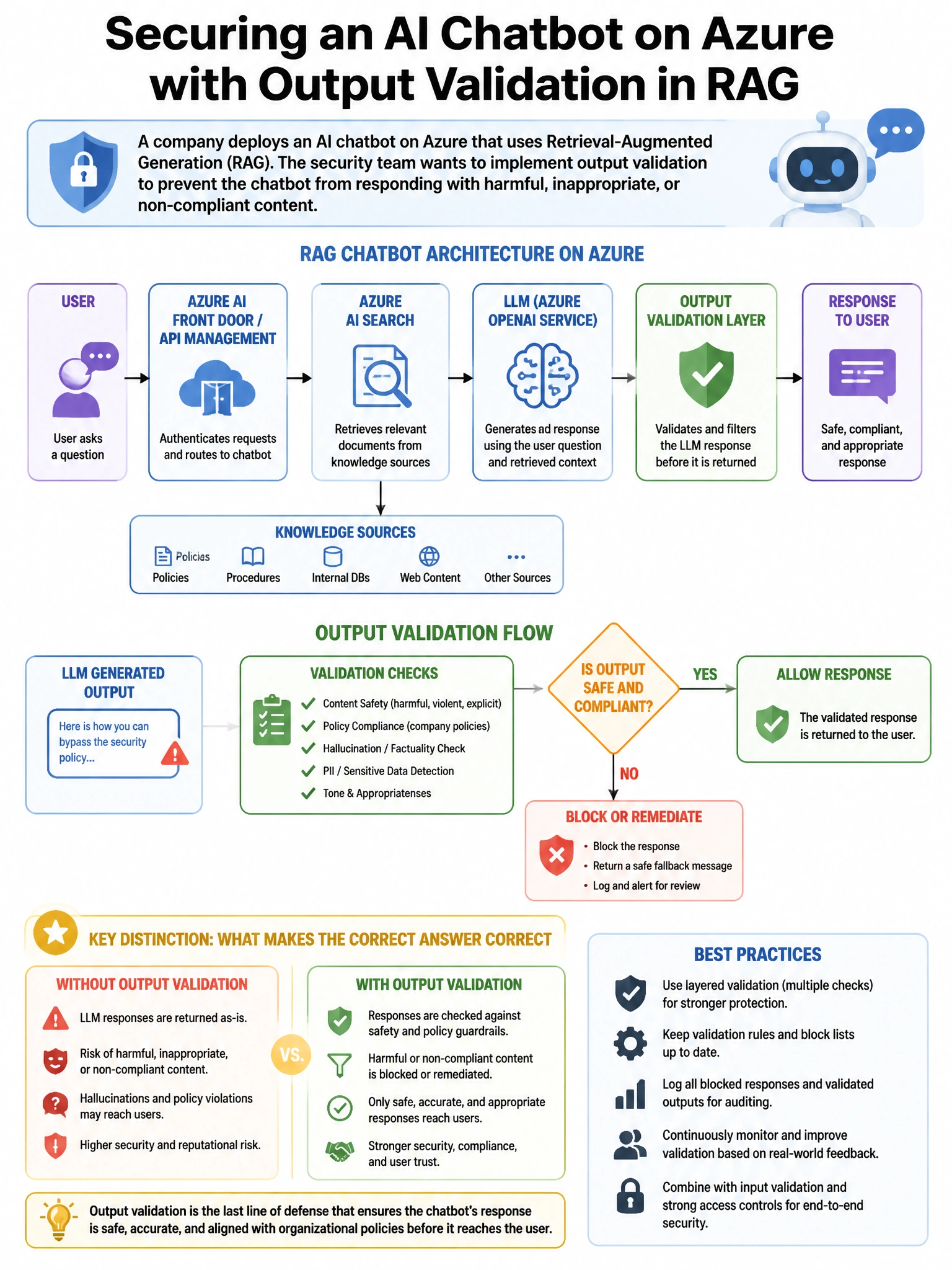
Here's the deal — a is correct because Azure AI Content Safety Groundedness Detection analyzes AI-generated responses to determine whether the content is grounded in the provided source documents. If the chatbot generates a response that contradicts official policies provided as context, the groundedness check can detect this as an ungrounded or contradictory response and trigger remediation.
Full explanation below image
Full Explanation
A is correct because Azure AI Content Safety Groundedness Detection analyzes AI-generated responses to determine whether the content is grounded in the provided source documents. If the chatbot generates a response that contradicts official policies provided as context, the groundedness check can detect this as an ungrounded or contradictory response and trigger remediation. B is incorrect because custom blocklists block specific terms or phrases, not semantic contradictions with organizational policy documents. C is incorrect because Communication Compliance reviews human communications for policy violations, not real-time AI output validation in RAG pipelines. D is incorrect because API Management response transformation can modify responses based on predefined rules but cannot semantically evaluate whether AI responses align with policy documents.