
An organization requires that AI-generated content used in regulatory filings must be immutably preserved as a record. A compliance engineer needs to configure Microsoft Purview so that these documents cannot be modified or deleted during the retention period. Which Microsoft Purview feature should be used?
Select an answer to reveal the explanation.
Short Explanation and Infographic
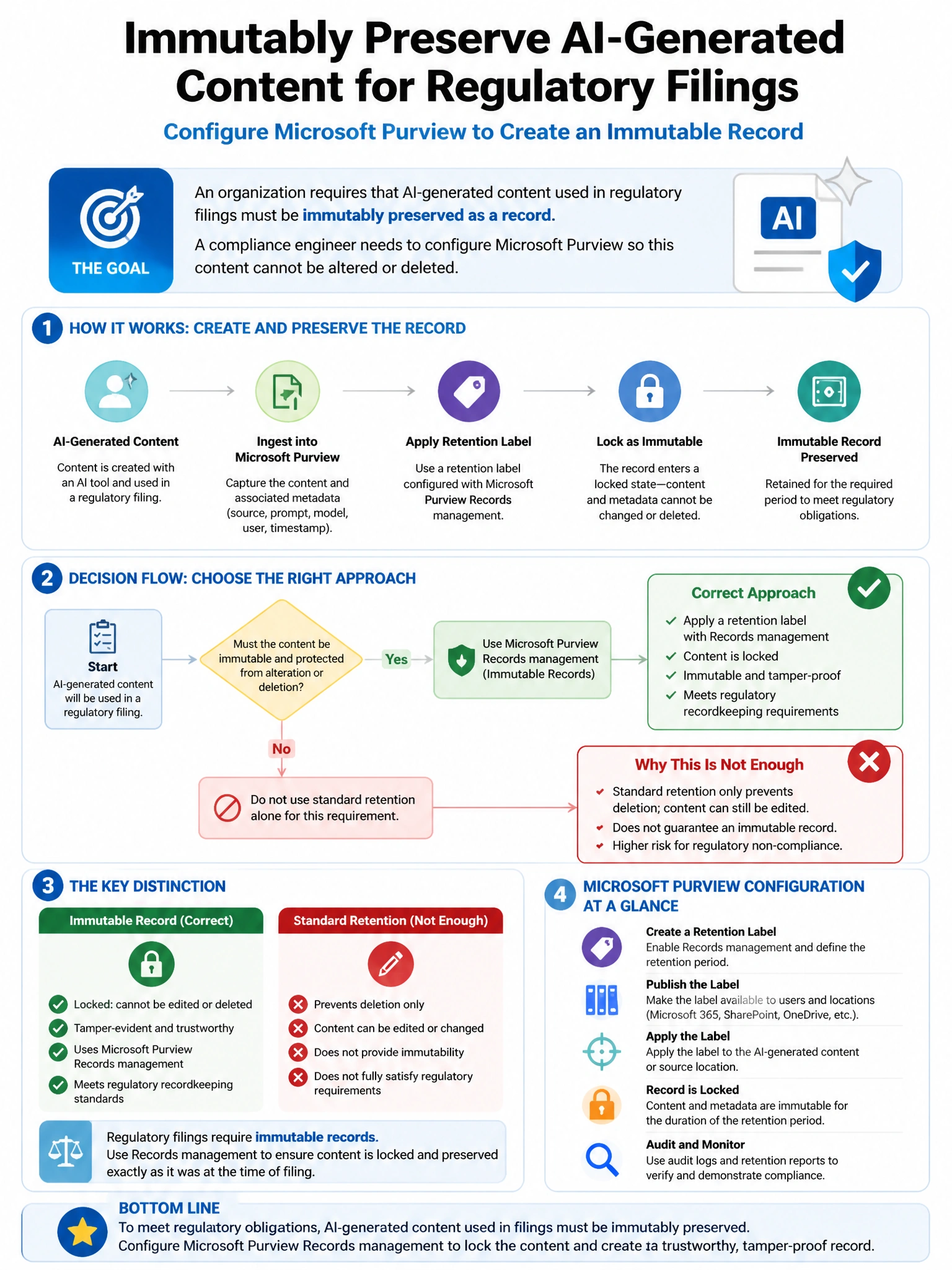
Here's the deal — b is correct because Microsoft Purview Records Management supports declaring content as regulatory records with WORM (Write Once, Read Many) protection, which makes the content immutable: it cannot be modified, relabeled, or deleted even by global administrators during the retention period. A is incorrect because a simple retention policy prevents deletion during the retention period but does not apply immutable record locking.
Full explanation below image
Full Explanation
B is correct because Microsoft Purview Records Management supports declaring content as regulatory records with WORM (Write Once, Read Many) protection, which makes the content immutable: it cannot be modified, relabeled, or deleted even by global administrators during the retention period. A is incorrect because a simple retention policy prevents deletion during the retention period but does not apply immutable record locking. C is incorrect because eDiscovery In-Place Holds can be released by eDiscovery managers and are not as restrictive as regulatory records. D is incorrect because sensitivity labels with 'Do Not Forward' control information rights for communication, not document immutability.