
A security team is investigating a Microsoft Defender XDR incident where a device used for AI model development shows signs of compromise. The device has Azure ML SDK and Azure CLI installed. The team is concerned that the attacker may have exfiltrated Azure credentials from the development environment. Which Defender XDR investigation step directly identifies if cached Azure credentials were accessed?
Select an answer to reveal the explanation.
Short Explanation and Infographic
Here's the deal — a is correct because Azure CLI stores authentication tokens in a local MSAL token cache file at '%USERPROFILE%\.azure\msal_token_cache.json' (on Windows). If an attacker runs credential dumping tools or file access operations targeting this file, those actions are recorded as process creation and file access events by Microsoft Defender for Endpoint.
Full explanation below image
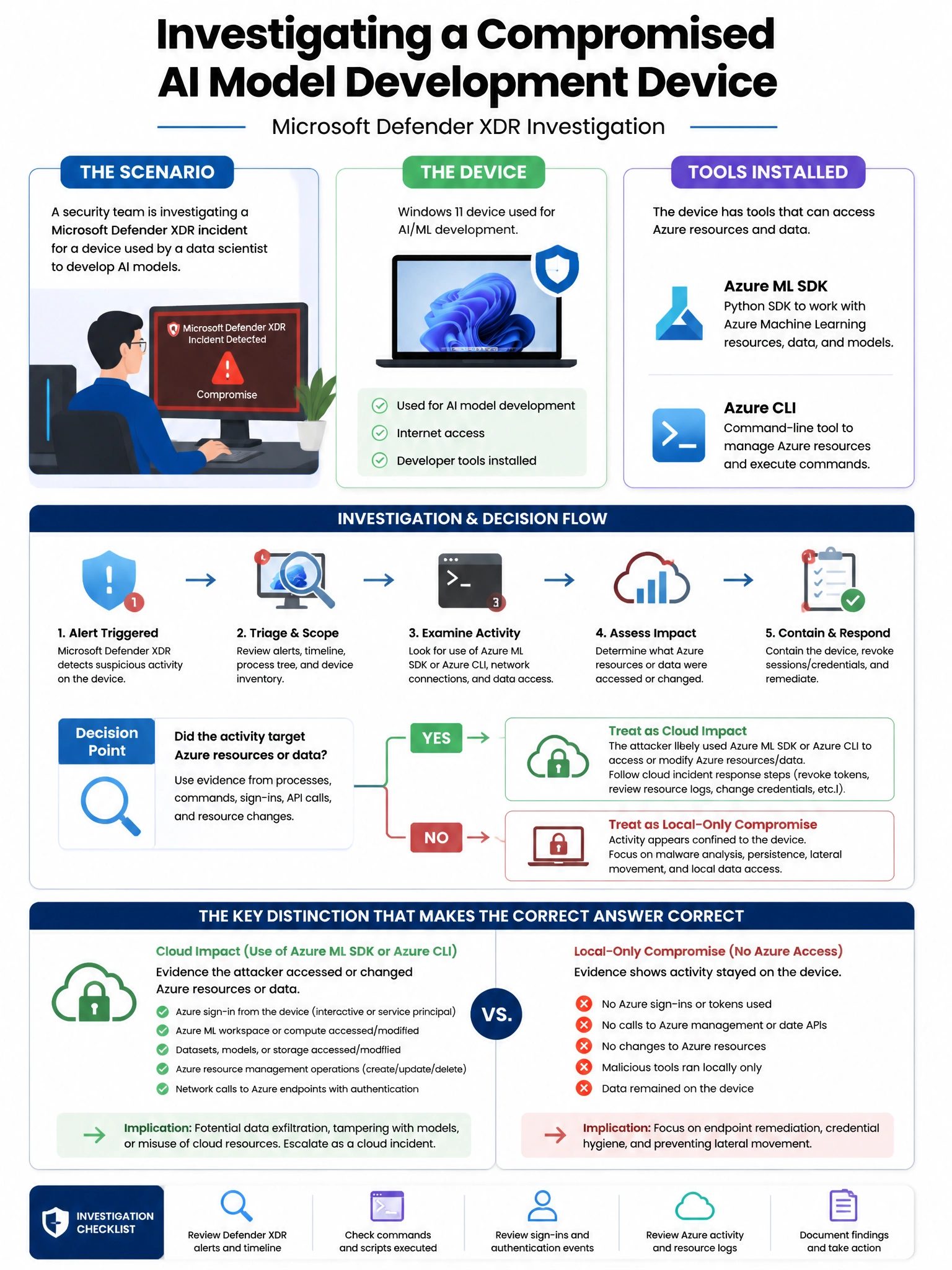
Full Explanation
A is correct because Azure CLI stores authentication tokens in a local MSAL token cache file at '%USERPROFILE%\.azure\msal_token_cache.json' (on Windows). If an attacker runs credential dumping tools or file access operations targeting this file, those actions are recorded as process creation and file access events by Microsoft Defender for Endpoint. In Defender XDR, the analyst can query the DeviceFileEvents and DeviceProcessEvents tables in Advanced Hunting to identify accesses to the token cache file by unexpected processes—directly confirming credential theft attempts. B is wrong because AzureActivity logs record Azure control plane operations; they show what was done with the credentials, not the on-device theft of the credential files. C is wrong because Entra ID Sign-in logs show where credentials were used to authenticate; failed attempts may indicate the stolen token was invalid, but checking the on-device file access is the more direct investigation step for credential theft. D is wrong because Microsoft Purview Audit logs Microsoft 365 service activities, not local device command executions.