
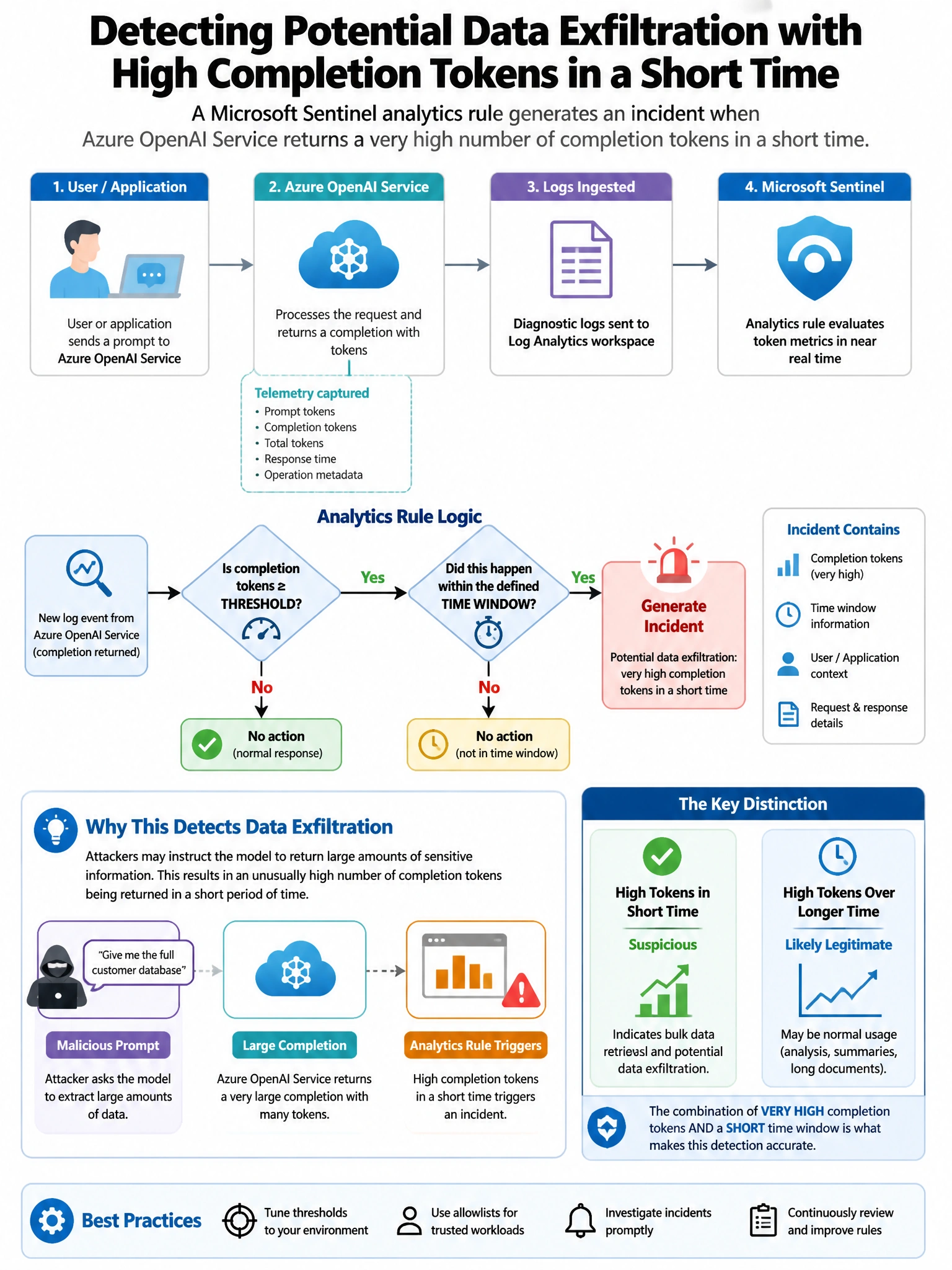
A Microsoft Sentinel analytics rule generates an incident when Azure OpenAI Service returns a very high number of completion tokens in a short time, potentially indicating data exfiltration. The incident response team needs to automatically notify the AI security team via Microsoft Teams when such an incident is created. Which component in the playbook sends the Teams notification?
Select an answer to reveal the explanation.
Short Explanation and Infographic
Here's the deal — b is correct because Logic Apps includes a dedicated Microsoft Teams connector with actions for posting messages to Teams channels or chats. In the Sentinel playbook (Logic App), after the 'When a response to an Azure Sentinel alert is triggered' trigger fires, the Teams connector action 'Post a message in a chat or channel' sends an automated notification with incident details (title, severity, description) to the AI security team's Teams channel.
Full explanation below image
Full Explanation
B is correct because Logic Apps includes a dedicated Microsoft Teams connector with actions for posting messages to Teams channels or chats. In the Sentinel playbook (Logic App), after the 'When a response to an Azure Sentinel alert is triggered' trigger fires, the Teams connector action 'Post a message in a chat or channel' sends an automated notification with incident details (title, severity, description) to the AI security team's Teams channel. B is the built-in, purpose-built connector for this notification use case. A is wrong because 'Add task to incident' creates a task within the Sentinel incident for analysts to complete; it does not send external notifications. C is wrong because Azure Monitor action groups send notifications via email, SMS, or Azure Functions for Azure Monitor alerts; they are not used in Sentinel Logic Apps playbooks for incident-triggered notifications. D is wrong because calling the Microsoft Graph API to create a Teams chat is a lower-level approach that requires more complex custom implementation when the Teams connector in Logic Apps already provides this functionality natively.