
A company uses Azure Machine Learning with a managed online endpoint that authenticates callers using a key. The security team wants to migrate to token-based authentication using managed identities. The endpoint will be called by an Azure App Service. Which steps correctly implement this migration?
Select an answer to reveal the explanation.
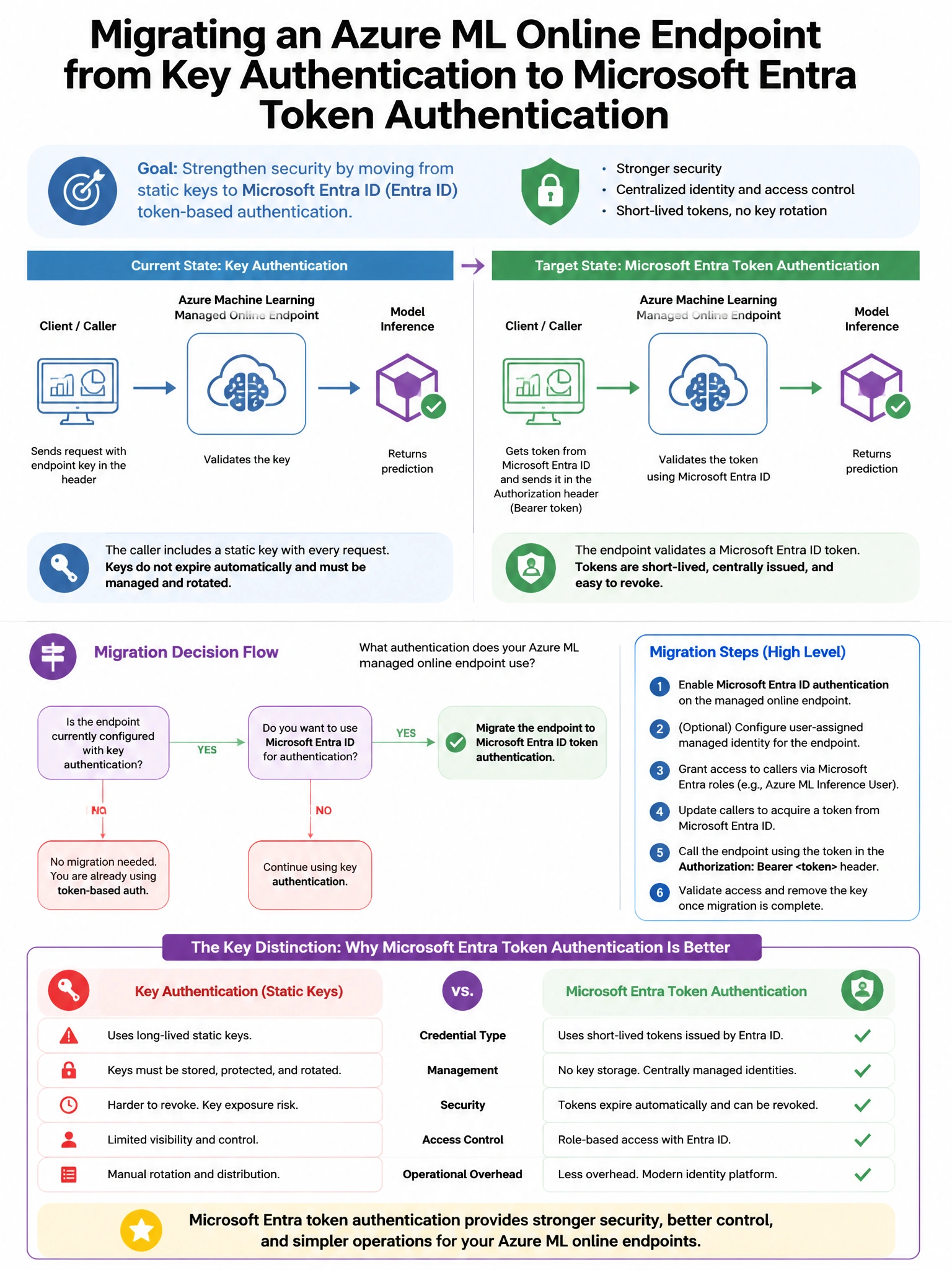
Short Explanation and Infographic
Here's the deal — a is correct because Azure Machine Learning managed online endpoints support Microsoft Entra ID token authentication in addition to key authentication. To migrate: (1) Disable key-based authentication on the endpoint to enforce token-only access, (2) Enable a system-assigned managed identity on the Azure App Service (caller) to give it an Entra ID identity without stored credentials, and (3) Assign the AML-appropriate role to the App Service's managed identity so it can call the endpoint.
Full explanation below image
Full Explanation
A is correct because Azure Machine Learning managed online endpoints support Microsoft Entra ID token authentication in addition to key authentication. To migrate: (1) Disable key-based authentication on the endpoint to enforce token-only access, (2) Enable a system-assigned managed identity on the Azure App Service (caller) to give it an Entra ID identity without stored credentials, and (3) Assign the AML-appropriate role to the App Service's managed identity so it can call the endpoint. The 'AzureML Data Scientist' role or a custom role with endpoint invoke permissions grants the App Service access to submit scoring requests. B is wrong because the AML endpoint having a managed identity controls what the endpoint itself can access (e.g., storage), not who can call the endpoint. C is wrong because service principals with manual credentials are not credential-free; the question requires managed identity-based auth. D is wrong because Azure App Service does not natively use OAuth2 client credentials flow on its own; managed identity is the credential-free approach.