
A financial services organization has configured Microsoft Purview Data Loss Prevention to prevent Azure OpenAI from returning responses that contain credit card numbers. The DLP policy is in test mode and the security team wants to verify it is detecting credit card numbers correctly before switching to enforcement mode. Where can the team view DLP policy match reports?
Select an answer to reveal the explanation.
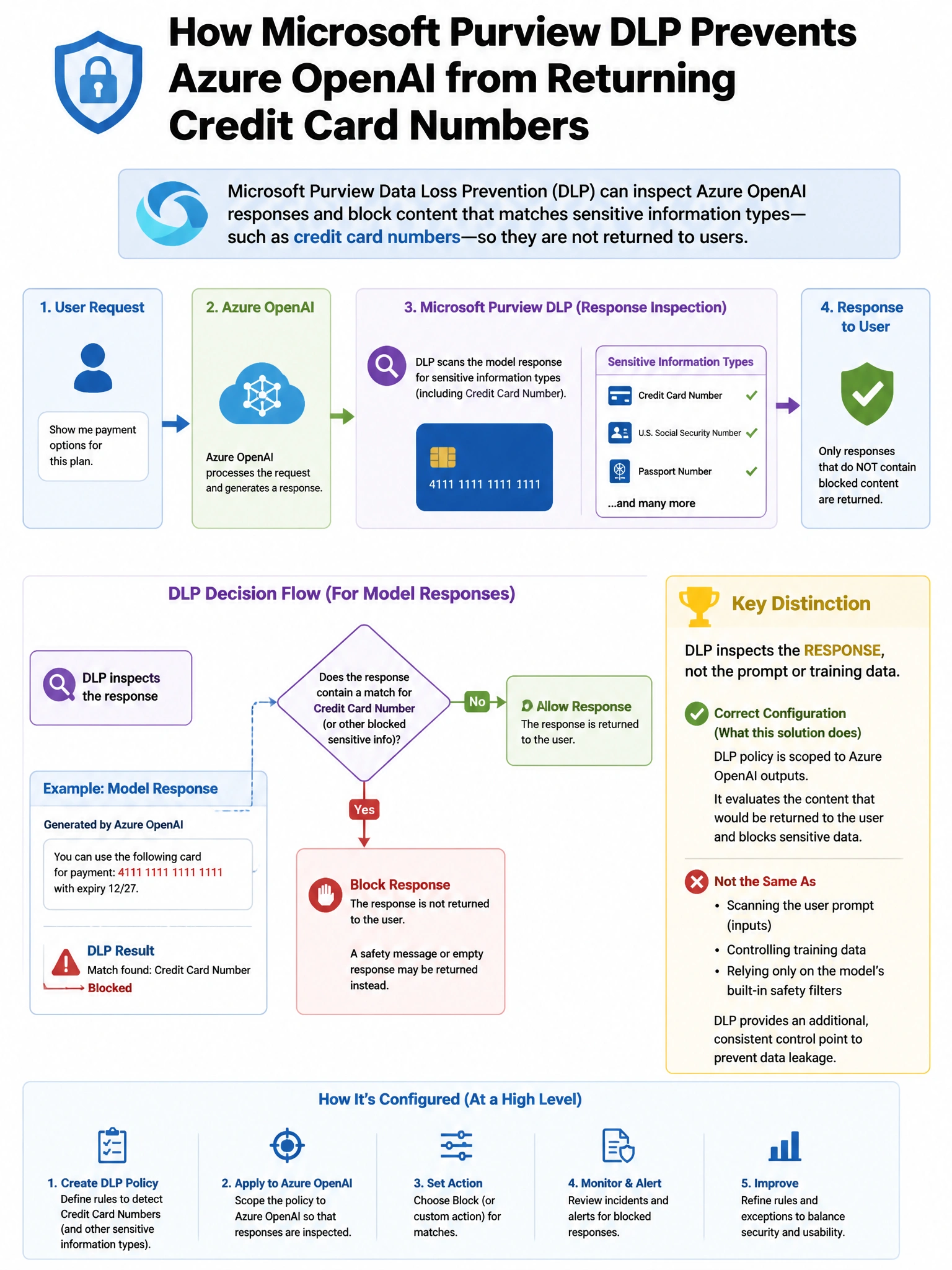
Short Explanation and Infographic
Here's the deal — a is correct because in the Microsoft Purview compliance portal, the DLP Activity Explorer displays a detailed log of DLP policy matches including the policy name, rule matched, content location, sensitive information type detected, and whether the action was applied or simulated (in test mode). Security teams use Activity Explorer to verify that the DLP policy is correctly matching credit card numbers in Azure OpenAI interactions before enabling enforcement.
Full explanation below image
Full Explanation
A is correct because in the Microsoft Purview compliance portal, the DLP Activity Explorer displays a detailed log of DLP policy matches including the policy name, rule matched, content location, sensitive information type detected, and whether the action was applied or simulated (in test mode). Security teams use Activity Explorer to verify that the DLP policy is correctly matching credit card numbers in Azure OpenAI interactions before enabling enforcement. B is wrong because Entra ID Sign-in logs record authentication events, not DLP policy match details for content inspection. C is wrong because Defender for Cloud Apps activity logs record app governance events, not Purview DLP policy match results. D is wrong because Azure Monitor Log Analytics with AzureDiagnostics captures Azure service operational telemetry, not Microsoft Purview DLP match results.