
A company's AI research team regularly has visiting researchers who need temporary access to Azure ML workspace resources for 48-hour engagements. The security team wants just-in-time access with automatic expiration. Which Microsoft Entra ID capability is most appropriate?
Select an answer to reveal the explanation.
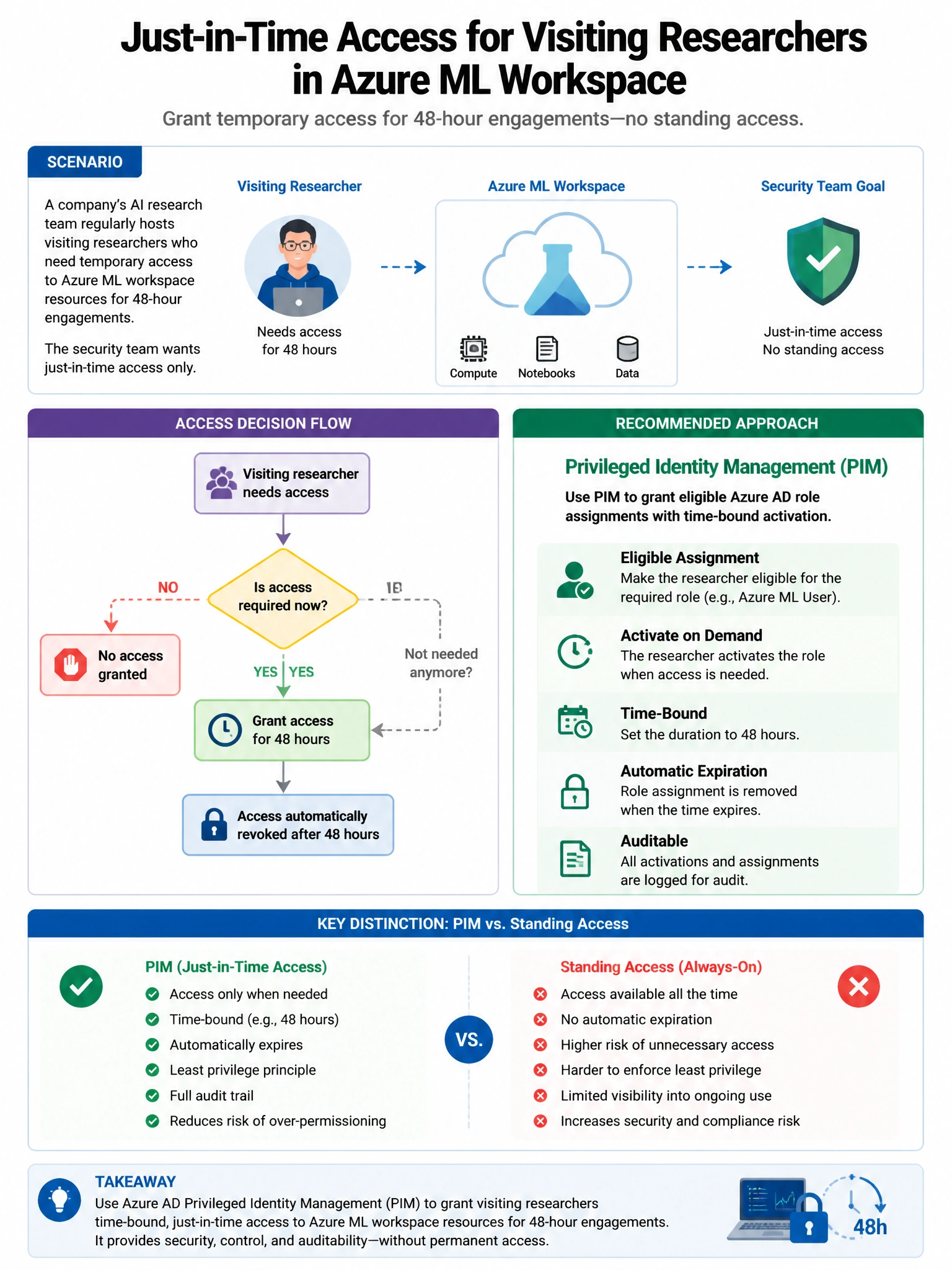
Short Explanation and Infographic
Here's the deal — b is correct because Microsoft Entra ID Governance Entitlement Management allows you to create access packages that bundle resources (like Azure ML workspace group membership) and configure policies with a maximum access duration (48 hours). External users or guests can request the access package, and it automatically expires after the configured duration, removing access without manual intervention.
Full explanation below image
Full Explanation
B is correct because Microsoft Entra ID Governance Entitlement Management allows you to create access packages that bundle resources (like Azure ML workspace group membership) and configure policies with a maximum access duration (48 hours). External users or guests can request the access package, and it automatically expires after the configured duration, removing access without manual intervention. A is wrong because a Temporary Access Pass is a time-limited passcode used for initial device setup or account recovery, not for granting access to Azure ML resources. C is wrong because PIM time-bound active assignments are appropriate for Azure RBAC or Entra roles, not for flexible researcher onboarding at scale with self-service request workflows. D is wrong because manual processes with calendar reminders are error-prone and do not scale or provide automated enforcement.