
Transit receives a language-model payload for the rider-alert assistant and must surface the natural-language answer. What should developers do?
Select an answer to reveal the explanation.
Short Explanation
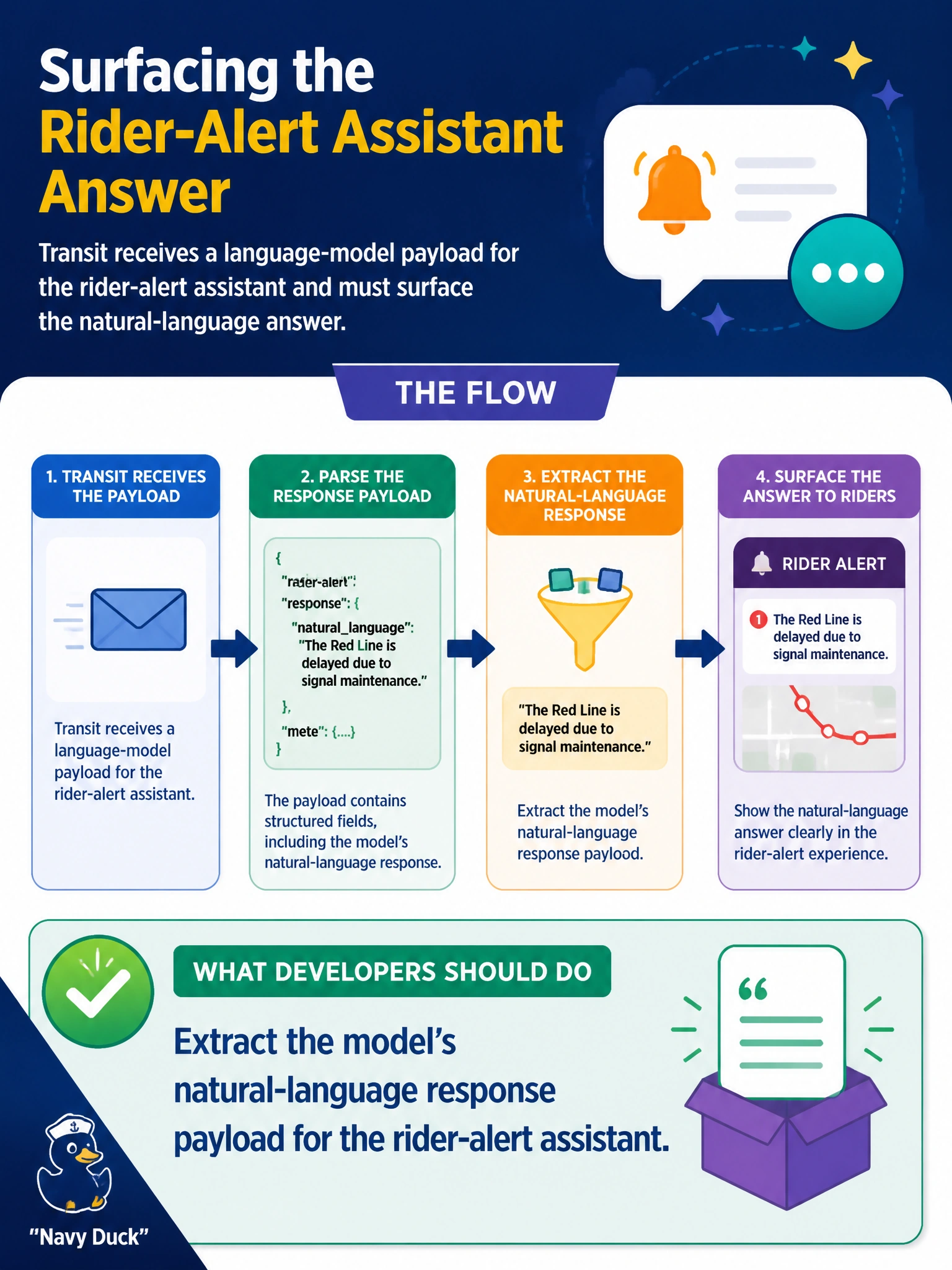
After the model talks back, transit still has to open the envelope—extract the natural-language payload so riders actually see the alert.
Full Explanation
After transit receives a language-model payload for the rider-alert assistant, developers must extract the model’s natural-language response content for display to riders. RAG and external model calls are incomplete until the civic UI surfaces the generated alert text people actually need to read. Discarding the entire model payload and showing a blank alert screen fails by concept because it throws away the answer the call produced and leaves riders without guidance. Displaying only the HTTP status code with no response text fails because transport status confirms connectivity, not the rider-facing message body that explains delays or detours. Overwriting the payload with a hardcoded string unrelated to the model output fails by replacing dynamic grounded content with static text that ignores the retrieved context and the current question. Exam caveat: extraction must target the actual content field in the provider’s JSON schema—HTTP status, token-usage counters, or raw envelope wrappers are not the rider alert text. Operationally, parse the response payload, map the natural-language field into the rider-alert UI, handle empty or safety-refused generations with a clear fallback, and log correlation IDs so failed extractions can be diagnosed without exposing secrets or full prompt contents.