
Housing GraphQL clients are failing intermittently and operations needs proactive notice when error rates spike. What should they configure?
Select an answer to reveal the explanation.
Short Explanation
Monitor alerts are the smoke detector for housing GraphQL—set them on error rates so ops hears the alarm before the mayor’s phone rings.
Full Explanation
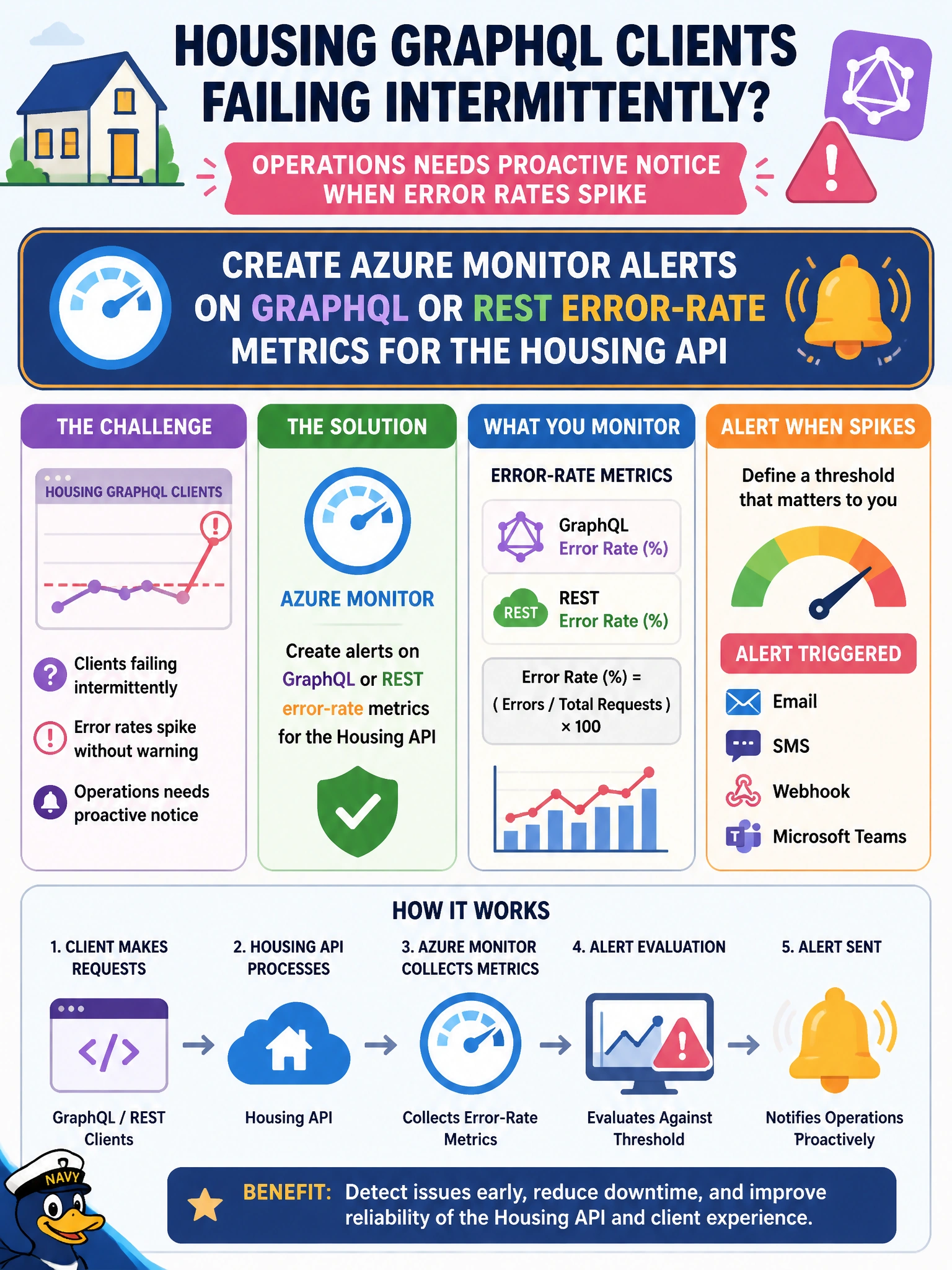
Housing GraphQL clients are failing intermittently and operations needs proactive notice when error rates spike. They should create Azure Monitor alerts on GraphQL or REST error-rate metrics for the housing API. Metric alerts convert telemetry into actionable municipal ops signal—so platform teams learn about rising failure rates before residents escalate politically. This closes the loop with Application Insights/Monitor telemetry by defining thresholds and notification actions.
Waiting for residents to call the mayor’s office before investigating API failures fails as a detection strategy; citizen complaints are lagging indicators. Turning off all Monitor alerts to avoid notification noise permanently fails by removing the control the stem asks to configure—noise is tuned with thresholds/routing, not by disabling monitoring. Logging errors only to an unmonitored local text file on a single laptop fails central observability and high availability of the signal path.
Exam caveat: proactive notice on error-rate spikes means Azure Monitor alerts on API metrics—not social escalation or local log files. If noise is a concern, the exam still wants alerts configured thoughtfully, not disabled.
Operational check: define an Azure Monitor alert rule on housing API exception/error-rate metrics with a sensible threshold and action group to on-call; synthesize errors in a test slot, confirm the alert fires, and document suppressions/windows so weekend housing deployments do not silently disable the rule.