
Housing waitlist updates under long SERIALIZABLE transactions cause widespread timeout storms for caseworkers. What should the SQL AI developer conclude?
Select an answer to reveal the explanation.
Short Explanation
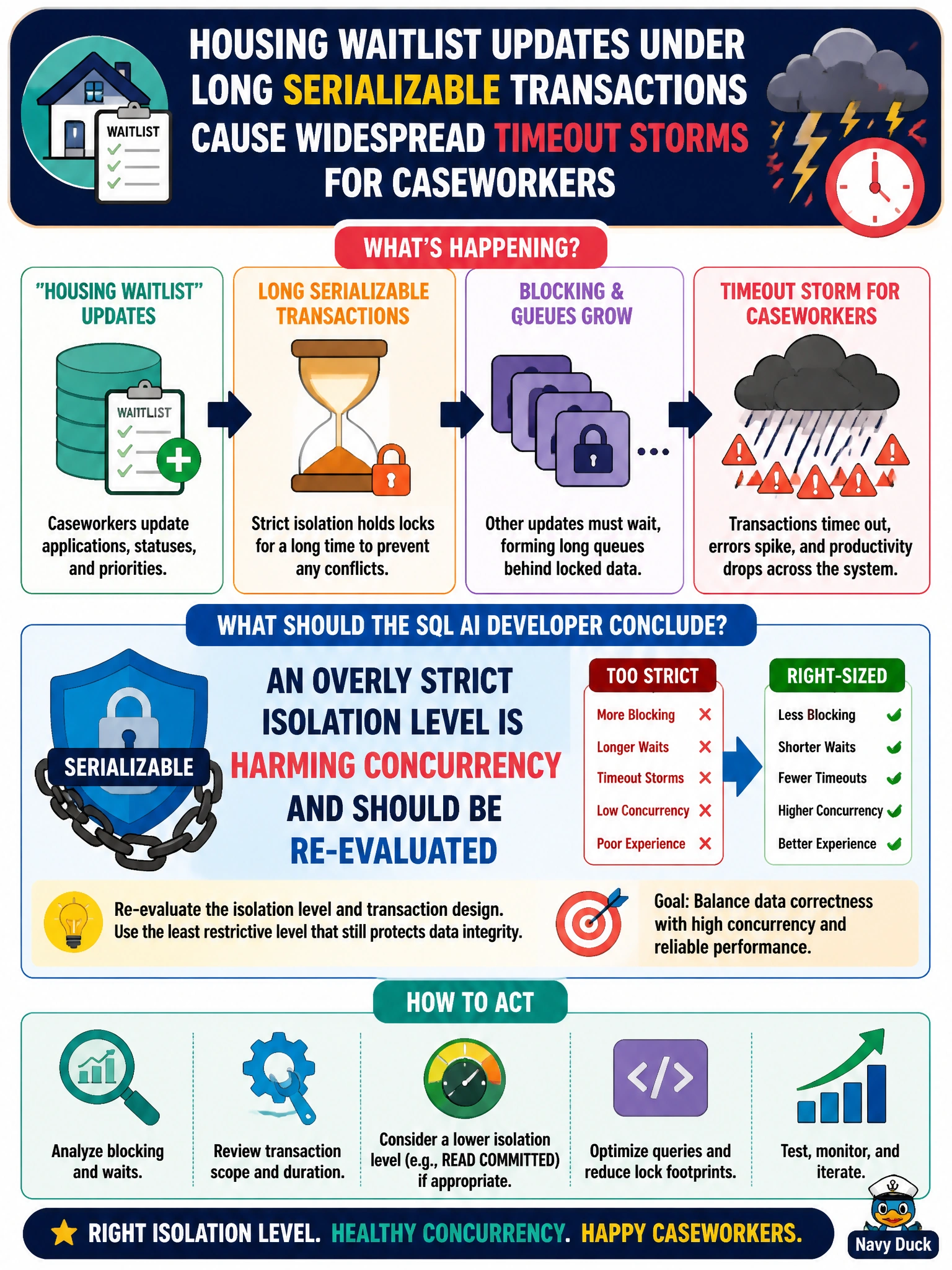
When long waitlist updates use SERIALIZABLE, you can end up holding locks that make other caseworkers wait and time out. Re-evaluating that isolation level can improve concurrency while preserving the protections the waitlist actually needs.
Full Explanation
Timeout storms during long SERIALIZABLE waitlist transactions indicate that an overly strict isolation level is harming concurrency and should be re-evaluated. SERIALIZABLE uses range locks to prevent phantom rows, and those locks can block broad areas of waitlist activity until a transaction ends. If a transaction remains open across multiple statements or user think-time, other caseworker sessions may queue and time out. SERIALIZABLE is not mandatory for every municipal UPDATE: most waitlist modifications can be correct under weaker isolation when predicates and constraints are sound. The timeout pattern does not prove Always Encrypted must be disabled; encryption-key problems typically produce client or cryptographic errors, not isolation-driven lock timeouts. Nor does SERIALIZABLE prevent Query Performance Insight from running; the isolation level does not turn that feature off. Exam caveat: weaker isolation can permit phantoms or non-repeatable reads, so a specific allocation rule may genuinely require SERIALIZABLE. Keep that protection limited to the smallest critical section rather than the entire caseworker workflow, and distinguish application command timeouts from SQL LOCK_TIMEOUT. Practical check: identify procedures using SERIALIZABLE, measure lock-wait chains during peak periods, and test a narrower isolation scope under concurrent updates, including double-assignment edge cases. Confirm that timeout rates and blocked sessions fall while waitlist integrity checks continue to pass.