
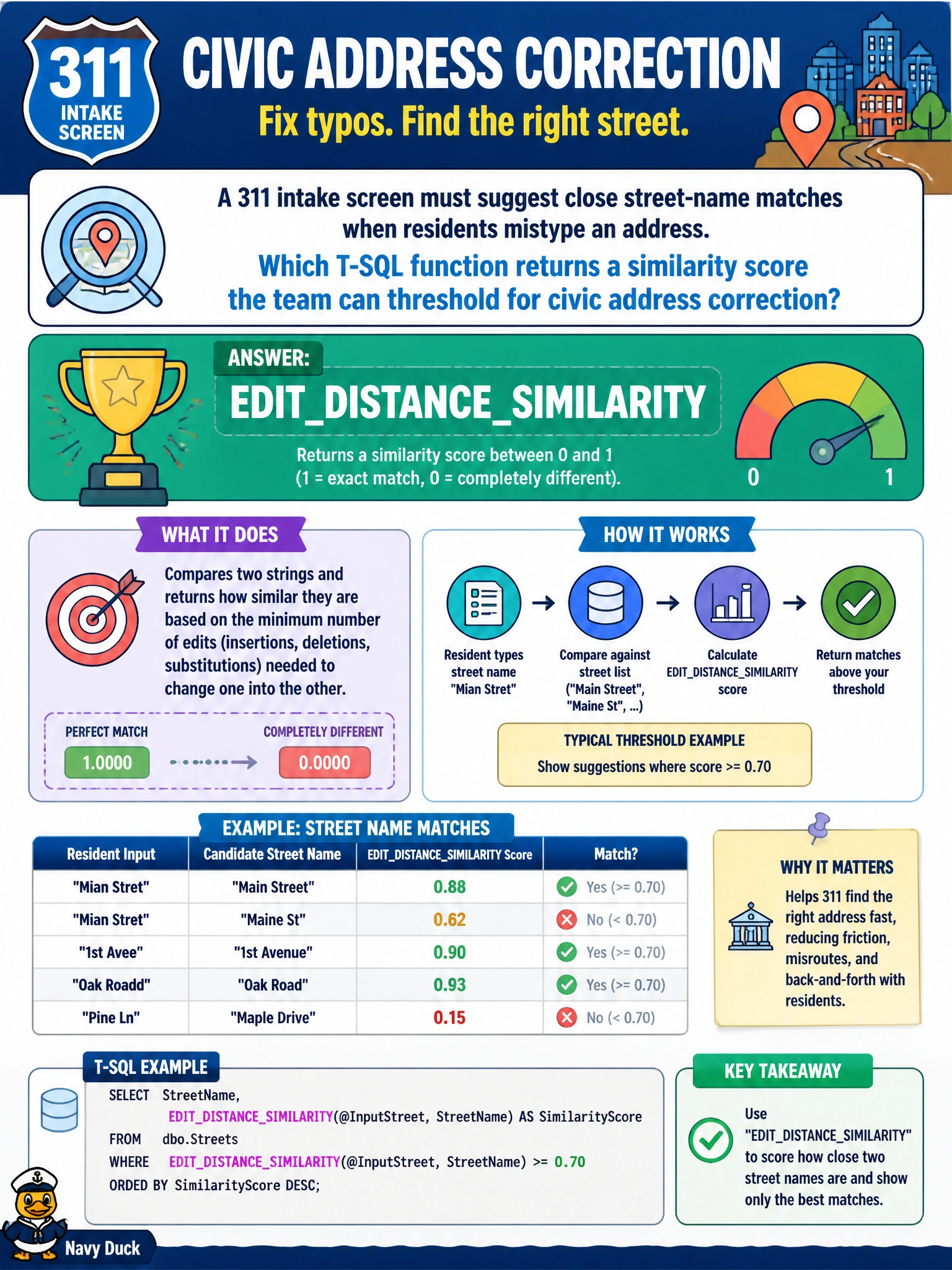
A 311 intake screen must suggest close street-name matches when residents mistype an address. Which T-SQL function returns a similarity score the team can threshold for civic address correction?
Select an answer to reveal the explanation.
Short Explanation
When residents mistype a street name, you need a score that can help your 311 app suggest close matches. EDIT_DISTANCE_SIMILARITY gives you that similarity score to threshold.
Full Explanation
EDIT_DISTANCE_SIMILARITY is the right function when a 311 intake screen needs a similarity score for mistyped street names, so the civic address-correction flow can threshold suggestions. Unlike a raw edit count, its similarity score is normalized for comparison against a cutoff, matching the need to suggest close street-name matches during resident intake. OPENJSON does not fit because it shreds JSON documents into relational rows; it does not score how alike two street strings are. REGEXP_COUNT counts regular-expression matches inside text, so it can count pattern hits but cannot produce a pairwise street-name similarity score for thresholding. MATCH is the SQL graph pattern-matching operator over node and edge tables; it traverses relationships rather than measuring fuzzy string closeness for address correction. Exam caveat: distinguish a normalized similarity score from an integer edit count; when the task emphasizes thresholding a score for UX suggestions, choose EDIT_DISTANCE_SIMILARITY rather than a raw count, graph matching, or JSON shredding. Operational check: load a municipal gazetteer of official street names, run mistype samples from historical 311 tickets, set a similarity cutoff that balances false suggestions against missed corrections, and monitor acceptance rates for suggested streets in the intake UI before widening the threshold citywide.