
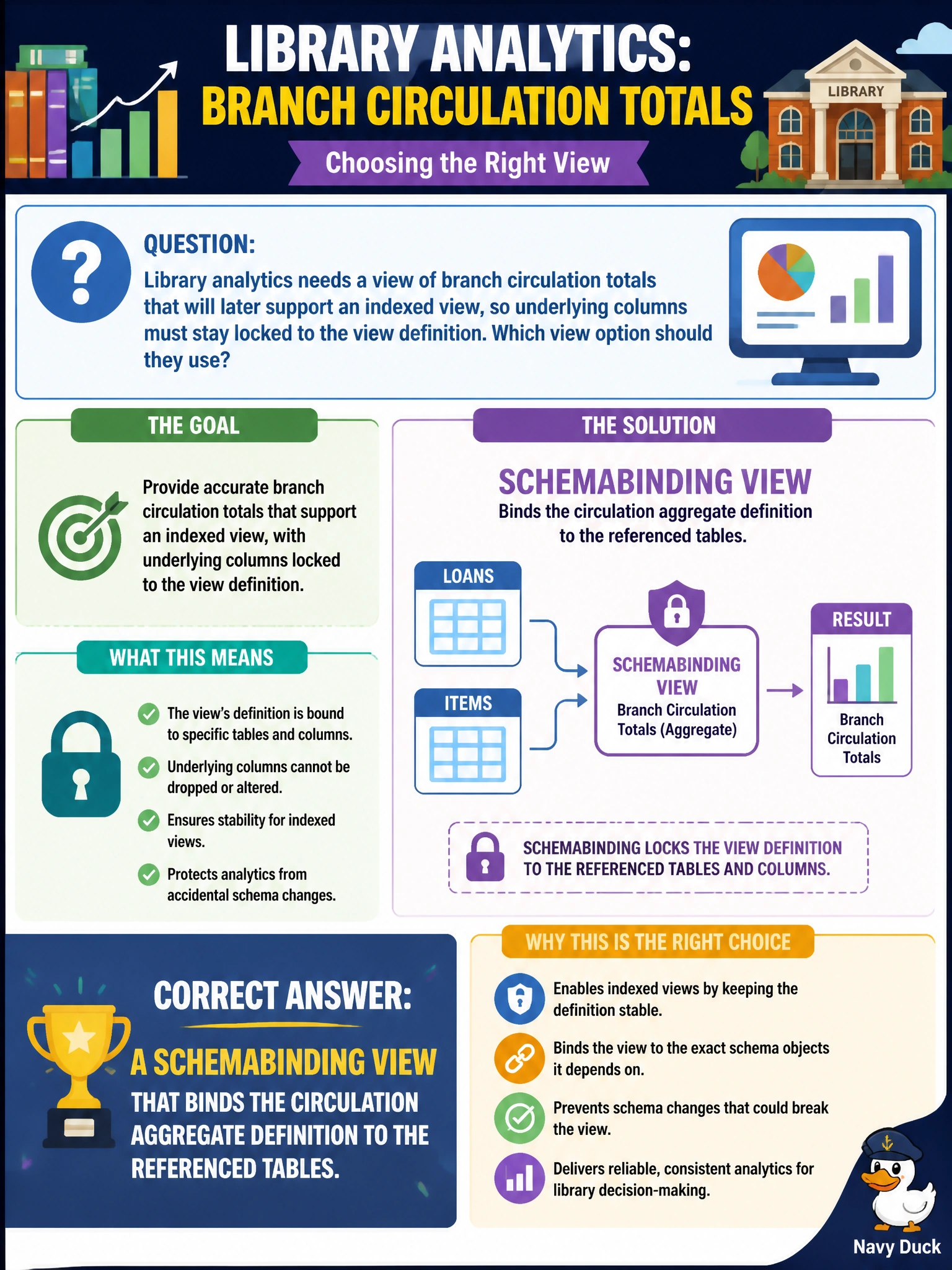
Library analytics needs a view of branch circulation totals that will later support an indexed view, so underlying columns must stay locked to the view definition. Which view option should they use?
Select an answer to reveal the explanation.
Short Explanation
You’ve found the right fit: SCHEMABINDING ties the circulation view’s definition to its referenced tables and columns. That protection helps keep the definition stable for a future indexed view.
Full Explanation
A schemabinding view is the right choice because it binds the circulation aggregate’s definition to its referenced tables and columns, preventing changes that would invalidate the view. This schema stability is required for an indexed view in SQL Server and Azure SQL, though other indexed-view rules also apply. A temporal system-versioned view does not ignore base-table schema changes or provide this binding; temporal versioning tracks row history, which is a different purpose. A graph edge view models relationships such as contractor-to-jobsite links, so it does not address branch circulation totals. An in-memory OLTP view is not a mechanism for storing totals in the buffer pool as a substitute for binding a view definition to its source tables. Exam caveat: schemabinding alone does not make every view indexable; requirements such as two-part names and the applicable indexed-view rules must also be satisfied. Practical check: create the schemabound view, then try to alter a referenced base-table column. The engine should block a change that would invalidate the view until you alter or drop the view, confirming that the definition is protected.