
A water utility needs a managed graph for sensor bronze and silver tables with expectations attached. What should they create?
Select an answer to reveal the explanation.
Short Explanation
Declarative pipelines are the plumbing schematic—bronze and silver pipes drawn on the wall, with pressure gauges (expectations) bolted on.
Full Explanation
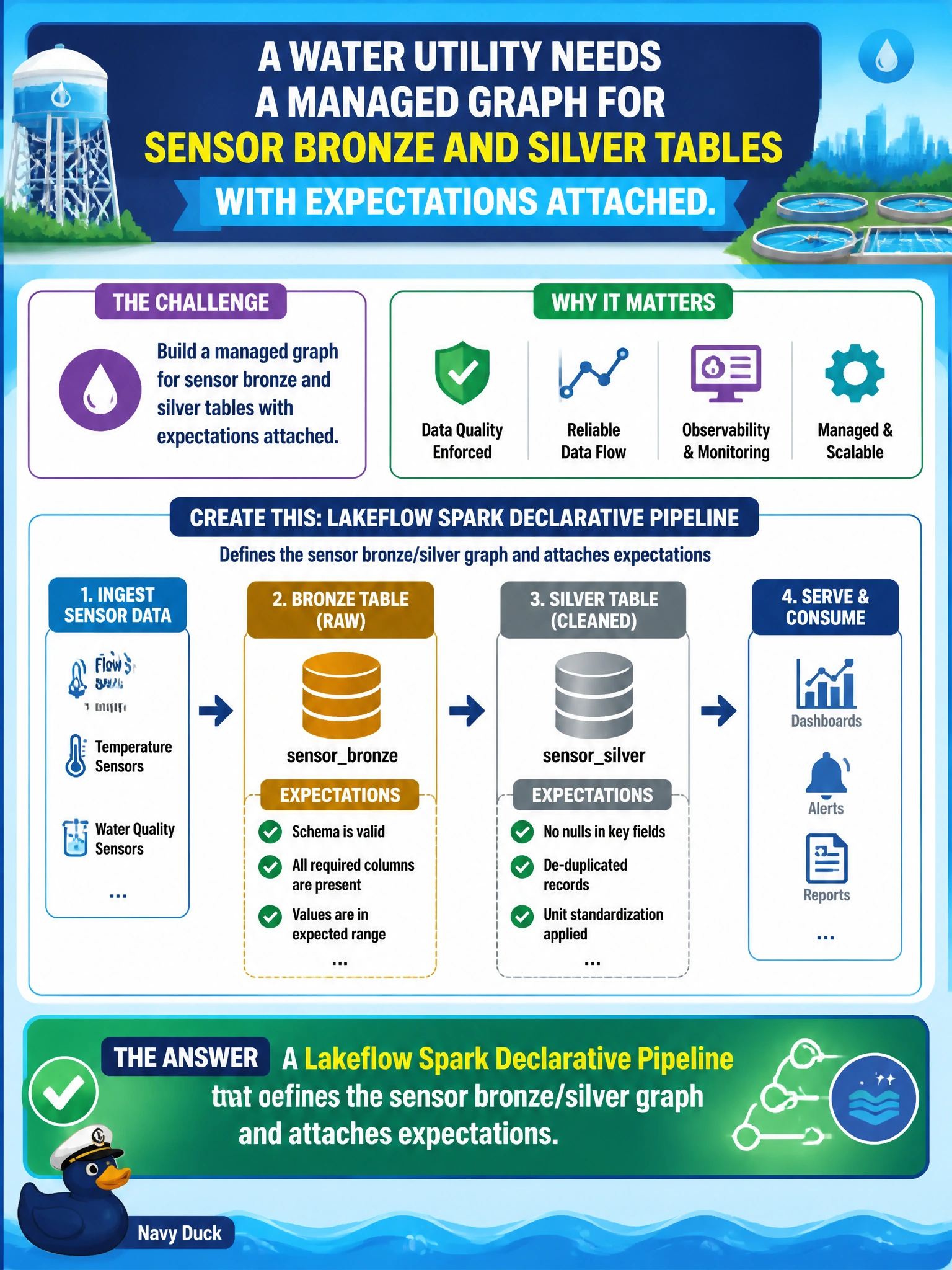
Creating a Lakeflow Spark Declarative Pipeline gives a managed graph for municipal IoT refine paths: declare sensor bronze and silver tables, wire dependencies, and attach expectations in one designed pipeline. Water-utility telemetry that needs governed bronze landing plus silver cleanses with quality rules fits that model far better than ad-hoc statements or unmanaged folders. The pipeline definition is the operational artifact operators schedule, monitor, and evolve. A Databricks Job with a notebook that defines the sensor bronze/silver graph and attaches expectations misattributes pipeline capability — a Job orchestrates tasks, it is not a declared table graph with attached expectations, so quality rules would remain hand-coded in the notebook rather than enforced and reported as a managed unit. A Databricks SQL warehouse with a view that defines the sensor bronze/silver graph and attaches expectations misattributes pipeline capability — a warehouse provides serving compute and a view is only saved query logic, not the declarative pipeline construct that defines bronze/silver dependencies and attaches expectations. A Lakeflow Connect ingestion pipeline that defines the sensor bronze/silver graph and attaches expectations misattributes pipeline capability — Connect is a connector for getting source data in, not the managed graph-with-expectations construct itself, so it cannot define bronze-to-silver dependencies or attach quality expectations. Exam caveat: declarative pipelines excel at table graphs and expectations; irregular one-off sensor backfills may still use jobs/notebooks alongside the always-on pipeline. Operational check: deploy a declarative pipeline with bronze/silver sensor tables and at least one expectation, trigger a run, confirm tables update in Unity Catalog, and verify expectation results appear in the pipeline quality UI.
Prefer to study offline? Printable PDF study book + test engine ($7.50, unofficial). These questions stay free here.