
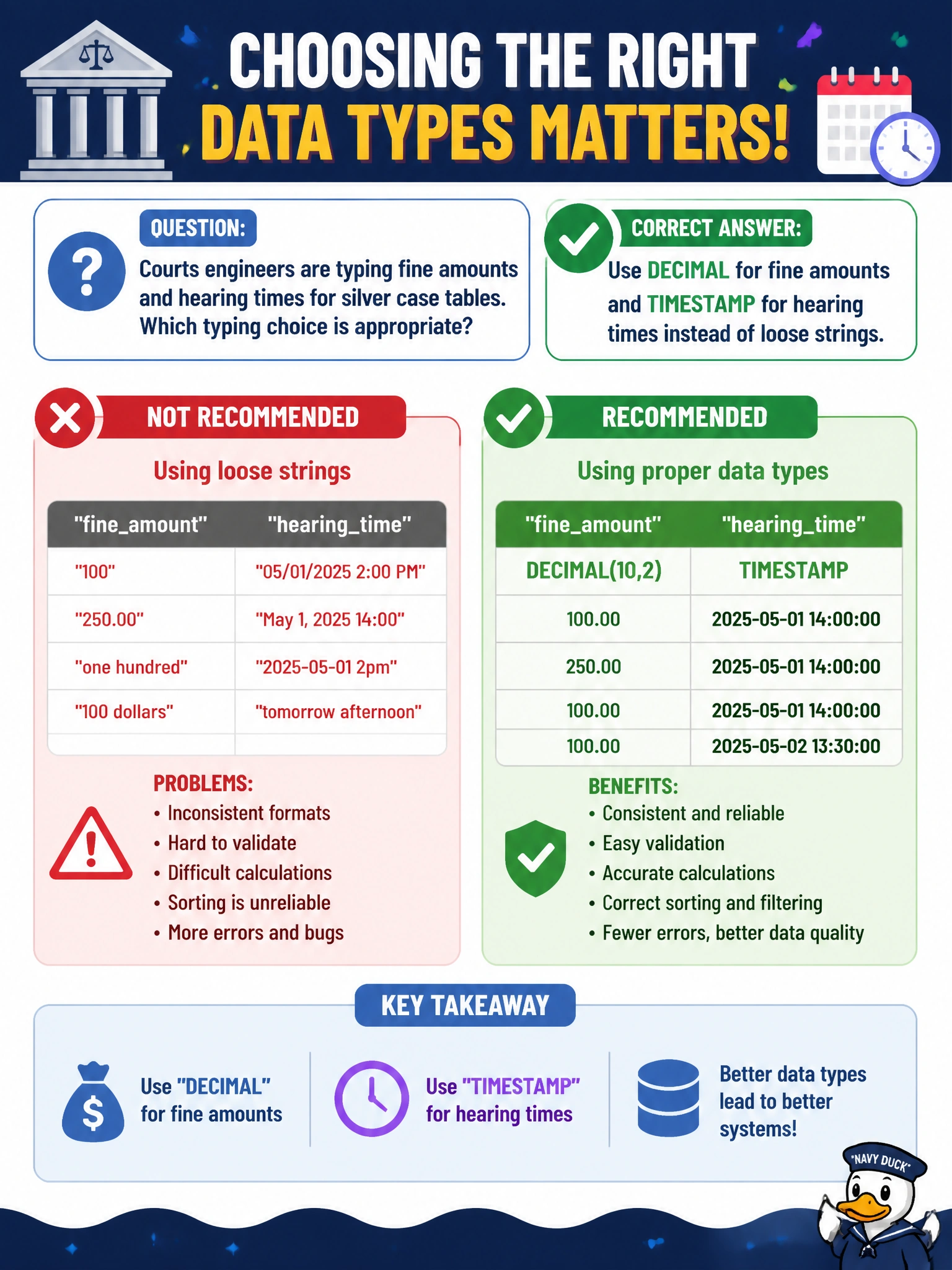
Courts engineers are typing fine amounts and hearing times for silver case tables. Which typing choice is appropriate?
Select an answer to reveal the explanation.
Short Explanation
DOUBLE rounds your fines and DATE or ISO strings can't pin down a hearing instant. DECIMAL and TIMESTAMP keep your court math and calendars honest instead of leaving you with messy conversions.
Full Explanation
Court silver models should type fine amounts as DECIMAL and hearing times as TIMESTAMP. Monetary fines need exact scale for sums, balances, and audits; hearing times need temporal types for calendaring, SLA windows, and ordering. Using DOUBLE for fines and TIMESTAMP for hearings forces fragile floating-point math in every consumer and invites sorting and rounding errors in municipal finance and case scheduling reports. Storing fine amounts as DOUBLE and hearing times as TIMESTAMP fails by concept: DOUBLE introduces rounding errors in sums and range checks for fines, even though TIMESTAMP is sound for hearings. INTEGER for fines and DATE for hearing times misuse types that cannot represent currency or calendar instants. Using STRING in ISO format for hearing times prevents proper temporal typing, governance, and normal SQL analytics on case facts. Exam caveat: Silver curation is where civic domains apply correct types—DECIMAL for money, TIMESTAMP for hearings, not DOUBLE for currency, INTEGER for amounts, DATE for instants, or ISO strings posing as timestamps. Operational check: Load a sample of fine and hearing rows into silver with DECIMAL and TIMESTAMP columns, run SUM on fines and date filters on hearings, and confirm results match source office totals. Attempt invalid casts (text into DOUBLE, bad dates into DATE, unparseable ISO strings) and verify they quarantine or fail per policy rather than silently becoming wrong values in gold.
Prefer to study offline? Printable PDF study book + test engine ($7.50, unofficial). These questions stay free here.