
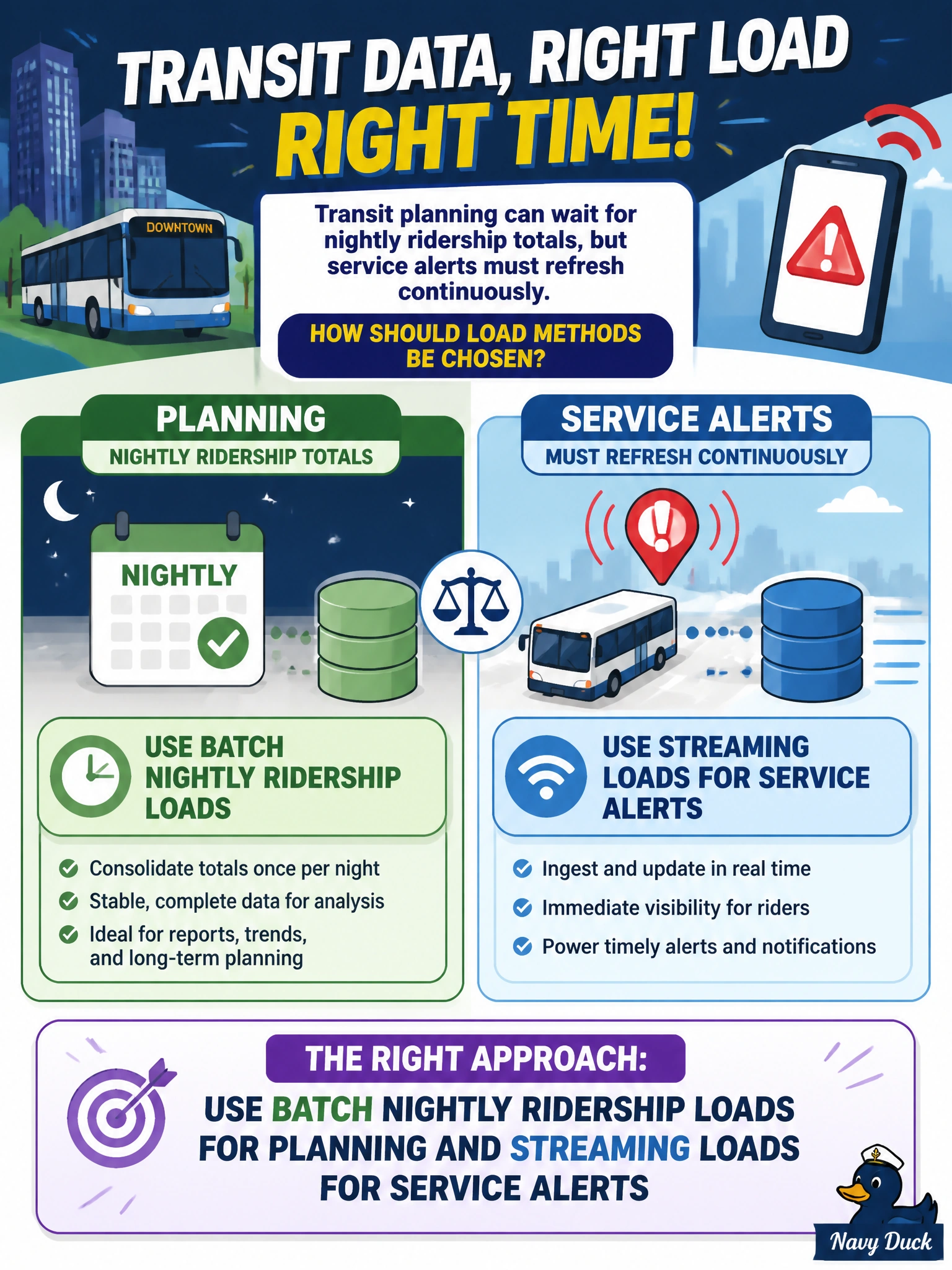
Transit planning can wait for nightly ridership totals, but service alerts must refresh continuously. How should load methods be chosen?
Select an answer to reveal the explanation.
Short Explanation
Nightly ridership is the overnight count of passengers; service alerts are the live PA system—batch for the count, streaming for the announcements.
Full Explanation
Load method should follow freshness need. Transit planning that can wait for nightly ridership totals should use batch loads; service alerts that must refresh continuously should use streaming. Using batch nightly ridership overwrites for planning with streaming loads for service alerts gets the freshness timing right but breaks planning history, overwriting the ridership totals that must be retained for trend analysis instead of appending them. Overwriting the planning tables each night wipes prior days needed for trend analysis, so planning loses its historical record even though alerts still stream correctly. Using batch nightly ridership loads for planning and streaming snapshots for service alerts keeps planning correct but mishandles alerts, because snapshots capture periodic table state instead of delivering each alert event continuously as riders need. Using batch nightly ridership loads for planning and streaming backfills for service alerts misuses backfills, which reprocess historical data to fill gaps rather than delivering live alert events with continuous freshness. Exam caveat: batch versus streaming is driven by latency requirements, not by “streaming is always better”—pair each municipal dataset with the cheapest method that meets its SLA, and document why ridership stays batch while alerts stream. Operational check: schedule a nightly batch ridership load into the planning tables, implement a streaming path for service alerts into a live sink, measure end-to-end alert latency against ops requirements, and confirm planning dashboards do not depend on the streaming alert path for historical ridership totals.
Prefer to study offline? Printable PDF study book + test engine ($7.50, unofficial). These questions stay free here.