
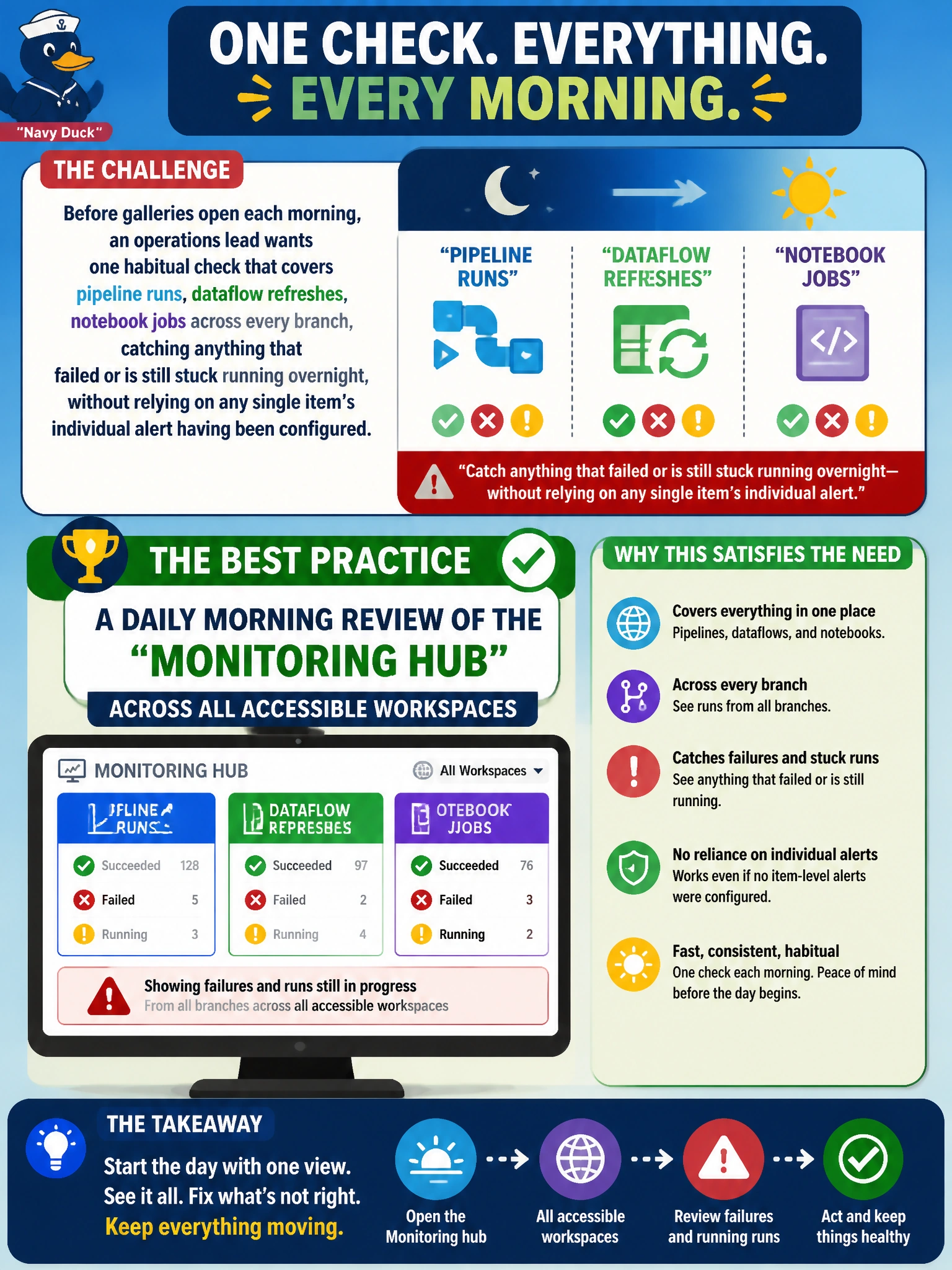
Before galleries open each morning, an operations lead wants one habitual check that covers pipeline runs, dataflow refreshes, and notebook jobs across every branch, catching anything that failed or is still stuck running overnight, without relying on any single item's individual alert having been configured. Which practice best satisfies this?
Select an answer to reveal the explanation.
Short Explanation
Building this into a daily habit is like a museum guard doing a morning walkthrough before doors open, rather than waiting for a visitor to report something's missing. The Monitoring hub is the walkthrough route across every branch's overnight work.
Full Explanation
A daily morning review of the Monitoring hub, scanned across every workspace the lead can access, directly satisfies the goal of one habitual check covering pipelines, dataflow refreshes, and notebook jobs together, and it works even for items that never had a dedicated alert configured, since it surfaces run status rather than depending on a rule someone remembered to set up. Waiting for staff to report that dashboards look wrong is purely reactive and means a failure is discovered only after it has already affected visitors or exhibit operations. Reviewing only the Capacity Metrics app's storage trend reports on OneLake and warehouse storage consumption, not on whether individual overnight runs succeeded, failed, or are still stuck. Checking Git commit history across branches shows what changed in item definitions, not whether last night's scheduled runs actually completed. Making the Monitoring hub review a genuine daily habit, rather than an occasional check, is what turns it into a reliable safety net that catches quiet failures before they become a visitor-facing problem.