
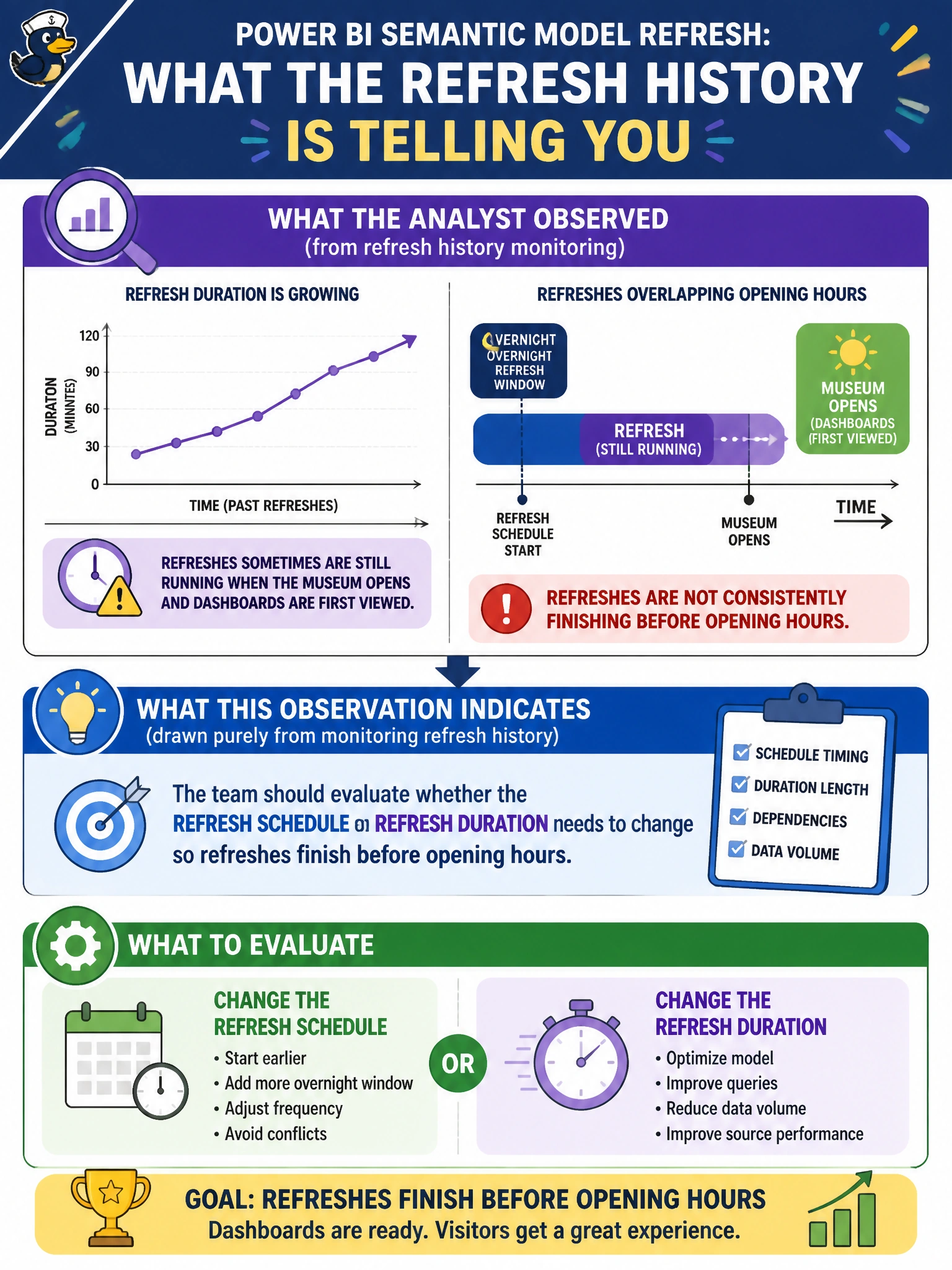
An analyst monitoring a branch's semantic model refresh history notices refreshes have grown long enough that they sometimes are still running when the museum opens and dashboards are first viewed. What does this observation, drawn purely from monitoring the refresh history, indicate the team should evaluate?
Select an answer to reveal the explanation.
Short Explanation
Watching the refresh creep past opening time is like noticing a bakery's ovens are still running when the doors unlock. The fix isn't labeling the bread, it's starting the bake earlier or finding a faster oven.
Full Explanation
Noticing from the refresh history that refreshes now sometimes overrun into opening hours is a monitoring signal that the schedule's timing, the refresh's own duration, or both need to be evaluated, since the goal is for the refresh to reliably finish before dashboards are first viewed each day. Sensitivity labels classify data for governance and access purposes; upgrading one wouldn't make a refresh finish any earlier and doesn't relate to timing at all. Whether Git integration is enabled concerns version control of item definitions, a lifecycle-management question unrelated to how long a refresh takes to run. Item endorsement reflects certification and discoverability status, not performance, and has no bearing on refresh timing. Recognizing this pattern purely from historical monitoring, before it causes a visible stale-dashboard complaint, is what lets the team plan a schedule or performance change proactively rather than reactively.