
An archives network is choosing where to land newly digitised oral-history audio files alongside the semi-structured JSON metadata each file's OCR and transcription process produces, before any Spark transformation happens. Which factor should most directly drive the data store choice at this stage?
Select an answer to reveal the explanation.
Short Explanation
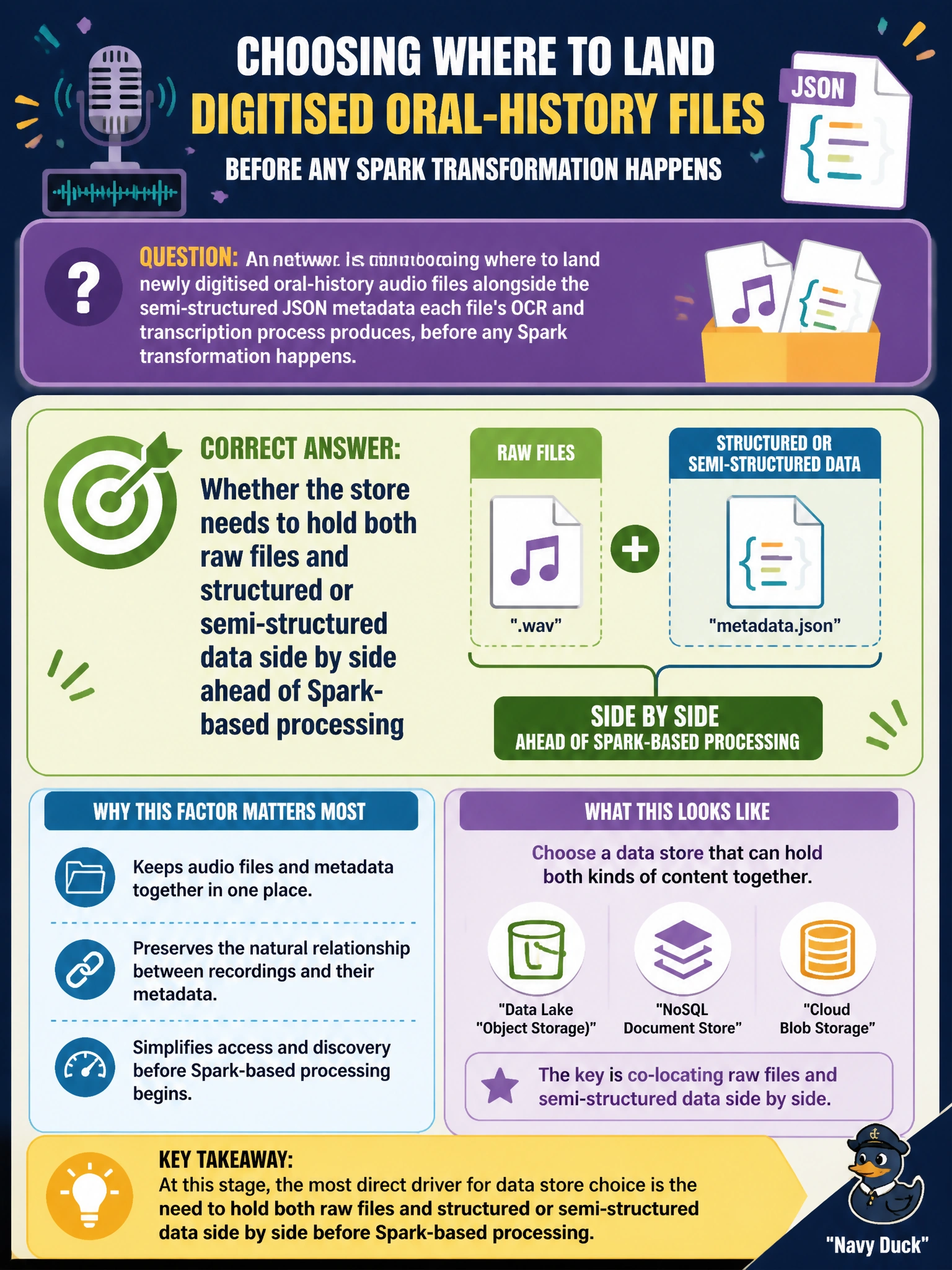
The real question at this stage is simple: can the store hold the raw audio files and the messy JSON metadata together before Spark ever touches them? That need for mixed file-plus-table storage ahead of processing is what should drive the choice, not who prefers what tool elsewhere.
Full Explanation
Choosing an appropriate data store means matching the store's core capabilities to what the workload actually needs at this stage: raw audio files sitting alongside semi-structured JSON metadata, prior to any Spark-based transformation. A Lakehouse is built precisely for this, holding files and Delta tables together under one workspace item and exposing both to Spark notebooks, which makes the presence of mixed raw and semi-structured content ahead of processing the deciding factor. Whether an unrelated finance team prefers T-SQL for billing reports has nothing to do with how oral-history audio and OCR metadata should be stored; that's a separate workload with its own, already-appropriate Warehouse choice. Whether a Power BI report already references this data is a downstream consumption concern that applies after the data has been ingested, cleansed, and likely aggregated into a gold-layer table, not a factor in choosing where raw files should first land. A marketing team's file-naming preference is an organizational convention, not a technical requirement that should determine which Fabric item type stores the data; naming conventions can be applied inside whichever store is chosen for the right technical reasons. When making this call in practice, confirm whether any transformation step genuinely requires T-SQL, since a data store choice should follow from the required combination of file support, processing engine, and downstream structure, not from unrelated team preferences.