
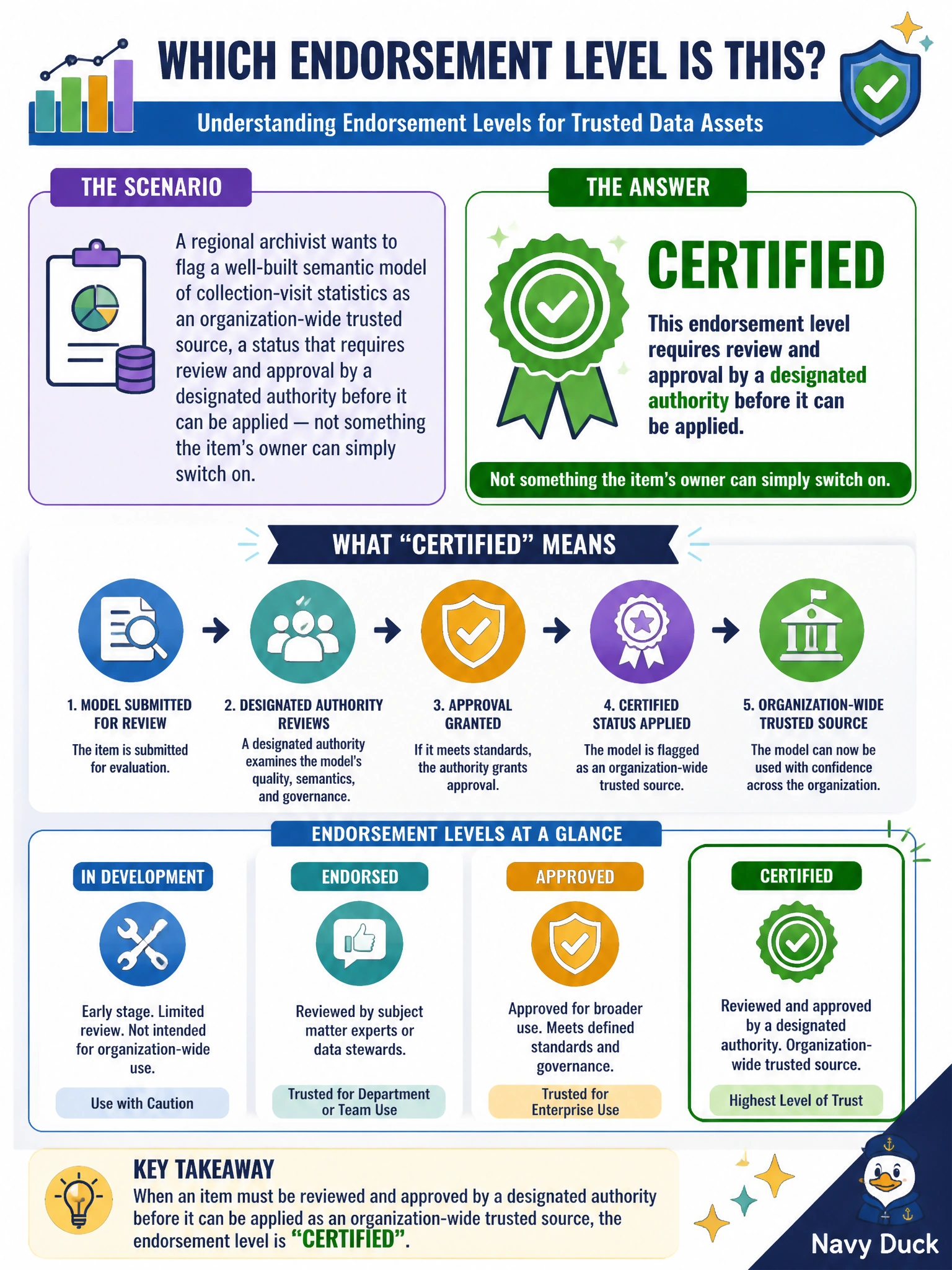
A regional archivist wants to flag a well-built semantic model of collection-visit statistics as an organization-wide trusted source, a status that requires review and approval by a designated authority before it can be applied — not something the item's owner can simply switch on. Which endorsement level is this?
Select an answer to reveal the explanation.
Short Explanation
Certified is the museum's official seal of authenticity — a designated reviewer has to sign off before it goes on the piece, unlike Promoted, which the curator can slap on their own work whenever they think it's ready.
Full Explanation
Fabric's endorsement system has two levels: Promoted, which an item's owner (or anyone with the right permission) can apply themselves as a lightweight signal that an item is ready for broader use, and Certified, which requires review and approval by people the tenant has designated as certification authorities, making it a stronger, organization-wide trust signal. The scenario describes exactly the Certified path — approval by a designated authority, not a self-service toggle — so Certified is correct. Promoted fails the requirement because it's owner-applied without a review gate, which contradicts 'requires review and approval.' Marking an item as a favorite is a personal bookmarking convenience with no organizational trust signal or governance meaning at all. Pinning an item to a workspace only affects its visibility and position within that workspace's item list; it doesn't certify quality or require any review process. An operational check: the archivist should look for the Certified badge option in the endorsement settings, which should only be selectable by, or with sign-off from, accounts on the tenant's certification-authority list.