
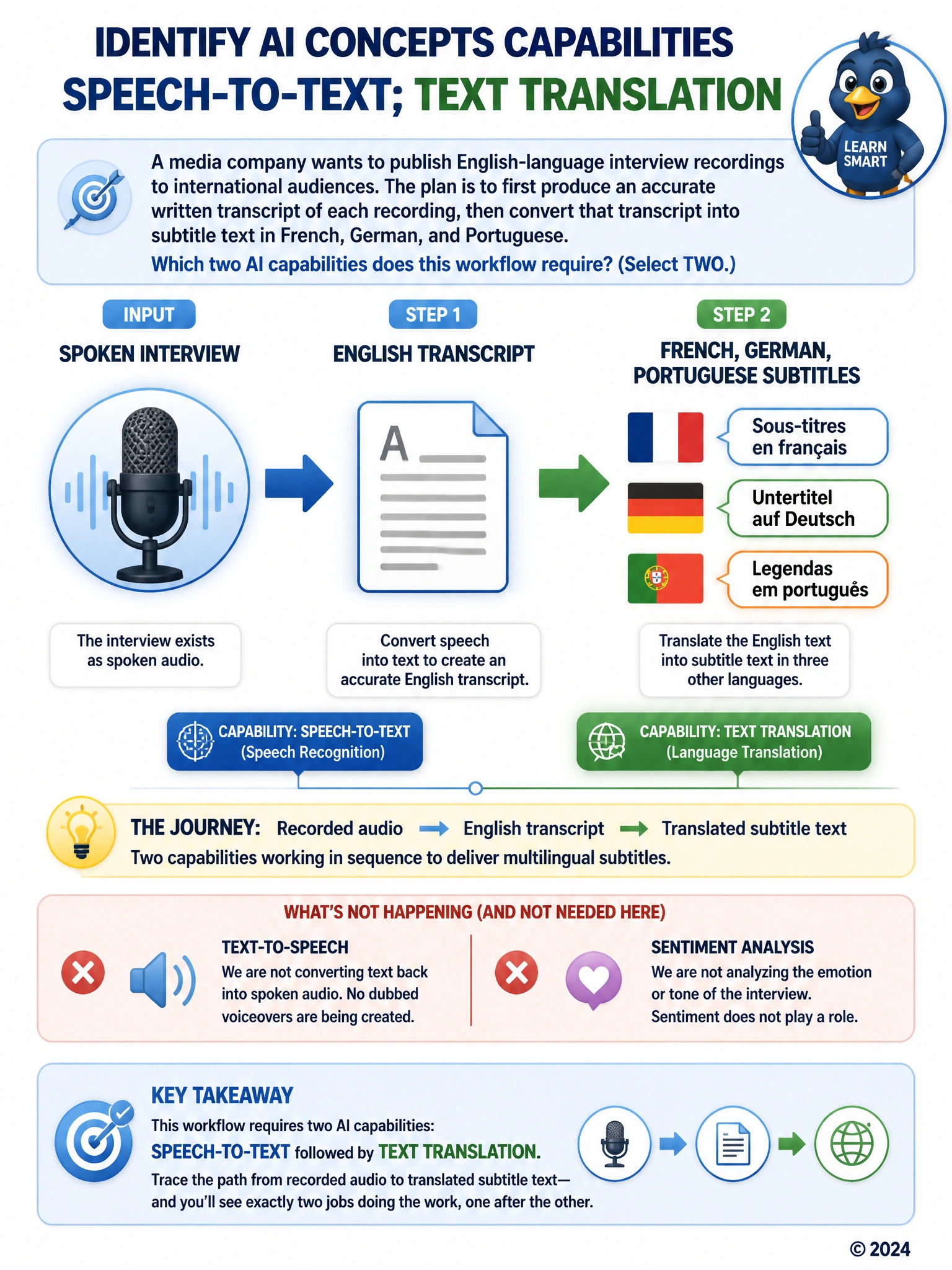
A media company wants to publish English-language interview recordings to international audiences. The plan is to first produce an accurate written transcript of each recording, then convert that transcript into subtitle text in French, German, and Portuguese. Which two AI capabilities does this workflow require? (Select TWO.)
Select all correct answers, then click Submit.
Short Explanation
Follow the interview through its journey: first it's just spoken audio, so step one is turning those spoken words into an accurate written transcript, that's converting speech into text. Once you have that English text sitting in front of you, step two is turning it into subtitle text in three other languages, that's converting written words from one language into another. Notice what's not happening here: nobody is generating spoken audio in French, German, or Portuguese, so turning text back into speech isn't part of this job, that would only matter if the plan were dubbed voiceovers instead of subtitles. And nobody cares whether the interview sounds upbeat or downbeat, so judging emotional tone doesn't come into play either. Trace the actual path from recorded audio to translated subtitle text, and you'll see exactly two jobs doing the work, one after the other.
Full Explanation
The correct answers are B and D. Producing an accurate written transcript from the spoken interview requires speech-to-text, which converts the recorded audio into text. Once that English transcript exists, converting it into French, German, and Portuguese subtitle text requires text translation, which converts written content from one language into another while preserving meaning. Together these two capabilities cover the full workflow described: audio becomes English text, and English text becomes subtitle text in three additional languages. Option C is incorrect because text-to-speech converts written text into spoken audio, which would be needed if the company wanted dubbed voice tracks in the other languages, but the plan here calls for subtitle text, not spoken audio, so this capability is not part of the workflow. Option A is incorrect because sentiment analysis evaluates the emotional tone of text, such as whether a message reads as positive or negative, which plays no role in transcribing spoken words or translating written subtitles into other languages. The workflow as described stops at producing translated subtitle text, so only the transcription and translation capabilities are actually needed.