
A video streaming service wants to suggest new shows to each subscriber based on patterns across what similar subscribers have watched and rated, aiming to increase watch time without asking subscribers to fill out a preference survey. Which type of AI solution is being described?
Select an answer to reveal the explanation.
Short Explanation
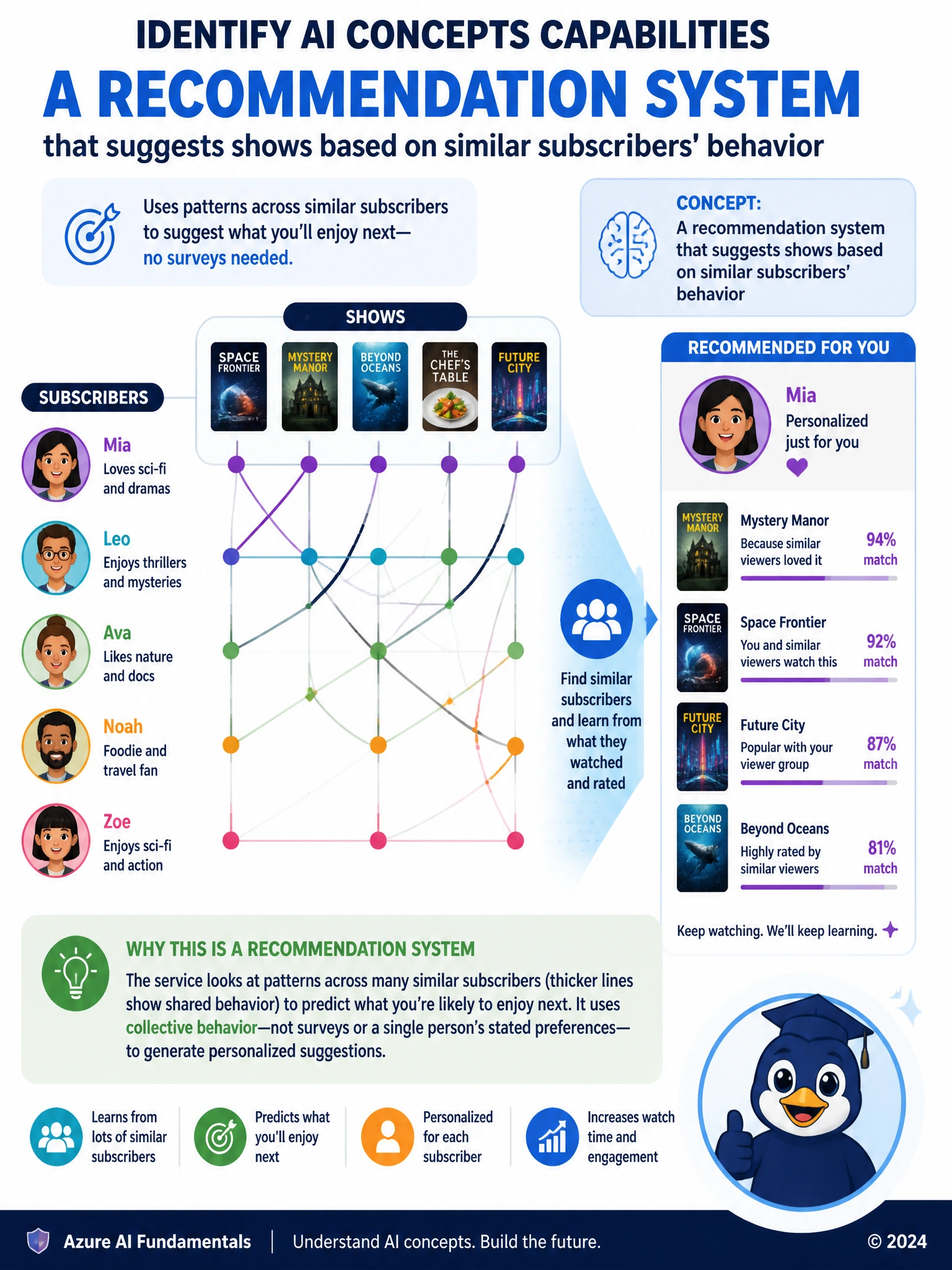
Notice what the streaming service is actually leaning on: not a survey, not a single subscriber's stated preferences, but patterns across lots of similar viewers to figure out what one person might enjoy next. That's the core idea behind systems built specifically to generate personalized suggestions from shared behavior. It's not about spotting something unusual in someone's account activity, which is a completely different job aimed at catching outliers rather than making suggestions. It's also not about predicting a company-wide number like how many total subscribers there will be next month, since that tells the business nothing about what an individual person should watch. And sorting cover art into categories might feed into a bigger system eventually, but by itself it doesn't use viewing history across subscribers to generate a personalized list. The described behavior points squarely at a system built to recommend.
Full Explanation
The correct answer is A. A recommendation system analyzes patterns in what similar users have watched, rated, or interacted with and uses those patterns to suggest new items to an individual user, which matches the streaming service's goal of surfacing shows a subscriber is likely to enjoy based on similar subscribers' behavior, without requiring an explicit survey. Option B is incorrect because anomaly detection is built to flag data points that deviate sharply from an expected pattern, such as unusual account activity, and has no mechanism for generating personalized content suggestions from shared viewing patterns. Option C is incorrect because a time-series forecasting model predicts a future numeric value, such as total subscriber count next month, which is a company-wide business metric and not a per-subscriber recommendation of which shows to watch next. Option D is incorrect because image classification assigns a category label to an image, such as classifying cover art by genre, which could support a recommendation system as one input but on its own does not use viewing and rating patterns across subscribers to generate personalized suggestions. Because the described behavior is generating individualized suggestions from patterns in similar users' activity, a recommendation system is the correct classification of the solution.