
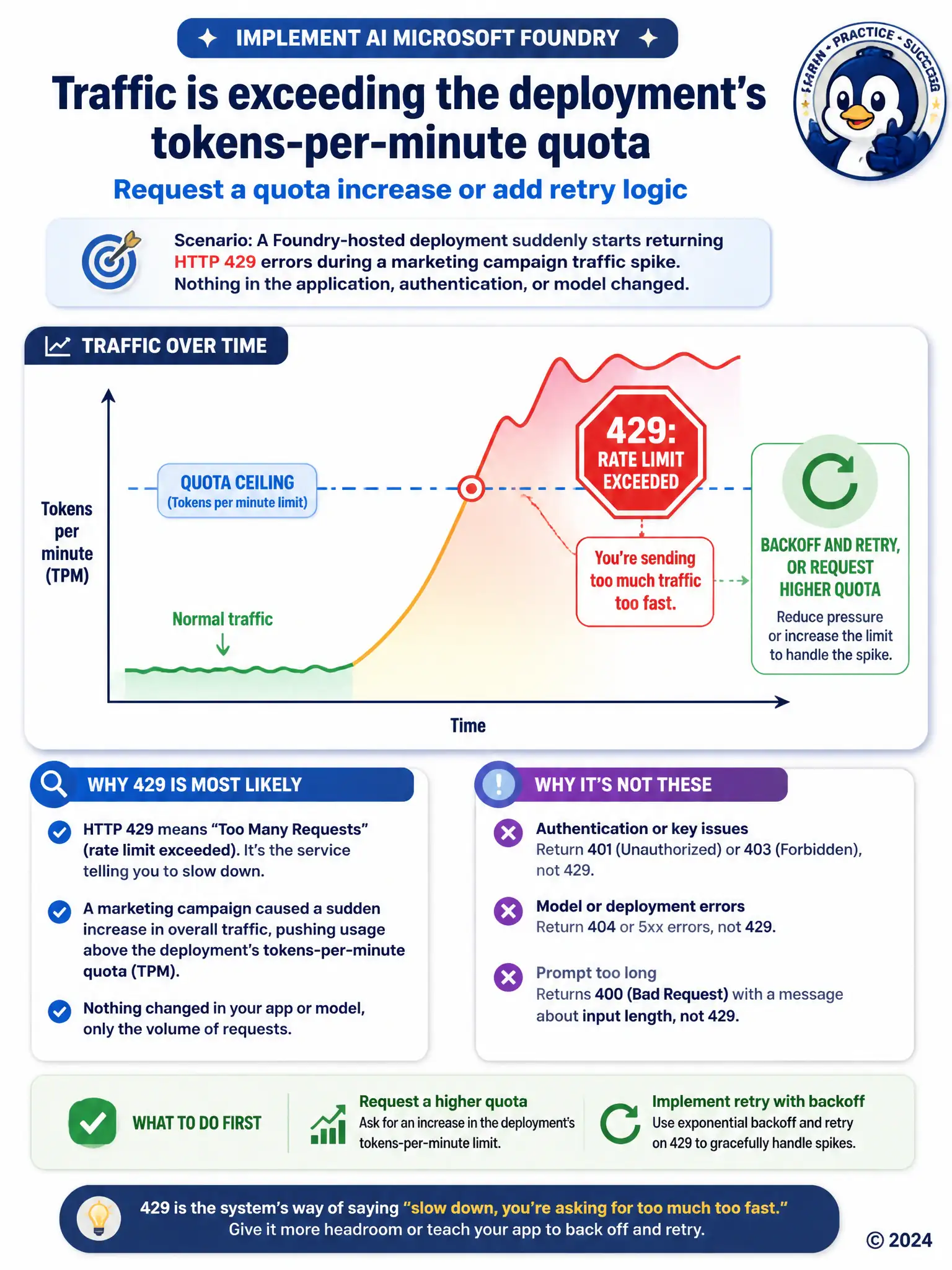
A developer's application calling a Foundry-hosted deployment begins receiving HTTP 429 errors during a sudden marketing campaign traffic spike, even though nothing in the application's code, authentication, or model configuration has changed. What is the most likely explanation, and what should the developer do first?
Select an answer to reveal the explanation.
Short Explanation
The 429 status code means you're being throttled, so a marketing spike is likely pushing you past the deployment's tokens-per-minute quota. You should ask for more quota or add retry-with-backoff logic instead of hammering the deployment. Expired keys, retired models, and oversized prompts fail with different errors.
Full Explanation
The correct explanation is that traffic is exceeding the deployment's tokens-per-minute quota, so the developer should request a quota increase or add retry logic with backoff to smooth out bursts. The 429 status code specifically signals that the caller is being throttled for sending more requests than the deployment's configured rate limit allows, which matches a sudden marketing spike while the application code, authentication, and model configuration remain unchanged. The expired-key explanation is incorrect because an expired or invalid key produces a 401 authentication error, not a 429, and the scenario states the code and credentials are unchanged. The retired-model explanation is incorrect because calling a retired or unavailable model version returns a 404-style not-found error rather than a rate-limit response, and nothing in the scenario suggests the model version changed. The oversized-prompt explanation is incorrect because exceeding the context window produces a 400-level request error describing the input as too large, which is a different failure than being throttled for request volume.