
An accounts-payable team receives vendor invoices in inconsistent layouts, different vendors place fields in different spots, and needs to automatically pull out vendor name, invoice number, line items, and total amount into structured data without writing custom OCR or layout-parsing code. Which Azure AI Foundry-connected service fits this need?
Select an answer to reveal the explanation.
Short Explanation
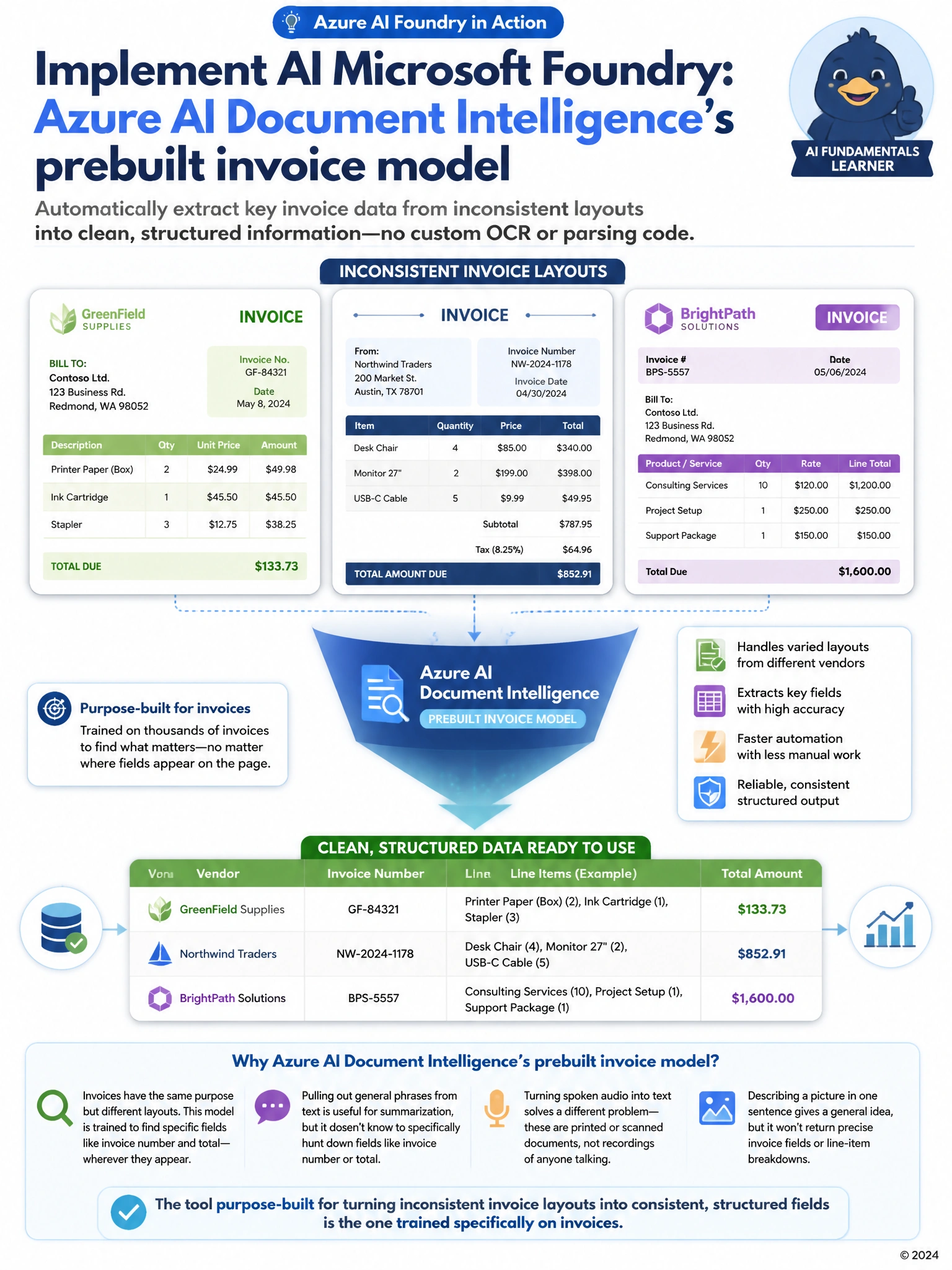
This is a document that has a fairly predictable purpose, an invoice, but the layout jumps around from vendor to vendor, so what the team needs is something already trained on thousands of invoices that knows where to look for a total or an invoice number no matter how the page is arranged. Pulling out generally important phrases from text is a different skill, it is good for summarizing a paragraph but it does not know to specifically hunt down a field like invoice number versus just any notable phrase. Turning spoken audio into text is solving an entirely different problem, since these are printed or scanned documents, not recordings of anyone talking. And describing a picture in one general sentence tells you roughly what an image shows, but it will not hand you a clean total amount or line-item breakdown. The tool purpose-built for turning inconsistent invoice layouts into consistent structured fields is the one trained specifically on invoices.
Full Explanation
The correct answer is D. Azure AI Document Intelligence's prebuilt invoice model is trained specifically to locate and extract structured fields such as vendor name, invoice number, line items, and totals across varied invoice layouts, exactly matching the team's need without any custom code. Option A is incorrect because key phrase extraction pulls out topically important phrases from free-flowing text; it is not designed to map extracted content to specific structured fields tied to a document's layout, such as distinguishing an invoice number from a line-item amount. Option B is incorrect because batch transcription converts spoken audio into text, and invoices are visual documents rather than audio recordings, so transcription has no application here. Option C is incorrect because image captioning generates a general one-sentence description of what a picture shows; it cannot isolate discrete structured data fields like a total amount or an invoice number from a scanned document. Only the prebuilt invoice model is purpose-built to turn inconsistent invoice layouts into consistent structured output.