
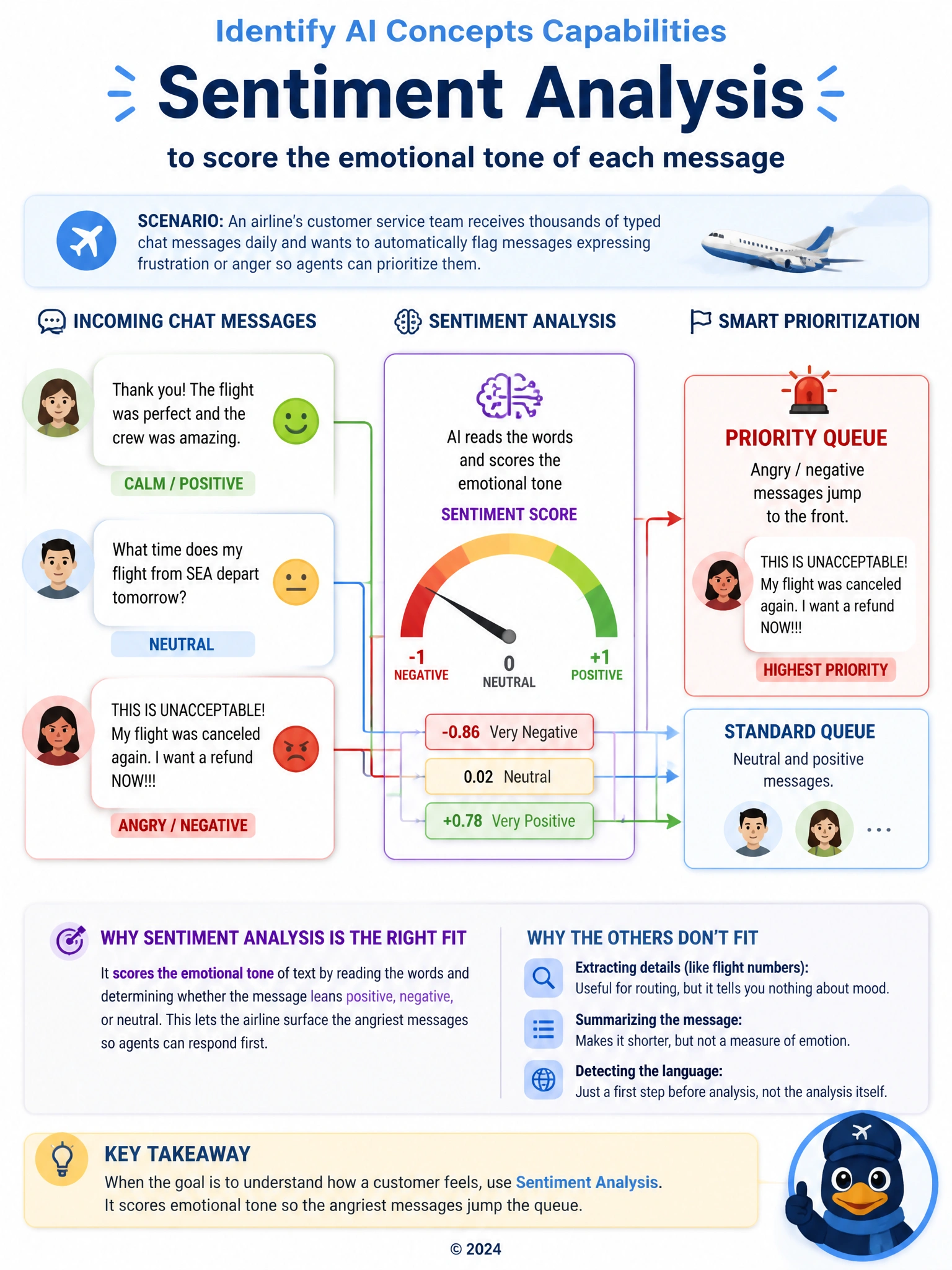
An airline's customer service team receives thousands of typed chat messages daily and wants to automatically flag messages expressing frustration or anger so agents can prioritize them. Which AI capability best fits this requirement?
Select an answer to reveal the explanation.
Short Explanation
The airline does not need the message made shorter, translated, or picked apart for details like flight numbers, it needs to know how the customer feels so the angriest messages jump the queue. That is a job for the technique that scores emotional tone in text, reading the words and deciding whether they lean positive, negative, or neutral. Pulling out flight numbers is useful for routing but tells you nothing about mood. Condensing a message to a shorter version does not tell you if the shorter version is angry or calm. And knowing what language something is written in is just a first step before any real analysis happens, not the analysis itself. The one option that directly measures emotional tone is the right fit here.
Full Explanation
The correct answer is B. Sentiment analysis evaluates text to determine whether the expressed tone is positive, negative, or neutral, and it can be tuned to flag negative or angry language, which is precisely the prioritization signal the airline wants. Option A is incorrect because named entity recognition extracts structured items such as flight numbers, dates, or locations from text, which could help route a ticket but says nothing about the customer's emotional state. Option C is incorrect because summarization shortens content for readability but does not classify or score tone, so a calm long message and an angry long message could summarize similarly without revealing which one is urgent. Option D is incorrect because language detection only identifies which language is being used, a preprocessing step that has no bearing on whether the message conveys frustration.