
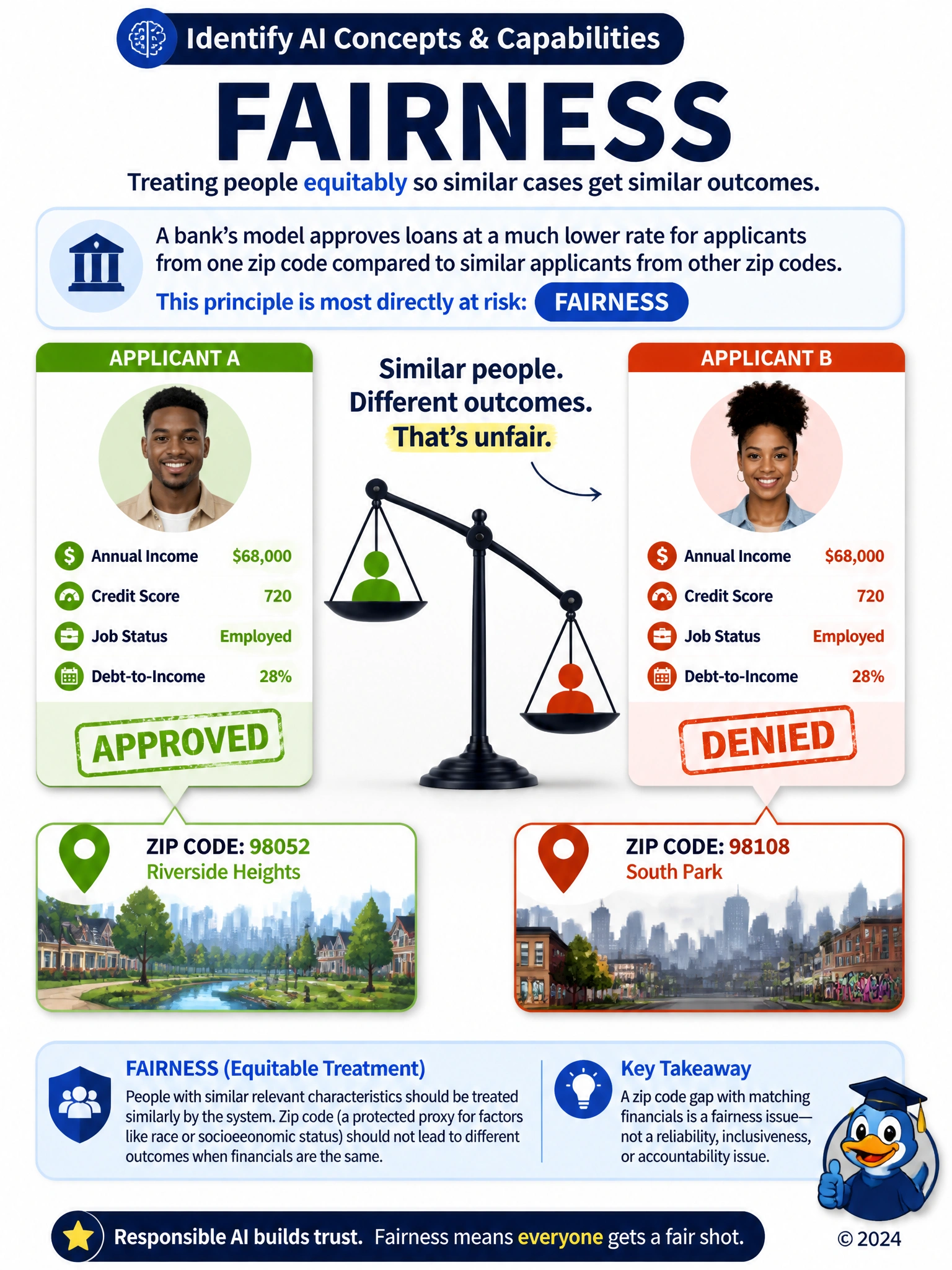
A bank's data science team is building a model to approve or deny personal loan applications. During testing they discover the model approves loans for applicants from one zip code at a much lower rate than applicants with similar income and credit history from other zip codes. Which Microsoft responsible AI principle is most directly at risk here?
Select an answer to reveal the explanation.
Short Explanation
Picture two loan applicants with nearly identical income and credit scores, but one gets approved and the other does not, and the only real difference is their neighborhood. That pattern is exactly what the equitable-treatment principle exists to catch, because it means the system is producing different outcomes for people who should be evaluated the same way. The wrong turns here point toward other ideas that sound similar but miss the mark. One is about whether a system keeps working correctly and safely without breaking down, which is not what is happening since the model runs fine, it just treats groups differently. Another is about making sure the system and its design process include and work well for people of varying abilities and backgrounds, which is a development-time concern rather than a biased outcome in scoring. The last one is about who is answerable for the system's behavior and governance, which matters after the fact but does not name the specific problem of unequal approval rates. The zip-code gap despite matching financials is the tell.
Full Explanation
The correct answer is B. The scenario describes applicants with comparable financial profiles receiving different loan outcomes based on where they live, which is a classic sign of biased treatment of a group, and fairness is the principle that requires AI systems to treat all people equitably and avoid outcomes that unjustly disadvantage a particular group. Option A is incorrect because reliability and safety concerns whether a system performs consistently and safely under expected and unexpected conditions, such as not crashing or producing dangerous errors, which is not the issue described. Option C is incorrect because inclusiveness focuses on designing systems that engage and empower people of all abilities and backgrounds during development and use, such as accessibility for users with disabilities, rather than disparate outcomes in a trained model's decisions. Option D is incorrect because accountability is about the humans and organizations behind an AI system being answerable for how it operates and having governance in place, which is a broader oversight concern rather than the specific pattern of unequal loan approvals shown here. The zip-code disparity, despite similar income and credit history, is the detail that points squarely at unequal treatment, which is what fairness in responsible AI is designed to catch and correct.