
An operations team deploys multi-agent solutions across DTAP environments and needs a production cutover strategy that can reverse a bad agent package within minutes if health probes fail. Which approach best meets that requirement?
Select an answer to reveal the explanation.
Short Explanation
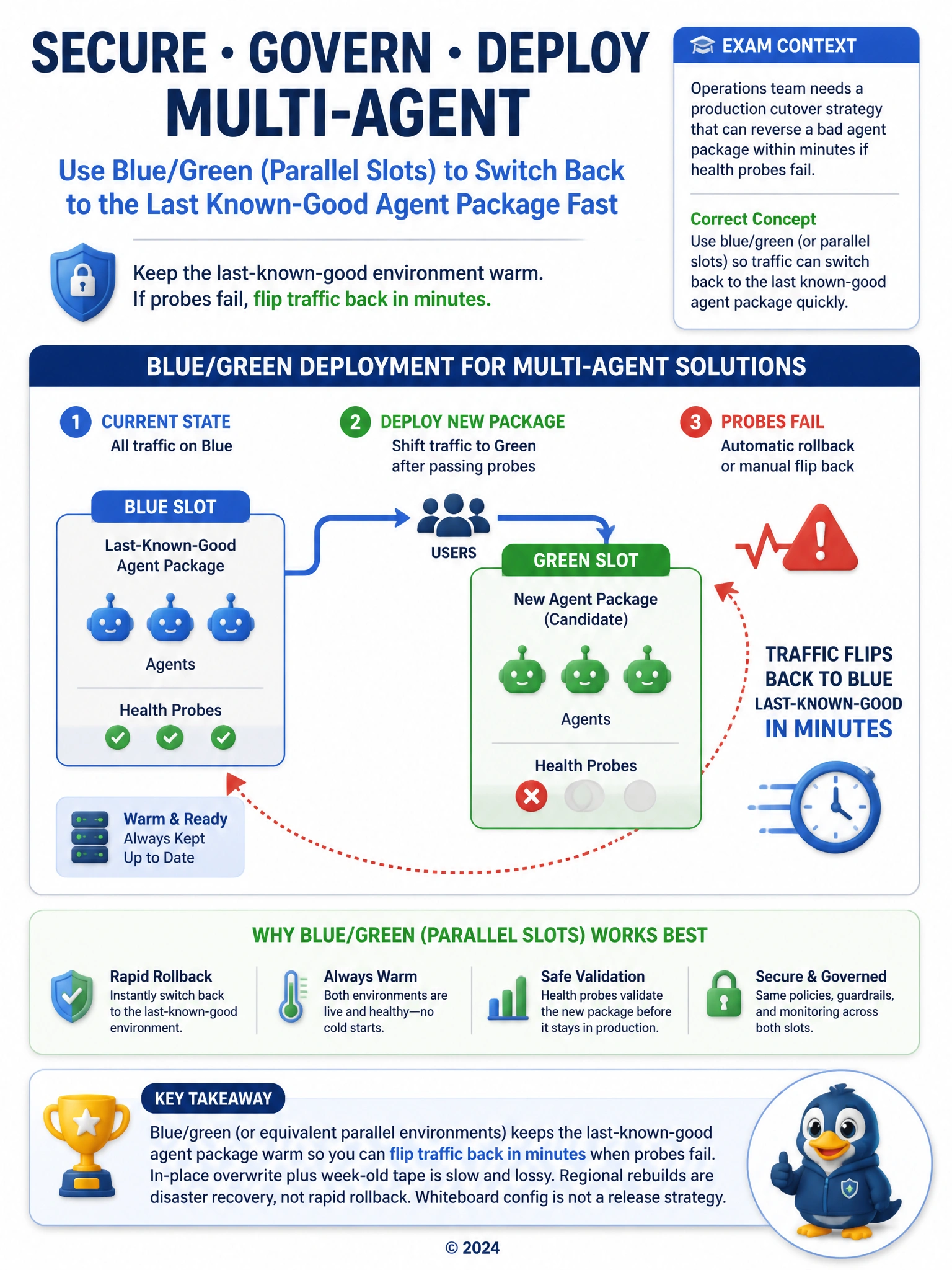
The correct answer is A. Blue/green (or parallel slots) keeps last-known-good warm so you flip traffic back in minutes when probes fail. In-place overwrite plus week-old tape is slow and lossy. Regional rebuilds are disaster recovery, not rapid rollback. Whiteboard config is not a release strategy.
Full Explanation
Option A is correct. Multi-agent deploy skills include blue/green and rollback strategies as part of multi-environment release design. Parallel production environments or slots enable rapid traffic switchback when health or quality probes fail after promoting an agent package.
Option B is incorrect because in-place overwrite destroys easy reversion, and week-old backups are too stale and slow for minute-level rollback.
Option C is incorrect because full regional rebuilds are high RTO and unsuitable as the primary rollback path for a bad agent package.
Option D is incorrect because undocumented, non-versioned configuration cannot support reliable automated rollback.