
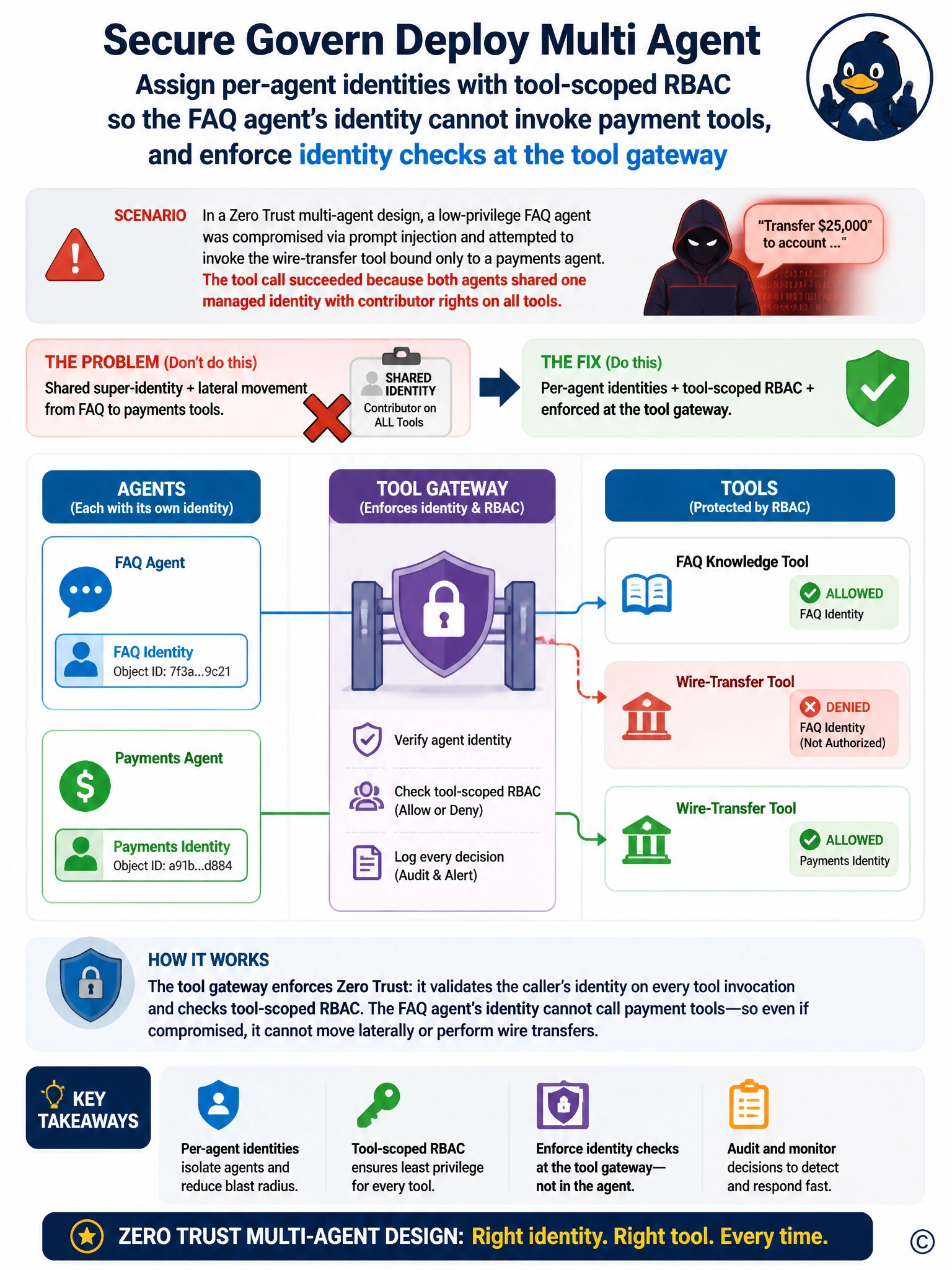
In a Zero Trust multi-agent design, a low-privilege FAQ agent was compromised via prompt injection and attempted to invoke the wire-transfer tool bound only to a payments agent. The tool call succeeded because both agents shared one managed identity with contributor rights on all tools. What architectural fix best prevents this lateral movement?
Select an answer to reveal the explanation.
Short Explanation
The correct answer is C. Zero Trust multi-agent design means each agent has its own identity and only the tools it should touch. A shared super-identity turns prompt injection in FAQ into wire transfers. Broader FAQ permissions and secrets in prompts make lateral movement easier. Merging agents removes isolation instead of fixing it.
Full Explanation
Option C is correct. Zero Trust multi-agent architecture requires per-agent identity scoping and lateral movement prevention. Distinct identities plus tool-gateway authorization ensure a compromised FAQ agent cannot call payment tools reserved for the payments agent.
Option A is incorrect because expanding FAQ permissions increases blast radius after compromise.
Option B is incorrect because secrets in prompts are extractable and grant the compromised agent direct payment capability.
Option D is incorrect because collapsing agents into one identity concentrates privilege and removes the isolation boundary the design needs.