
A banking multi-agent system can propose wire transfers. Policy requires human approval for wires over $10,000, supports manager override on edge cases, and must record who approved what. How should you implement human-in-the-loop?
Select an answer to reveal the explanation.
Short Explanation
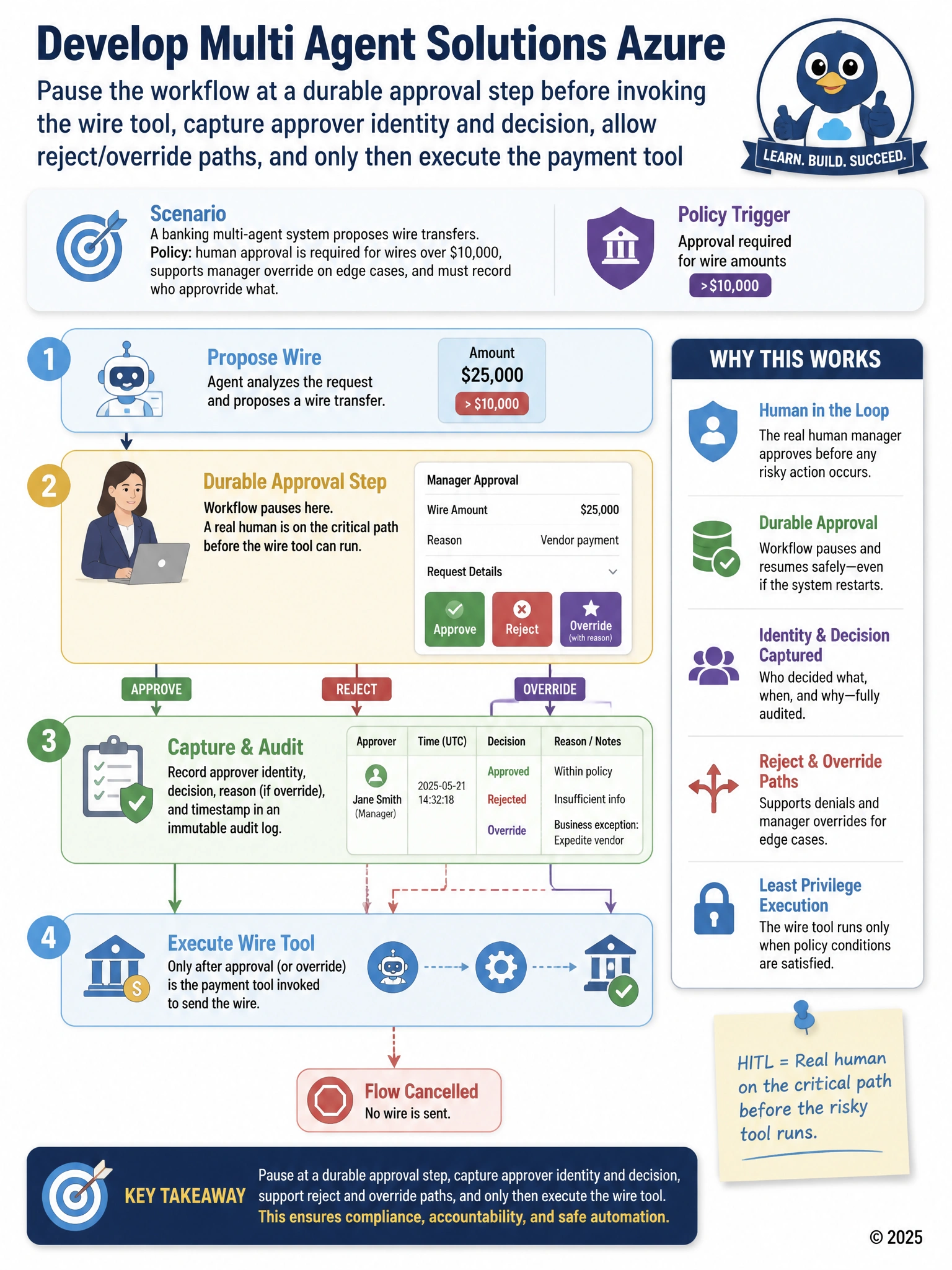
HITL means the real human is on the critical path before the risky tool runs. Durable approval step, capture identity/decision, support reject/override, then call the wire tool. Option A. Notify-after-send (B) is too late. Model-as-manager (C) is not human oversight. Optional comments (D) do not control execution.
Full Explanation
HITL processes include approval workflows, overrides, and edge-case handling. Option A implements a true control-point with auditability before side effects.
Option B inverts control and fails preventive policy.
Option C is simulated oversight, not compliance-grade human control.
Option D decouples governance from enforcement.
In practice, use durable orchestration (queues, workflow engines, or Agent Framework human approval patterns) so waits survive process restarts.
Exam tip: Approvals must gate tool calls that cause irreversible external effects.