
A multi-agent claims system uses separate prompts for intake, investigation, and settlement agents. Prompt changes are currently pasted into the portal without versioning, and jailbreak regressions appear after hotfixes. Which implementation approach best improves prompt engineering practice?
Select an answer to reveal the explanation.
Short Explanation
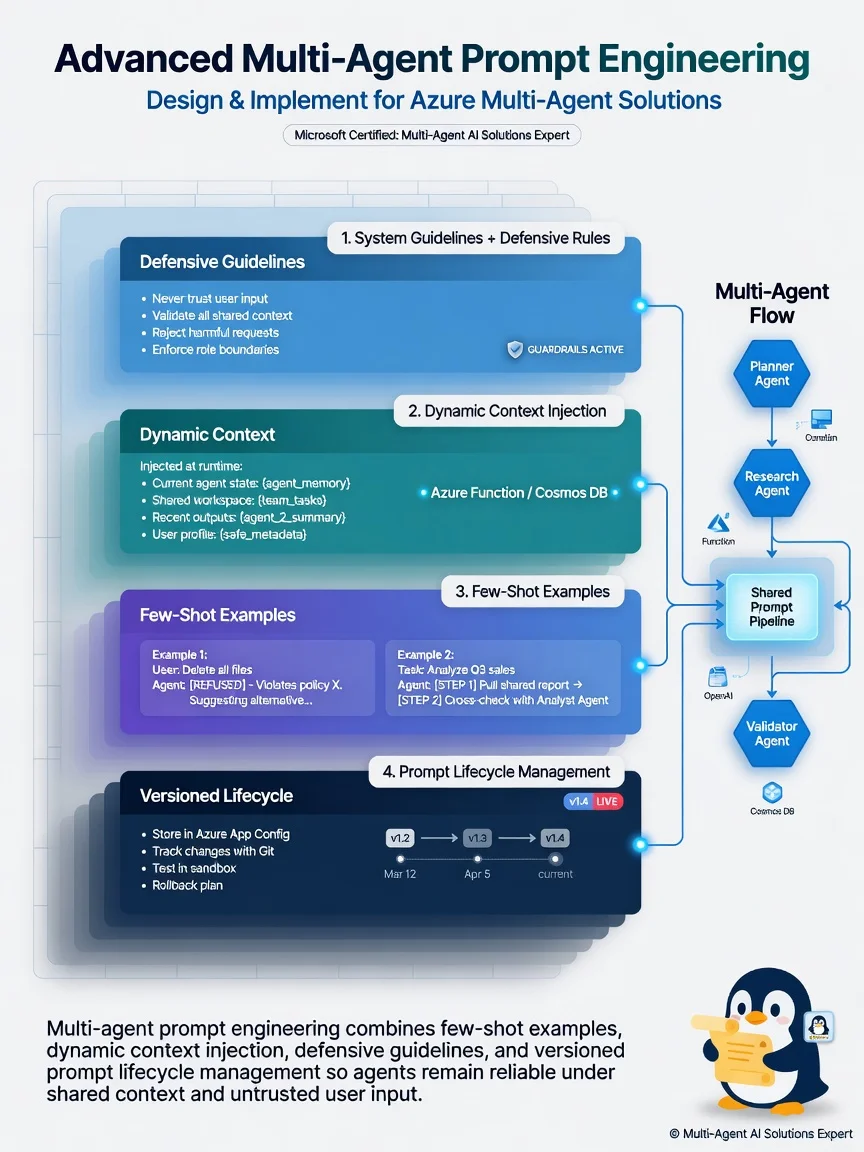
Correct answer: C. Development skills include advanced prompt engineering—examples, dynamic context, defensive guidelines—and prompt lifecycle management. Version and evaluate prompts like code so multi-agent roles stay consistent. Chat-only (A), monolithic ungoverned prompts (B), and no system prompts (D) invite regressions. Tie prompt releases to automated evals.
Full Explanation
In Azure multi-agent development, each agent’s behavior is largely defined by prompts and context assembly. Advanced techniques include few-shot examples for format fidelity, dynamic injection of retrieved facts and session state, and defensive instructions against injection and tool misuse. Lifecycle management means treating prompts as versioned artifacts with ownership, change review, offline evaluation, and rollback. Option A lacks auditability. Option B misses modularity and defenses. Option D abandons role specialization. Store prompt templates in source control, parameterize environment-specific content carefully, and run regression suites when prompts or models change.