
A multi-agent batch analytics job can spawn dozens of short-lived worker agents overnight, then drop to near-zero load by day. Requirements emphasize elastic scale, reliability, operational efficiency, security isolation, and cost control. Which compute specification approach is most appropriate?
Select an answer to reveal the explanation.
Short Explanation
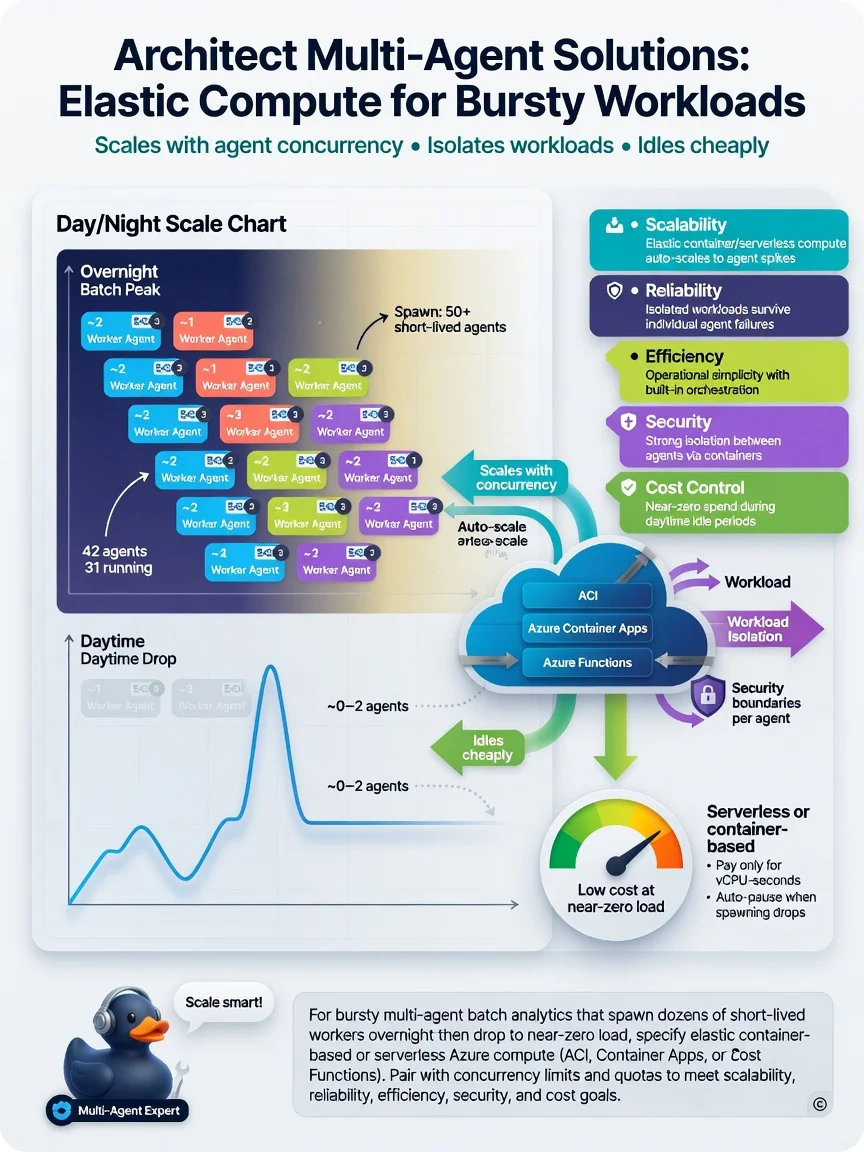
Correct answer: A. Architects specify compute components against scalability, reliability, operational efficiency, security, and cost. Bursty multi-agent spawning fits elastic container/serverless patterns on Azure—not closet servers (B), laptop ops (C), or static over-provisioning (D). Pair compute choice with concurrency controls and quotas.
Full Explanation
Technology component selection for multi-agent solutions explicitly includes compute that balances scale, reliability, efficiency, security, and cost. Nightly fan-out of worker agents is a classic elastic workload: Azure Container Apps, AKS with autoscaling, or Functions/durable orchestration patterns can scale out and in. Security isolation may use separate identities and network profiles per workload class. Option B fails elasticity and cloud ops model. Option C is unreliable. Option D wastes budget. Also design queueing/batching so model rate limits and tool backends are not overwhelmed when many agents start together.