
Token spend for a planner-heavy multi-agent graph spiked after agents began long tool-call loops. What optimization strategy should you implement?
Select an answer to reveal the explanation.
Short Explanation
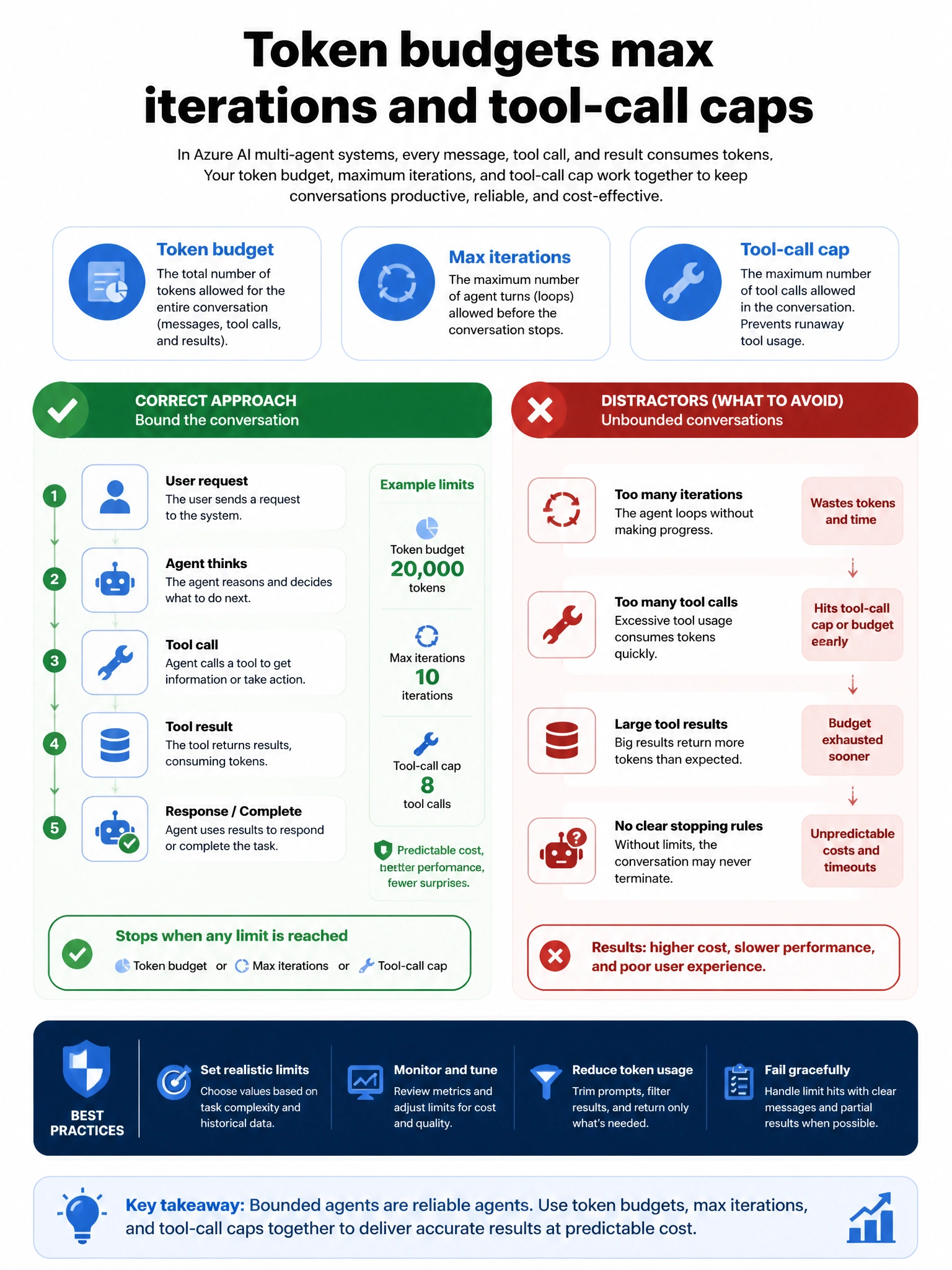
A is the token-optimization skill: token limits, loop controls, and disciplined tool calls. Planner loops without caps are a classic cost explosion. Budgets, max iterations, and tool-call ceilings stop runaway graphs; prompt trimming and deduped tools help further. B no limits is how bills explode. C intentional history duplication is sabotage. D blind cost is not optimization. Measure tokens per workflow and enforce controls in orchestration middleware.
Full Explanation
Correct Answer — A
Optimizing token usage includes token limits, loop controls, and managing tool-call volume. Caps on iterations and tools, plus lean prompts, reduce spend from runaway multi-agent loops.
Why B is wrong: Unlimited loops maximize cost and failure risk.
Why C is wrong: Duplicating histories inflates tokens without benefit.
Why D is wrong: Turning off measurement prevents cost management.
Exam tip: Loop controls are as important as model choice for token cost.