
A planner agent must choose among dozens of operational tools depending on the incident type. Hard-coding a fixed tool list in every prompt is unmaintainable. Which approach best builds the tool ecosystem?
Select an answer to reveal the explanation.
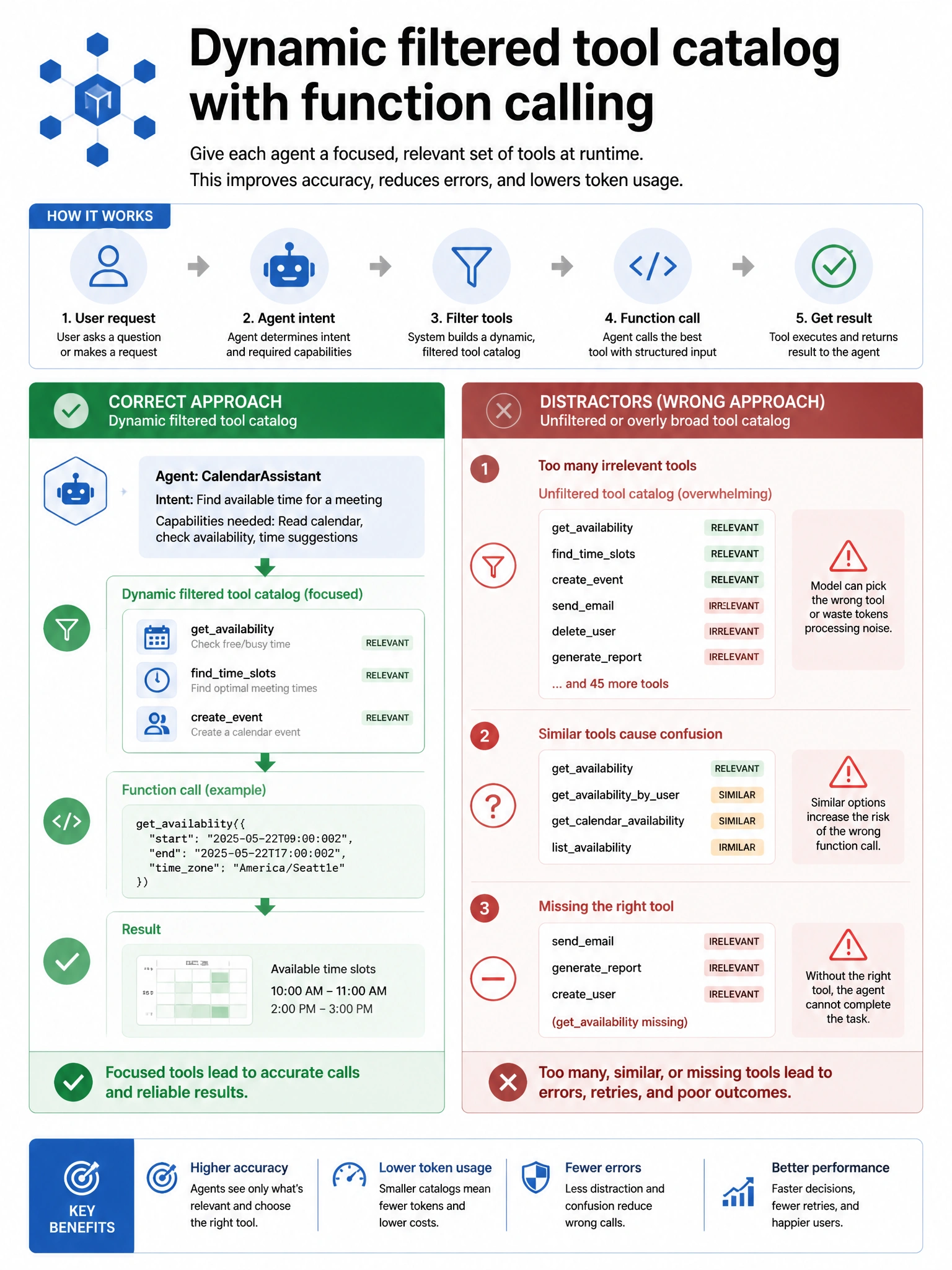
Short Explanation
D is right. Tool ecosystems in multi-agent Azure solutions rely on function calling with specified tool use and dynamic tool selection—not dumping every OpenAPI into the prompt. Filter the catalog by incident class, validate arguments, execute allow-listed tools only. A free-text shell is unsafe and unautomated. B admin-everything violates least privilege. C full OpenAPI every turn burns tokens and confuses selection. Dynamic tool use keeps planners accurate as the catalog grows.
Full Explanation
Correct Answer — D
Building tool ecosystems includes function calling, specified tool use, and dynamic tool use. Filtering available tools by context, validating arguments, and enforcing allow lists scales better than static mega-prompts or unconstrained privileges.
Why A is wrong: Free-text shell commands lack structured calling, validation, and safe automation.
Why B is wrong: Admin privileges on every agent violate least privilege.
Why C is wrong: Unfiltered full OpenAPI injection is costly and degrades tool selection.
Exam tip: Dynamic catalogs + validation beat “all tools always.”