
A support multi-agent system underperforms on company-specific resolution macros. Leaders ask about fine-tuning. Which strategy best aligns with multi-agent development guidance?
Select an answer to reveal the explanation.
Short Explanation
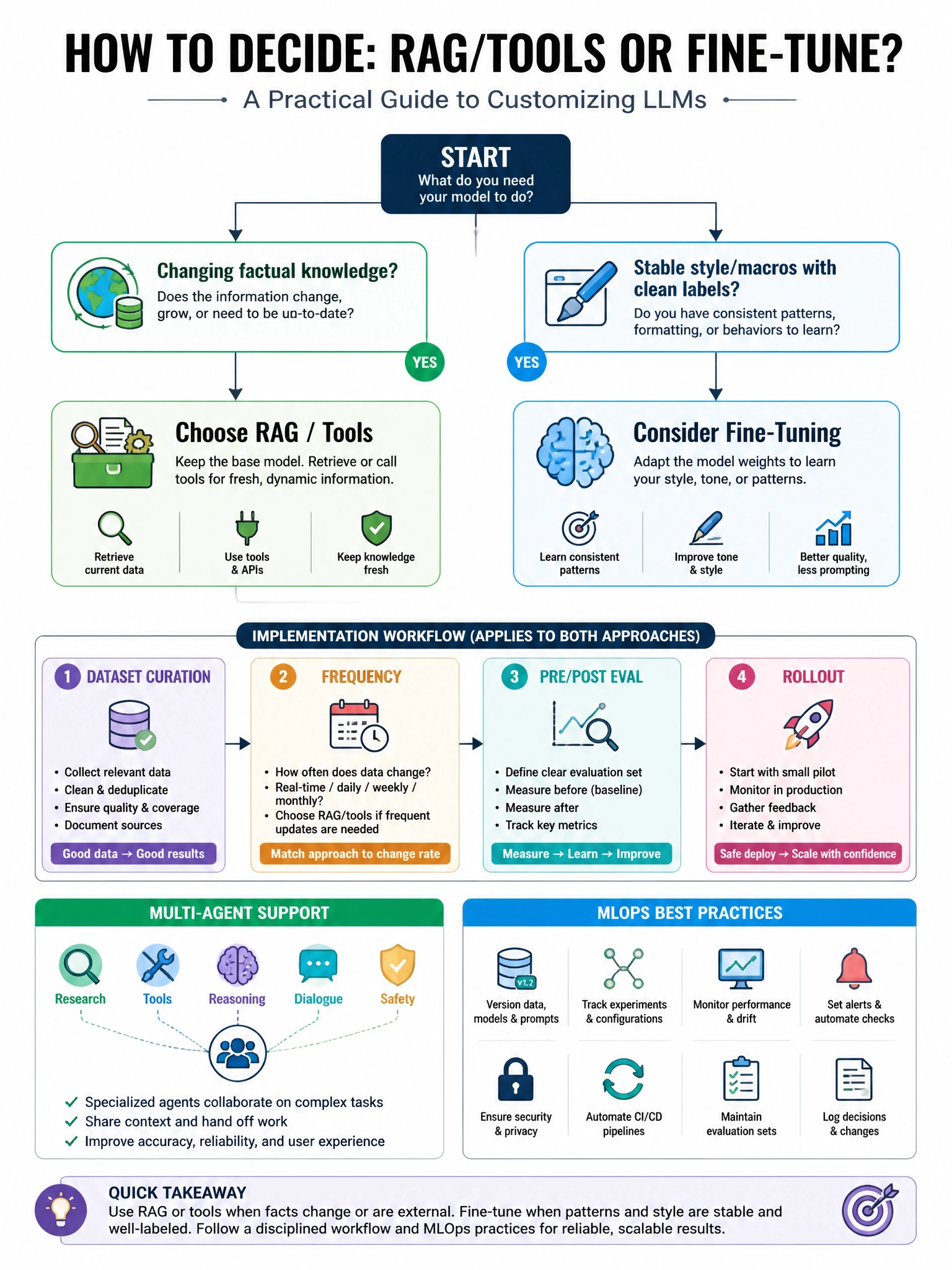
A is the disciplined approach: fine-tune when data and task fit, curate examples, set frequency, evaluate agent impact, and keep RAG/tools for volatile knowledge. B is unsafe and noncompliant. C mismatches modality/task. D skips gates. Multi-agent fine-tuning is a strategy—not a reflex—and must respect data lifecycle and eval loops.
Full Explanation
A is correct because developers may design fine-tuning strategies for agents/models including data selection and frequency, while recognizing RAG and tools often handle enterprise knowledge better when content changes quickly. B is incorrect: ungoverned training on sensitive logs creates compliance risk. C is incorrect: unrelated image fine-tunes do not address text resolution macros. D is incorrect: shipping without evaluation risks regressions across the agent mesh. Measure specialist task success, not only generic loss curves.