
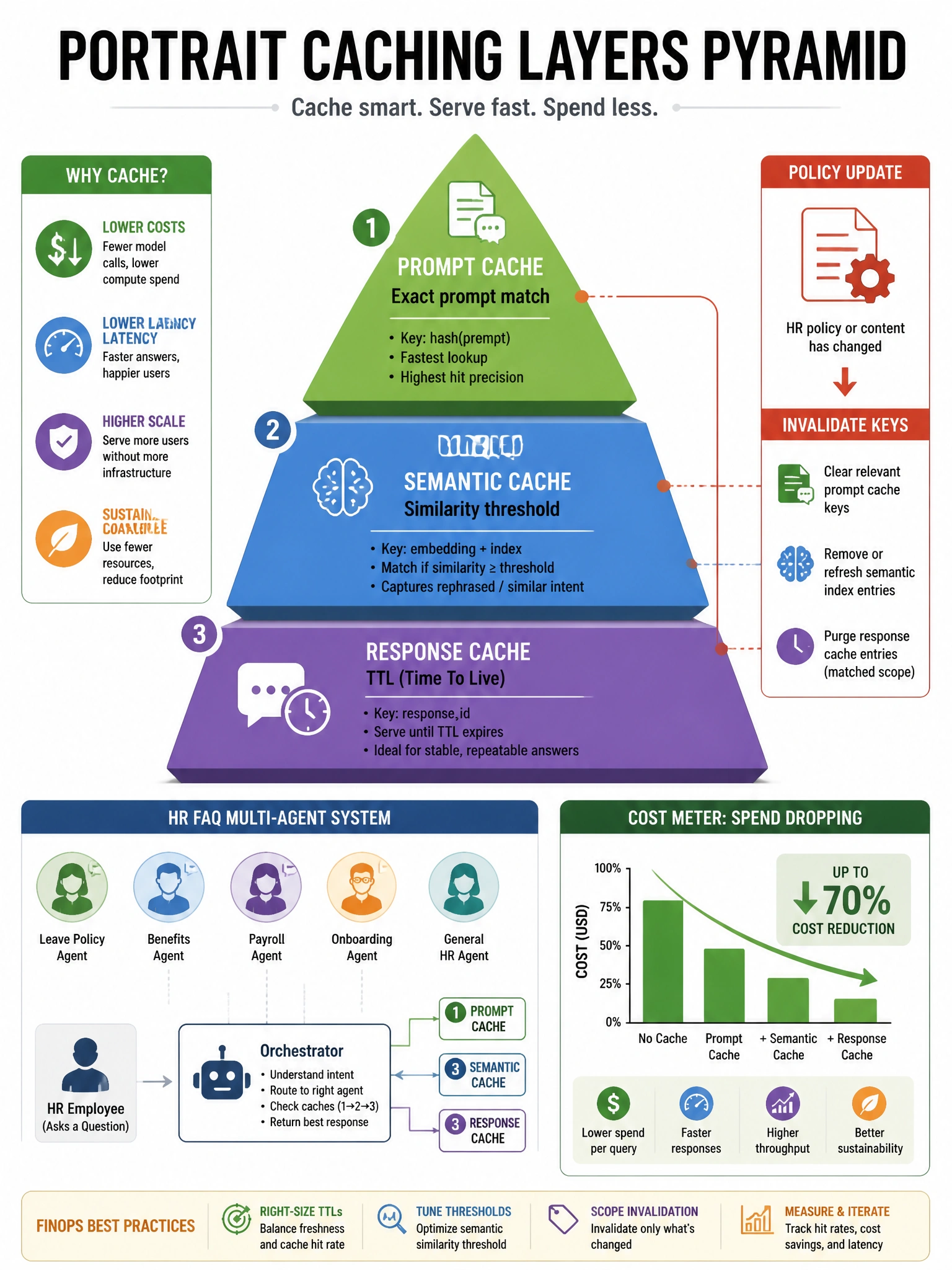
A multi-agent HR FAQ system repeatedly answers near-identical policy questions, driving high token cost. You must design caching without serving stale policy after updates. Which caching strategy is most appropriate?
Select an answer to reveal the explanation.
Short Explanation
D covers the triad: prompt caching, semantic caching, and response caching—with lifecycle controls so policy updates invalidate stale answers. That’s the caching strategy skill in multi-agent development. A wastes money. B misses the point. C is a collision-prone toy key. Design cache keys that include policy version or content hash, and monitor hit rate versus freshness incidents.
Full Explanation
D is correct because multi-agent solutions should implement caching strategies including prompt caching, semantic caching, and response caching, balanced with invalidation for changing knowledge. A is incorrect: zero caching ignores cost/latency optimization. B is incorrect: on-device weight caching does not address repeated FAQ completions. C is incorrect: weak keys cause collisions and wrong answers. Tie semantic cache entries to knowledge version IDs and enforce TTLs for regulated HR content.