
Your multi-agent travel system calls a third-party inventory API that intermittently returns 503s and occasionally returns schema-valid JSON with nonsensical prices. Which tool integration design best improves resilience and quality?
Select an answer to reveal the explanation.
Short Explanation
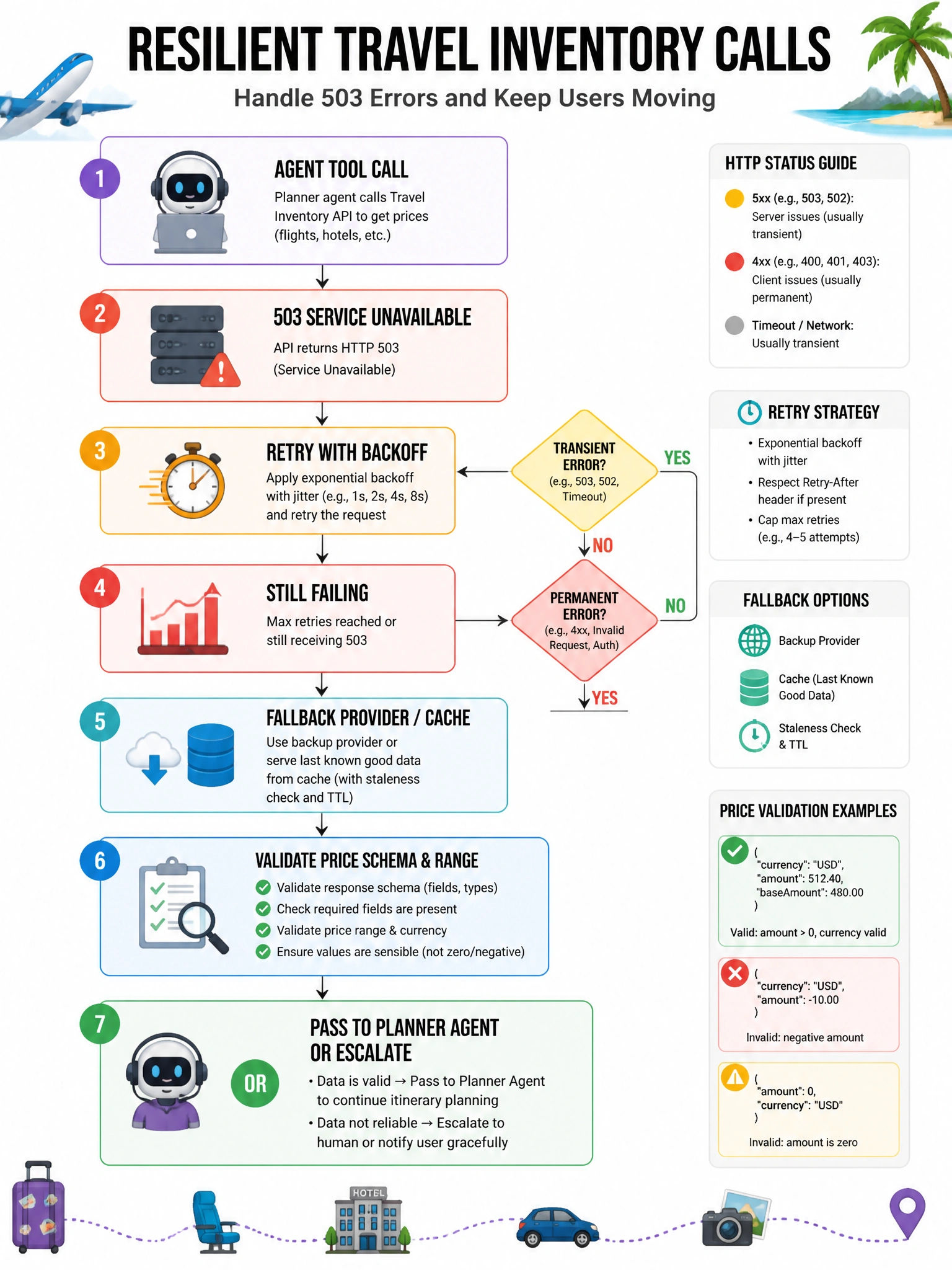
C is how you productionize tools. Transient 503s get retry/backoff; fallbacks keep the workflow useful; the orchestrator sees structured errors; and result validation catches “successful” nonsense prices before planning agents act. A causes confident wrong answers. B is brittle UX. D confuses HTTP success with semantic correctness. Tool ecosystems need error handling, fallbacks, and quality checks—explicitly called out in AI-500 develop skills.
Full Explanation
C is correct because developers must design tool error-handling and fallback mechanisms and implement tool result validation and quality checks. Resilience patterns (retry, alternate provider, cache) plus semantic validation prevent both outages and garbage-in cascades across agents. A is incorrect: bypassing tools for parametric memory undermines accuracy for live inventory. B is incorrect: hard failure without recovery harms reliability SLOs. D is incorrect: HTTP 200 does not guarantee business-valid payloads. Validate ranges, currency, and required fields; emit telemetry on validation failures.