
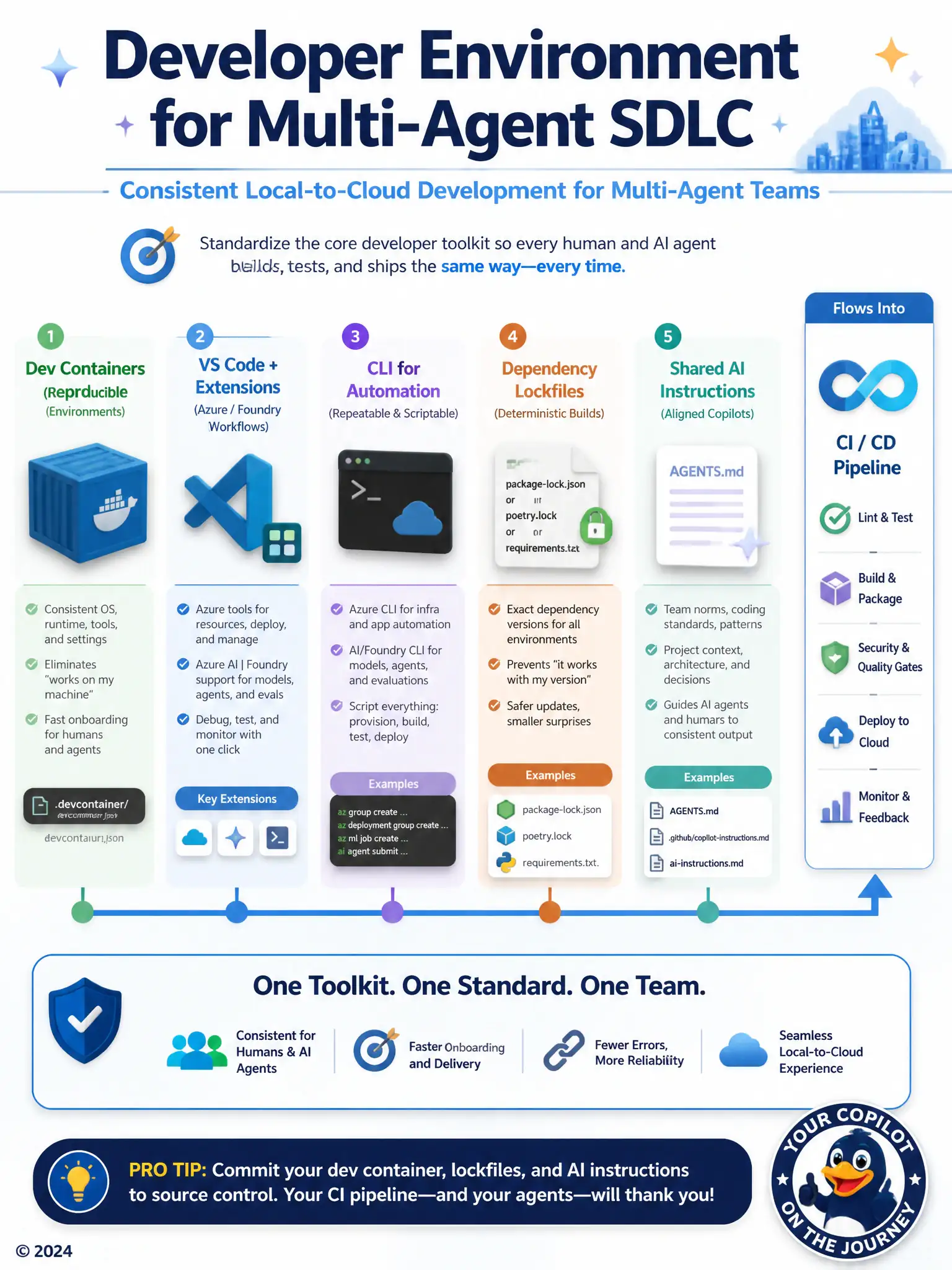
A multi-agent engineering team wants consistent local-to-cloud SDLC: reproducible dev environments, IDE support, CLI automation, dependency control, and shared AI coding instructions. Which technology-component specification best supports this?
Select an answer to reveal the explanation.
Short Explanation
You need reproducible dev containers, supported IDE extensions, CLI automation, dependency lockfiles, and shared AI instruction files so the whole team’s agents stay aligned. That’s the only choice that gives you consistent local-to-cloud SDLC hygiene.
Full Explanation
The correct specification standardizes on dev containers or equivalent reproducible environments, VS Code or supported IDE extensions for Azure/Foundry workflows, CLI automation, dependency lockfiles, and shared AI instruction files. That checklist supports consistent local-to-cloud SDLC for multi-agent work. The hand-installed global packages, no lockfiles, and direct production-agent edits option creates drift and unsafe changes. The Notepad-only, no-IDE option removes needed IDE support and productivity. The no-CLI, production-portal click-ops option removes automation and forces unsafe operations. Exam tip: map SDLC agent tooling to containers, IDE extensions, CLI, deps, AI instructions.