
An architect reviews RBAC for a multi-agent solution. The research agent only needs read access to a knowledge index and a web-fetch tool. The fulfillment agent needs to create support tickets. Currently both agents use a role that can read secrets, write tickets, and delete indexes. What change best applies least privilege?
Select an answer to reveal the explanation.
Short Explanation
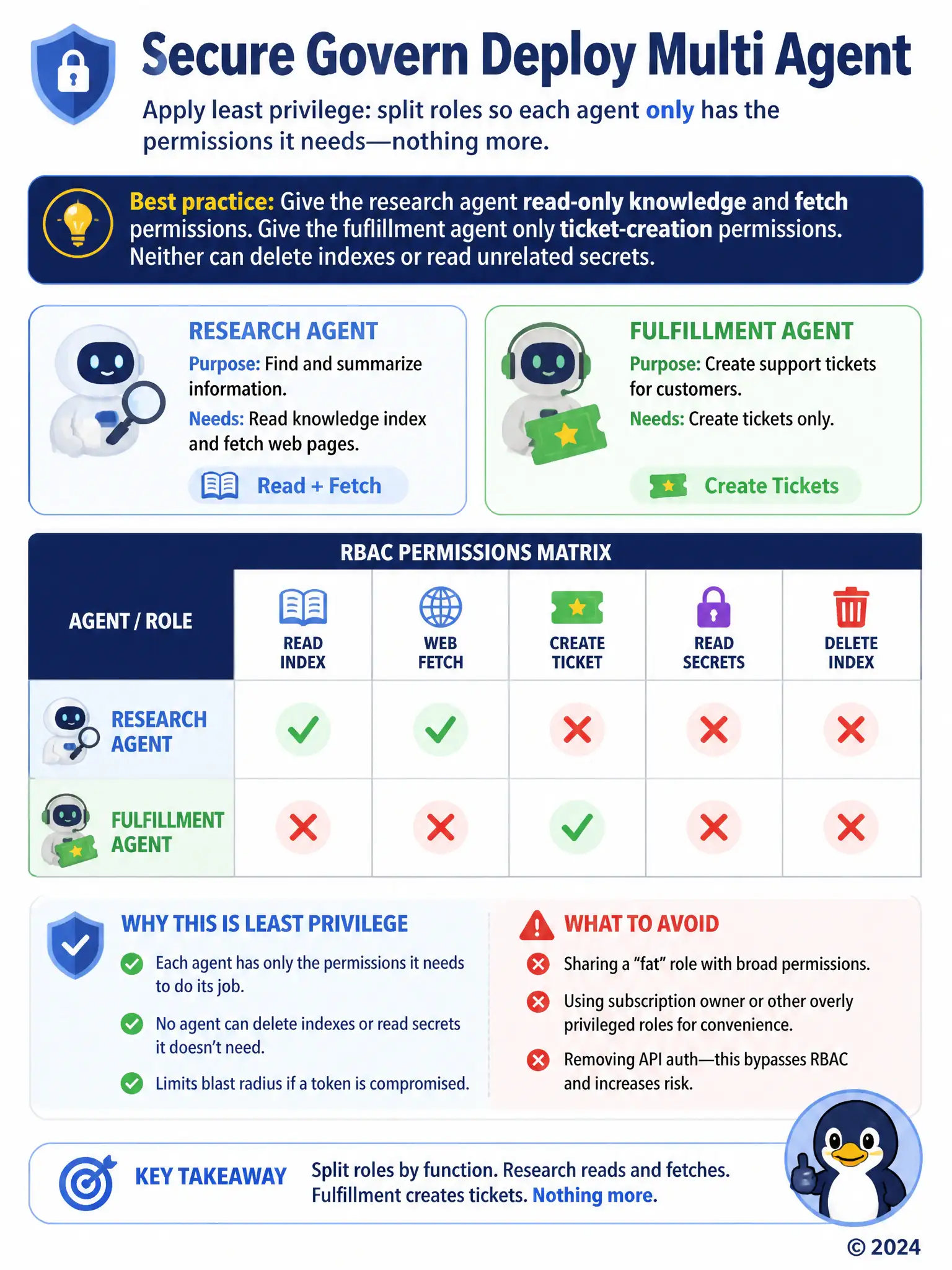
Least privilege means you give the research agent only read access to the knowledge index and the web-fetch tool, and you give the fulfillment agent only ticket-creation rights. You don't keep a fat shared role that can delete indexes or read unrelated secrets, because that's how breaches spread.
Full Explanation
Split roles so the research agent gets read-only knowledge and fetch permissions while fulfillment gets only ticket-creation permissions, with neither able to delete indexes or read unrelated secrets. Secure multi-agent design requires identity-based access, RBAC, and tool permission boundaries aligned to each agent's scope. Separating research and fulfillment roles eliminates unnecessary rights such as secret read and index delete from agents that never need them. Leaving the shared privileged role unchanged for faster onboarding is incorrect because convenience does not justify standing privileged access that enables lateral damage. Granting both agents subscription owner rights for future flexibility is incorrect because owner rights maximize blast radius and violate least privilege. Removing ticket API authentication to avoid RBAC is incorrect because it eliminates authorization rather than refining it.