
During month-end, a multi-agent finance close system must process thousands of entity reconciliations. Naively spawning unlimited agent instances exhausts model rate limits. What should you implement?
Select an answer to reveal the explanation.
Short Explanation
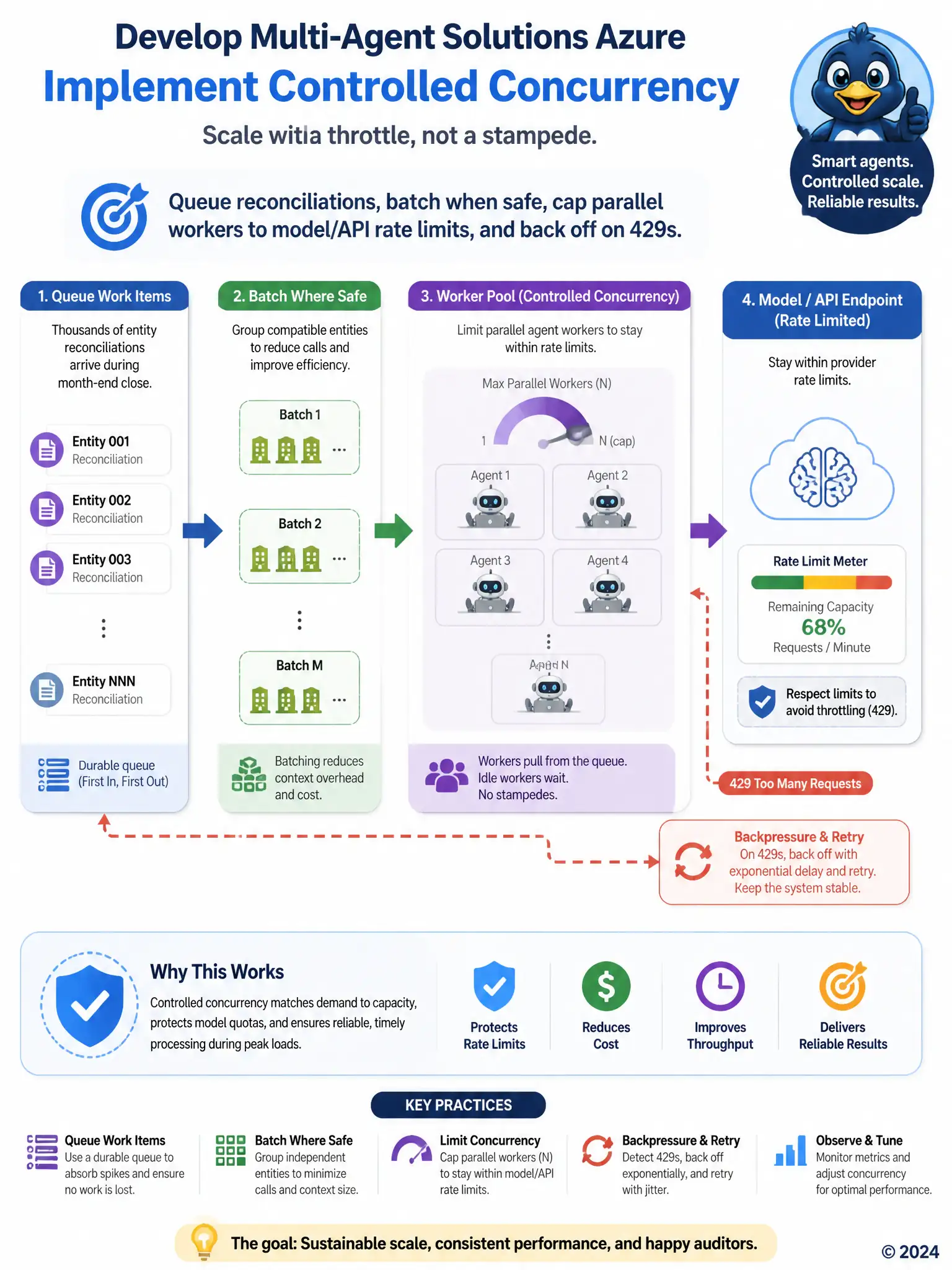
Scale with a throttle, not a stampede. Queue reconciliations, batch when safe, cap parallel workers to model/API rate limits, and back off when throttled. Unlimited spawning melts quotas, canceling automation fails the business, and one mega-context agent for the world is slow and brittle.
Full Explanation
This tests scaling and control of multi-agent spawning, batching, and concurrent execution. The controlled-concurrency approach balances throughput with platform limits by queuing work items, using worker pools, batching where safe, and applying backpressure or retry when throttled. Spawning one agent process per ledger line with no concurrency controls causes thundering herds and cascading failures. Disabling month-end processing and waiting for manual spreadsheets rejects the automation goal. Serializing every entity worldwide through a single agent with a multi-year context window underutilizes parallelism and risks context and quality issues. On Azure, pair Service Bus or Storage queues with worker containers and Foundry/Azure OpenAI rate-limit-aware clients. Exam tip: Concurrency limits are part of orchestration design, not an afterthought.