
A team updates system prompts for three specialist agents weekly. Last month a prompt edit improved tone but increased incorrect tool arguments. You need an evaluation practice that prevents similar regressions. What should you do?
Select an answer to reveal the explanation.
Short Explanation
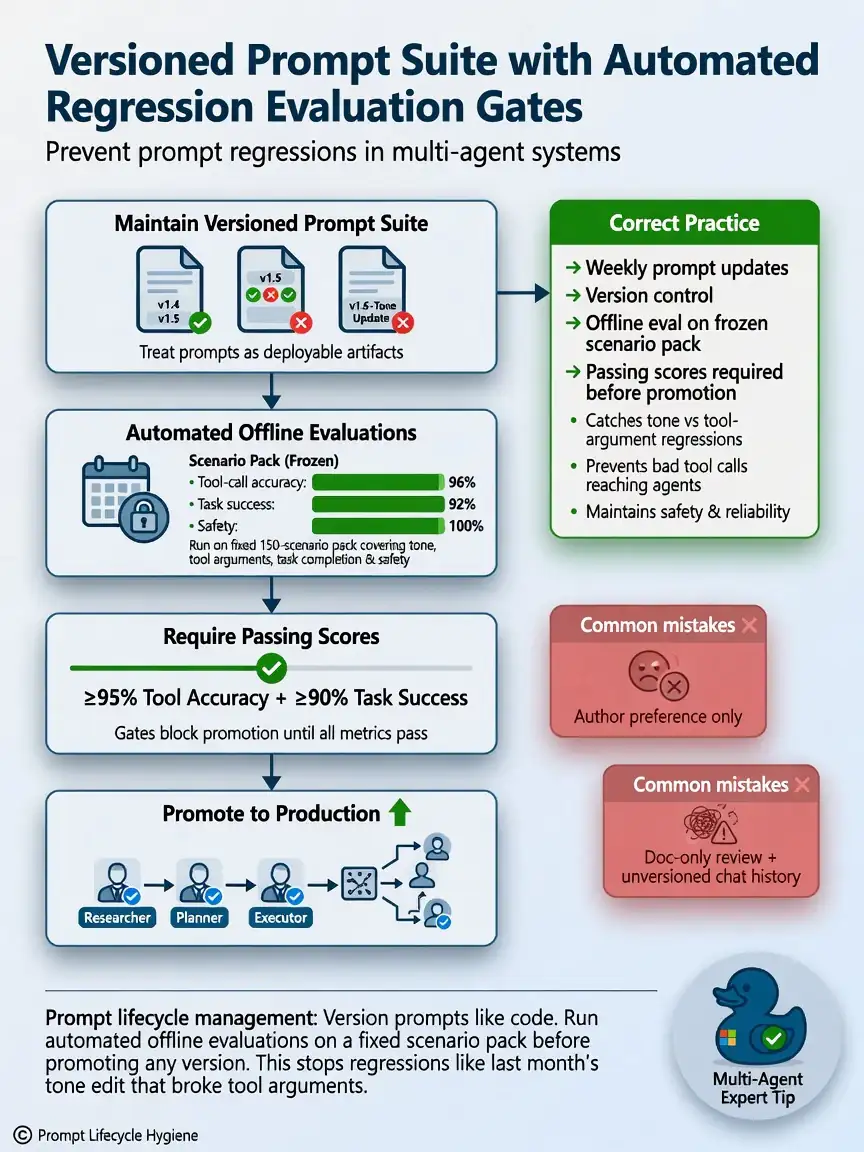
You need to treat prompts like deployable code: keep them versioned, run automated offline evals on a fixed scenario pack, and only promote versions that pass tool-call accuracy, task success, and safety checks. Author preference, doc-only review, or stuffing prompts into chat history won't catch runtime regressions like bad tool arguments.
Full Explanation
Correct answer: Maintain a versioned prompt suite with automated offline evaluations (tool-call accuracy, task success, safety) on a fixed scenario pack, and require passing scores before promoting prompt versions. Prompt lifecycle management requires versioned prompts, automated offline evals on representative scenarios, including tool-call correctness, and promotion gates. That catches tone-improving edits that break tool arguments. Shipping prompt edits directly to production based on author preference only lacks regression control. Evaluating prompts only by reading them in a document review meeting without runtime tests does not exercise tool calls or multi-agent runtime behavior. Storing prompts in chat history messages instead of controlled configuration so they cannot be versioned prevents controlled rollout and rollback. Exam tip: Version prompts plus automated scenario pack evals before promote.