
An enterprise multi-agent platform must let planning agents discover and call external tools from multiple teams and must also allow a partner’s independently hosted agent to collaborate on shared cases. Which protocol selection best matches these integration needs?
Select an answer to reveal the explanation.
Short Explanation
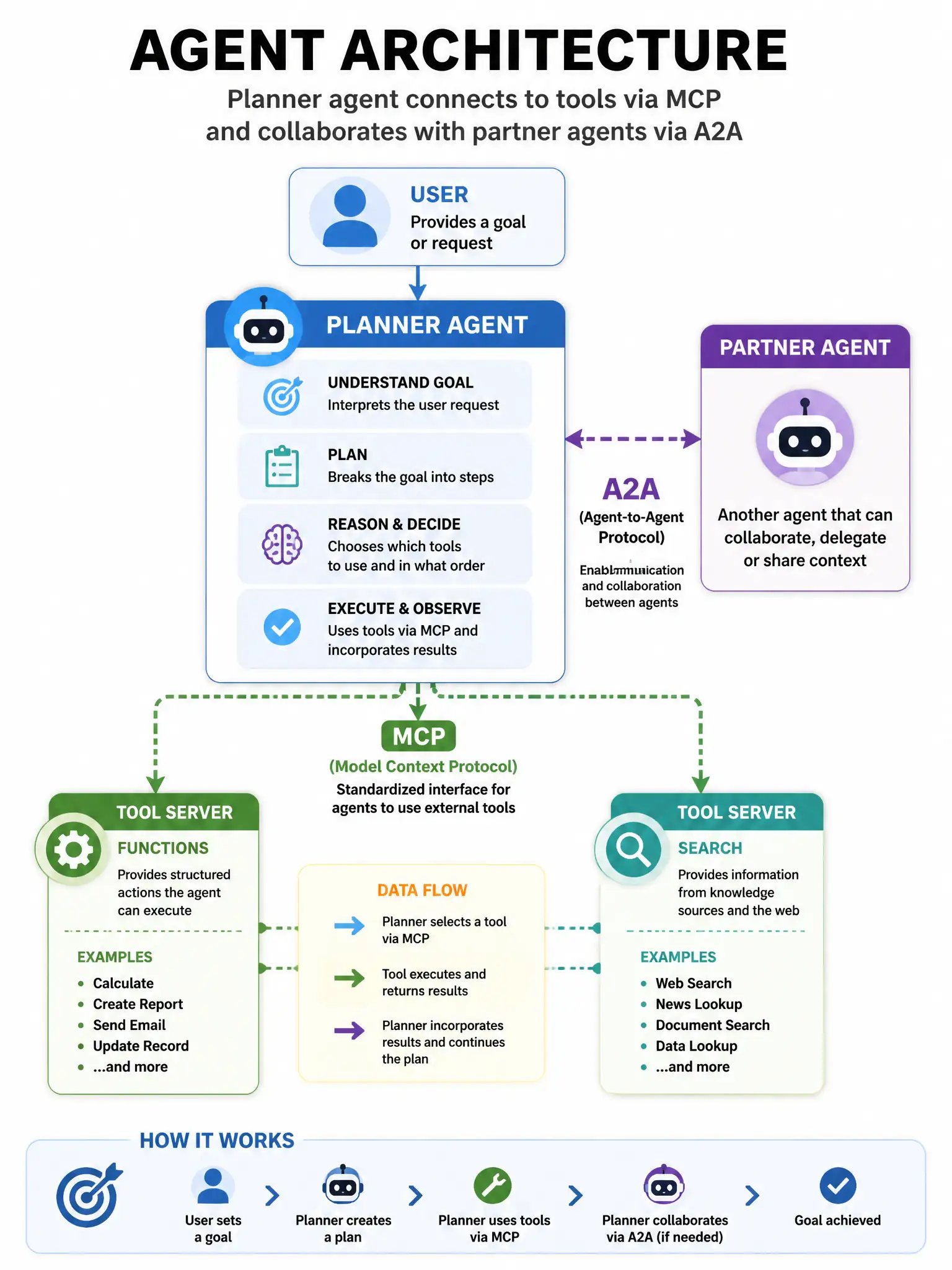
You need Model Context Protocol for tools and knowledge, and Agent2Agent for secure peer-agent collaboration. Don't use ad-hoc SSH JSON, hourly FTP drops, or SMTP control channels—they lack modern contracts, discovery, and security patterns. Specify protocols during architecture so identity, schemas, and observability can be designed around them.
Full Explanation
Architects must specify appropriate protocols for communication among agents and between agents and other components. Model Context Protocol standardizes how hosts connect to tool and data servers, including Azure Functions, Logic Apps, and API Management implementations. Agent2Agent addresses agent-to-agent interoperability when systems are not a single monolith. The proprietary ad-hoc JSON over unmanaged SSH tunnels with no standard tool or agent contracts creates brittle, non-auditable integrations. The hourly FTP prompt-text exchange and the SMTP email primary control channel are unsuitable real-time control planes for tool invocation and multi-agent collaboration. In design docs, map which interactions are tool calls (Model Context Protocol) versus peer agent collaboration (Agent2Agent), including authentication methods and permission boundaries on each channel.