
Over six weeks, a support multi-agent’s automated evaluation suite shows rising policy-violation rates even though code deploys were frozen. Knowledge articles were updated daily by content owners. What monitoring strategy best detects and explains this pattern?
Select an answer to reveal the explanation.
Short Explanation
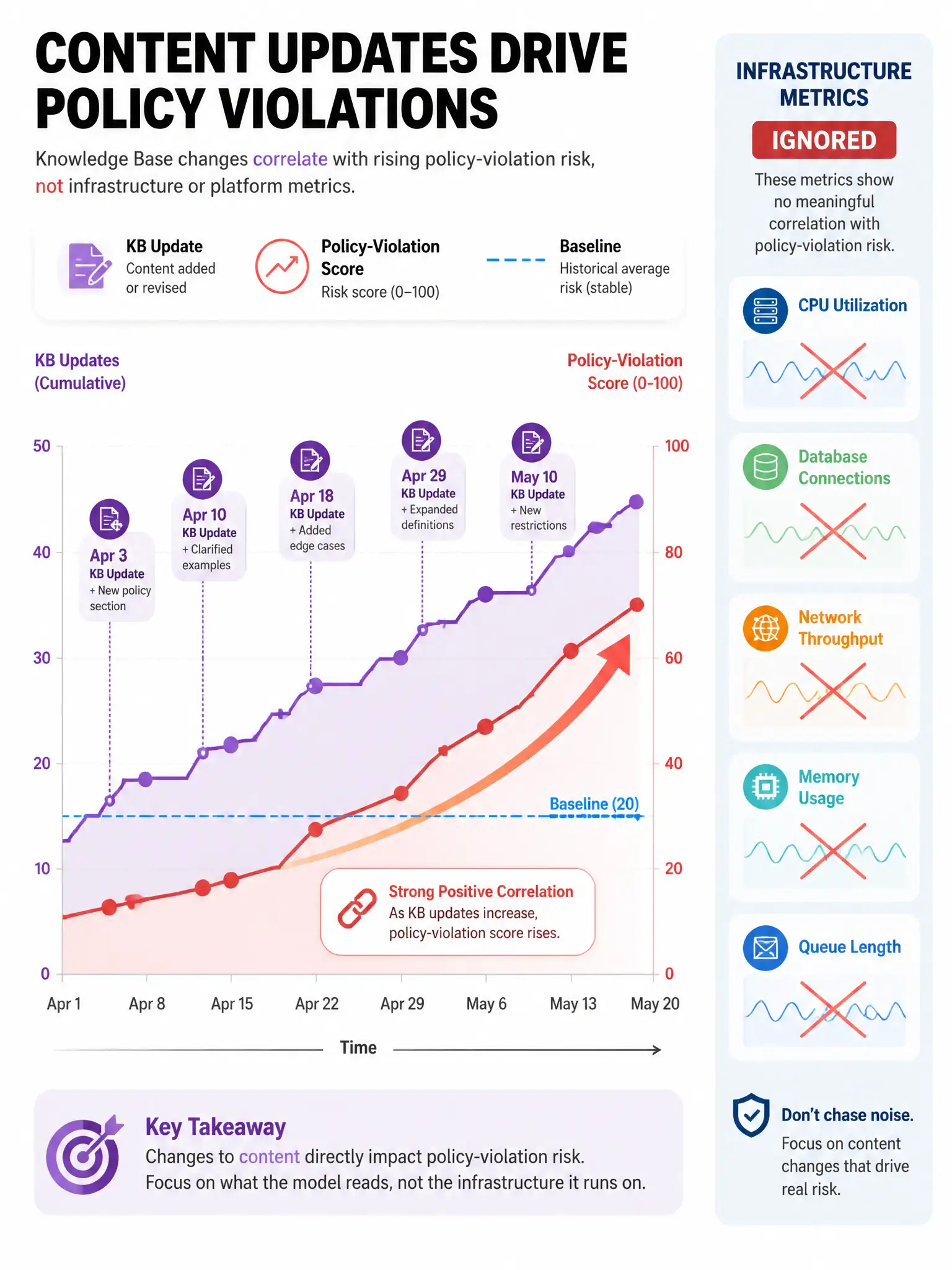
Code freezes don't freeze quality when knowledge changes under the agents. You need behavioral drift and quality-regression monitoring: versioned eval sets, scores versus a pinned baseline, and correlation of drops with knowledge updates plus model/prompt versions. Treat content releases like model releases—evaluate before and after.
Full Explanation
Multi-agent monitoring must include behavioral drift and quality regression detection, not only infrastructure metrics. With frozen code, daily knowledge updates can still shift retrieval context and agent answers into policy violations. The versioned evaluation dataset strategy establishes versioned evaluations, baseline comparison, and correlation with knowledge and model/prompt versions, enabling root cause analysis. Monitoring only VM CPU on the jump box used by operators measures infrastructure, not answer quality. Tracking only the count of open pull requests in the agent monorepo measures SDLC activity, not behavior. Alerting only when the Azure Active Directory sign-in failure rate exceeds 5% measures identity health, not policy-violation trends. Those signals might be useful operations signals, but they won't explain rising policy violations after article edits. Best practice is automated evaluation on each significant knowledge publish, with remediation paths such as rolling back articles, tightening guardrails, or adjusting retrieval filters.