
Poison/dead-letter queue depth for document AI jobs is climbing. What operational response fits?
Select an answer to reveal the explanation.
Short Explanation
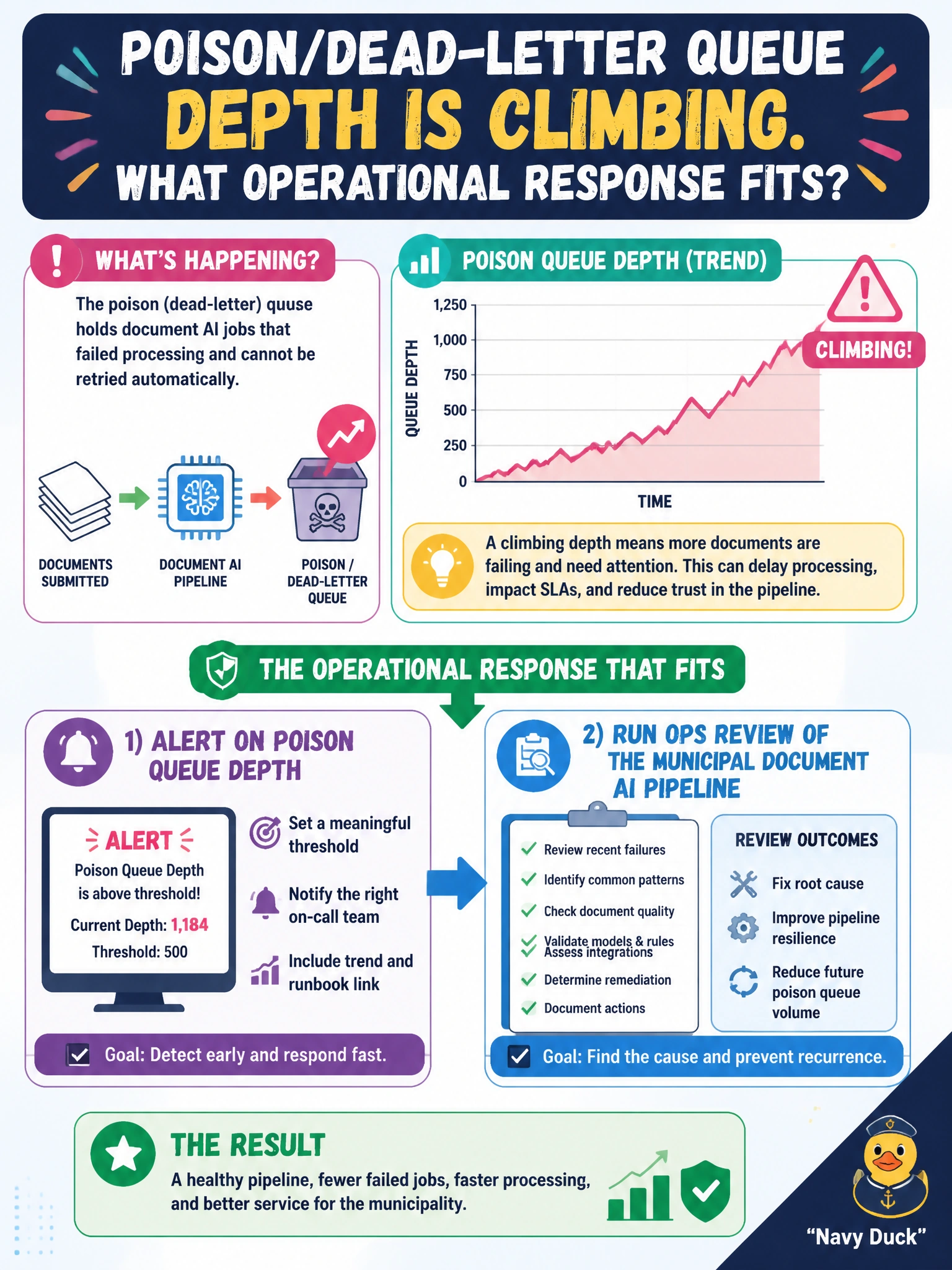
A rising poison pile is the red light on the document desk—alert on depth and dig into why those AI jobs keep dying.
Full Explanation
Climbing poison/dead-letter queue depth for document AI jobs is an operational signal: alert on depth and run an ops review of why municipal document jobs fail (schema errors, model throttling, corrupt PDFs, auth drift). Triage restores the pipeline and prevents silent growth of unprocessed resident or case documents.
Ignoring queue depth metrics discards the primary ops signal for AI messaging health. Deleting the namespace whenever depth rises destroys in-flight civic work and evidence. Increasing max delivery count to infinity delays visibility of poison messages and can amplify repeated harmful processing without ever surfacing a durable failure record for clerks or auditors.
Exam caveat: max delivery count and dead-letter queues exist so poison messages surface; monitoring depth is part of reliable Service Bus operations for AI workloads. Remediation may include fixing handlers, repairing payloads, and selective resubmit—not infinite retries or namespace deletion.
Operational check: create an alert on dead-letter message count for the document AI queue, inject a deliberate poison payload, confirm alert fire, inspect DLQ reason properties and Function logs, fix the root cause, and resubmit only sanitized messages while depth returns to baseline.