
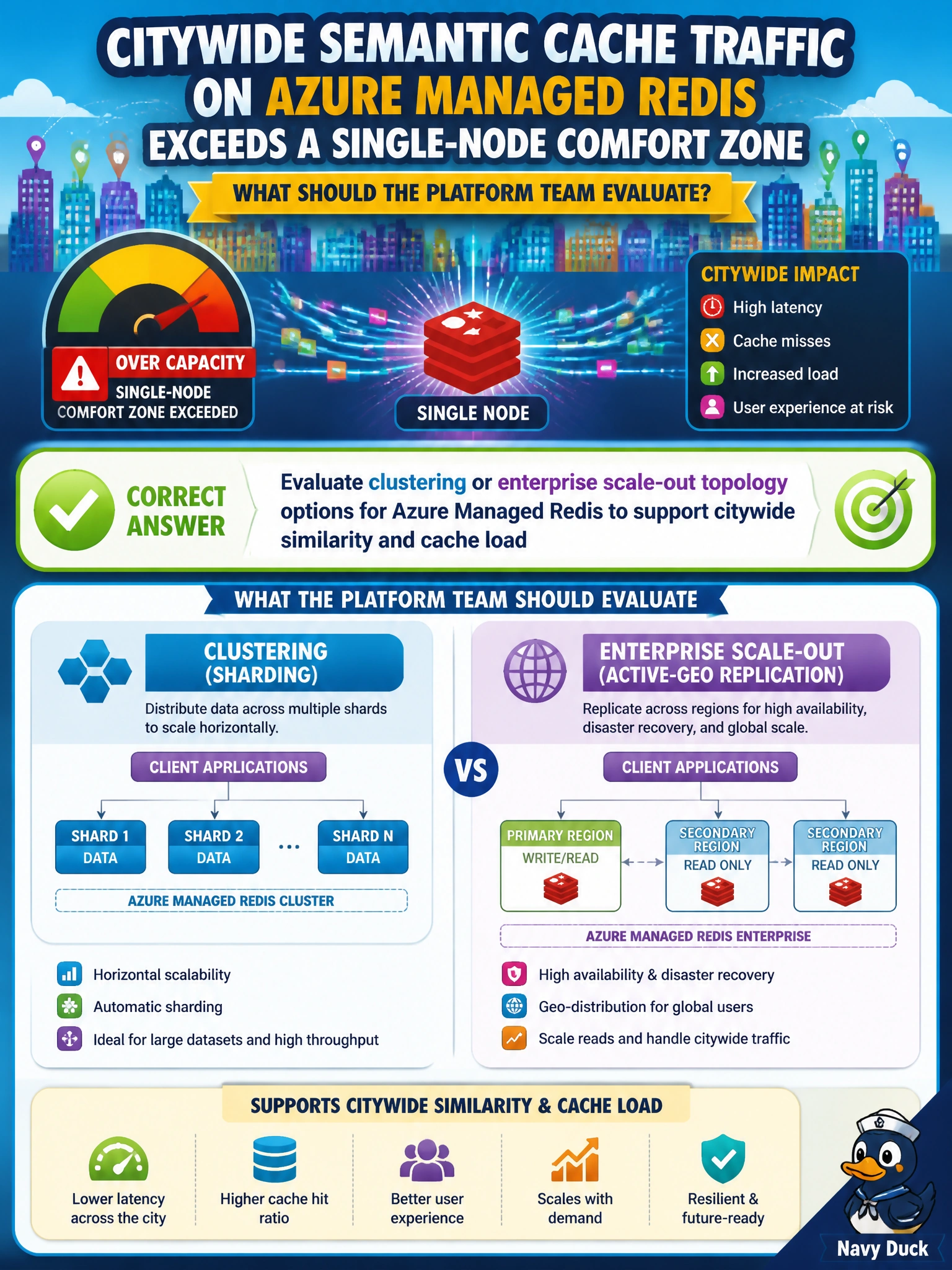
Citywide semantic cache traffic on Azure Managed Redis exceeds a single-node comfort zone. What should the platform team evaluate?
Select an answer to reveal the explanation.
Short Explanation
When your whole city leans on one Redis mailbox, clustering adds more sorting rooms so semantic cache and similarity traffic can share the load instead of overwhelming one node. You can evaluate Azure Managed Redis scale-out to keep the shared civic cache serving citywide demand.
Full Explanation
When citywide semantic cache traffic on Azure Managed Redis exceeds a single-node comfort zone, the platform team should evaluate clustering or enterprise scale-out topology options so similarity and cache load can grow with municipal demand across departments. Keeping a single undersized Redis instance and rejecting additional municipal traffic protects the node by denying service rather than scaling the shared civic cache platform. Replacing Redis with emailed spreadsheets of FAQ answers for every department abandons low-latency shared caching for a manual, non-queryable process that cannot serve semantic similarity. Running one Redis process inside each user’s browser with no shared citywide cache eliminates cross-user and cross-service reuse, so it cannot support a municipal semantic cache used by bots and APIs. Exam caveat: scale-out evaluation includes sharding, memory tier, and client configuration; topology choices must fit the expected peak load. Operationally, trend used_memory, ops/sec, and latency under peak civic load, pilot a clustered or enterprise topology in non-production, and validate client connection strings and failover before citywide cutover.