
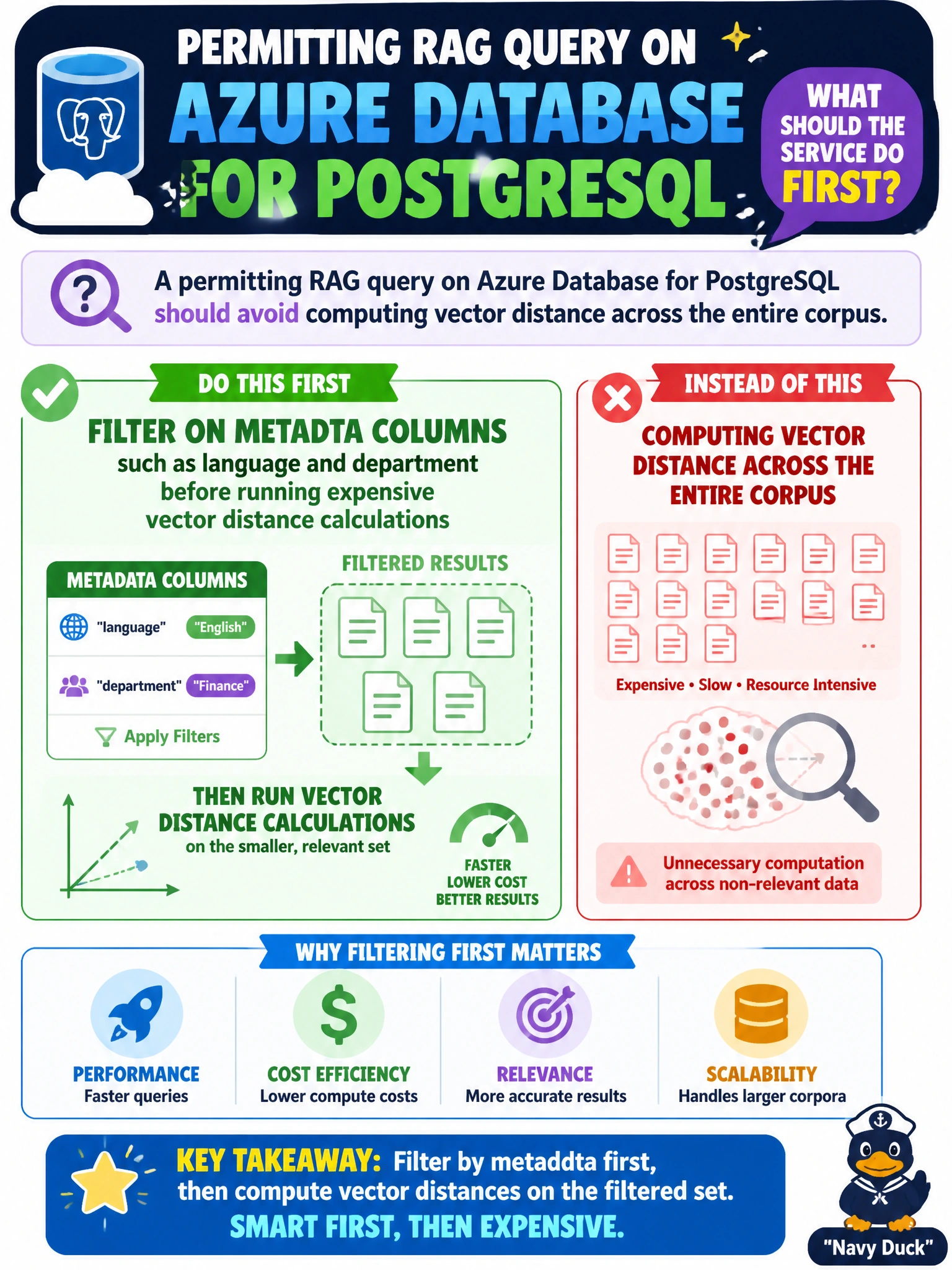
A permitting RAG query on Azure Database for PostgreSQL should avoid computing vector distance across the entire corpus. What should the service do first?
Select an answer to reveal the explanation.
Short Explanation
Filter first is ‘check the department and language tags before measuring every bookshelf with a ruler’—cheap metadata cuts the pile, then pgvector does the heavy distance work.
Full Explanation
Permitting RAG queries on Azure Database for PostgreSQL should not pay vector-distance cost across the entire corpus when cheap metadata can shrink the candidate set first. Filtering on columns such as language and department before expensive vector distance calculations reduces compute and latency for municipal retrieval. Always computing distance against every embedding row before any metadata filters wastes CPU and I/O on rows that would have been excluded by ordinary predicates. Dropping metadata columns so only raw vectors remain removes the selective filters civic RAG needs for multi-department corpora. Moving all filtering into client-side JavaScript after downloading the full vector table shifts an enormous dataset to the browser, increases latency and exposure, and abandons server-side query planning. Exam caveat: “filter then vector” is the performance pattern; exact operator order still depends on indexes and planner stats, but the design intent is metadata-first reduction. Operationally, ensure language/department indexes exist, write queries that apply those predicates before ANN distance work, and compare EXPLAIN and latency with versus without the filters on representative permitting loads.