
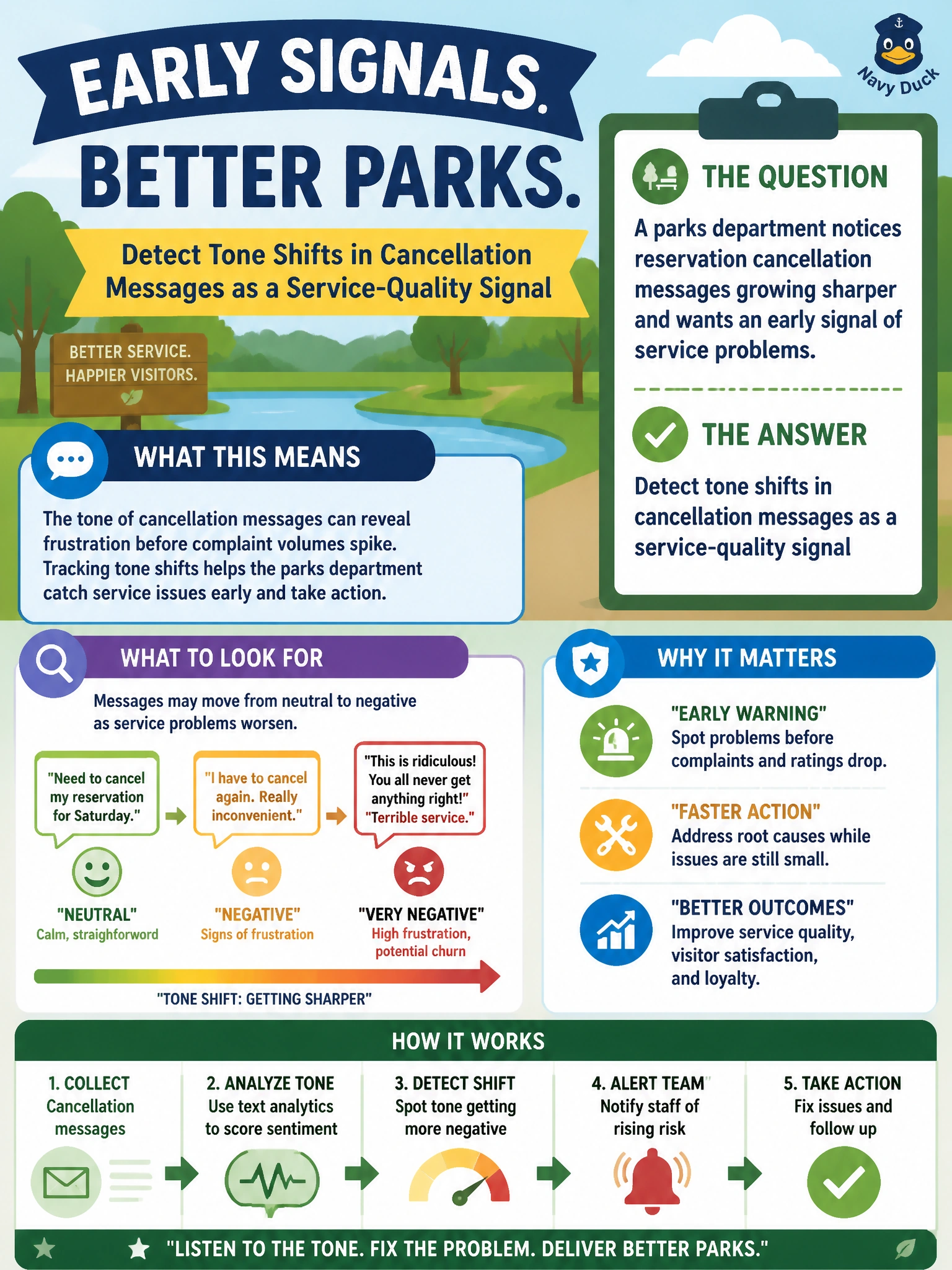
A parks department notices reservation cancellation messages growing sharper and wants an early signal of service problems. Which analysis should they apply to those messages?
Select an answer to reveal the explanation.
Short Explanation
Cancellations that suddenly sound icy are like smoke before the fire alarm. Tone detection on those messages tips parks that something in the service experience is going sideways. You'll miss that shift if you're only extracting key phrases, identifying named entities, or summarizing key concerns, since none of those track growing sharpness.
Full Explanation
The parks department notices reservation cancellation messages growing sharper and wants an early signal of service problems. Detecting tone shifts in those cancellation messages provides a service-quality early-warning signal: rising hostility, sarcasm, or abrupt curtness often precedes formal complaints about facilities, booking UX, or staffing. Tone analysis on cancellation wording therefore goes beyond extracting key phrases from cancellation messages as a service-quality signal, which surfaces repeated topics but misses whether wording itself is getting sharper. Extracting key phrases from cancellation messages as a service-quality signal surfaces which topics recur, not whether the wording itself is getting sharper, so key-phrase extraction can still hide rising hostility in the messages. Identifying named entities in cancellation messages as a service-quality signal identifies park names, locations, dates, or people mentioned, not whether wording is getting sharper, so entity identification misses the gradual tone shift over time that the stem calls an early-warning signal. Summarizing key concerns in cancellation messages as a service-quality signal distills what people complain about but compresses away the message-by-message tone trend parks needs to monitor. Extracting key phrases from cancellation messages measures recurring topics rather than the tone shift in the messages the stem highlights. Exam caveat: tone shift detection tracks how wording sounds over time, not which names or places it mentions; exams test entity identification separately as extraction, not as a quality signal. Do not confuse it with key-phrase extraction or concern summarization, which capture topics rather than growing sharpness. The stem’s “growing sharper” language points to monitoring change over time, not a one-off entity tag. Operational check: baseline tone scores on historical cancellation texts, alert when rolling averages worsen, and correlate spikes with outages (broken reservation UI, weather closures, fee changes). Have parks supervisors review sample messages weekly so automated tone alarms map to real service fixes rather than seasonal noise.
Prefer to study offline? Printable PDF study book + test engine ($7.50, unofficial). These questions stay free here.