
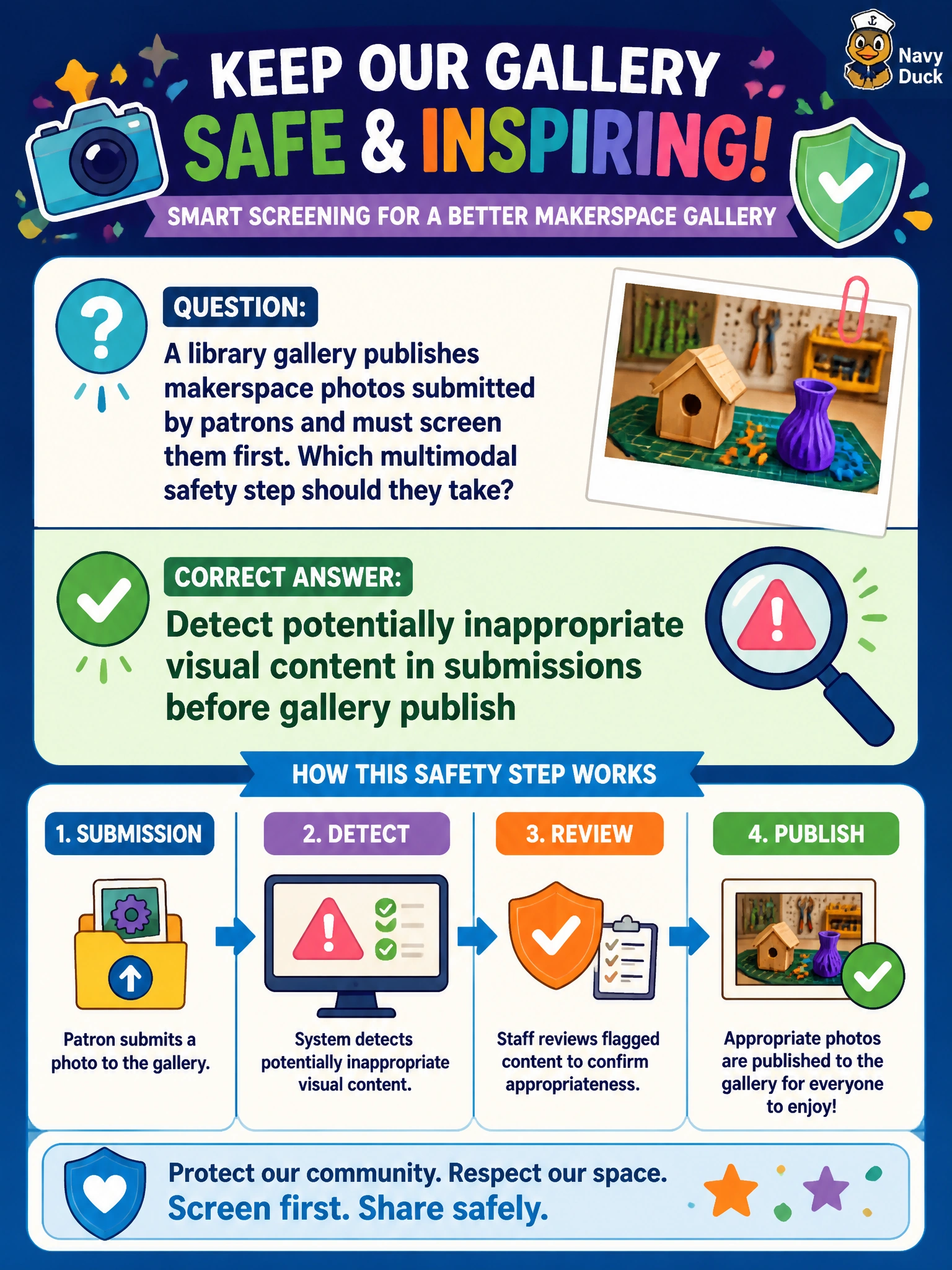
A library gallery publishes makerspace photos submitted by patrons and must screen them first. Which multimodal safety step should they take?
Select an answer to reveal the explanation.
Short Explanation
Patron photo galleries still need a safety check—spot inappropriate visuals before they hit the public wall. Run detection first, then publish the clean set. Checking text in images, sensitive emotions in faces, or language in captions won't spot bad visuals in the photo itself, so you'll still miss what you need to screen before you publish.
Full Explanation
Inappropriate-content detection is the multimodal safety step for civic galleries that accept user-submitted photos. A library publishing makerspace photos from patrons should screen submissions for potentially inappropriate visual content before gallery publish, allowing legitimate makerspace documentation while blocking material that violates gallery standards. Screening is selective safety—not a blanket ban on photography. Detecting potentially inappropriate text in submission images before gallery publish screens only text found inside the image for offensive wording but does not assess the photo's visual content itself, so inappropriate imagery can still go live. Detecting potentially sensitive emotions in submission faces before gallery publish analyzes faces for sensitive emotions but does not screen the image for inappropriate visual content, so it cannot block policy-violating visuals before the gallery publish. Detecting potentially inappropriate language in generated captions before gallery publish moderates only the auto-generated caption text and never inspects the submitted photo's visual content before it is published. Exam caveat: automated detectors err in both directions; libraries need human moderation for edge cases and a clear acceptable-use notice to patrons at upload time. Operational check: run inappropriate-content detection on each makerspace submission, hold flagged items for staff review, publish cleared photos to the gallery, and notify submitters when content is rejected under published guidelines.
Prefer to study offline? Printable PDF study book + test engine ($7.50, unofficial). These questions stay free here.