
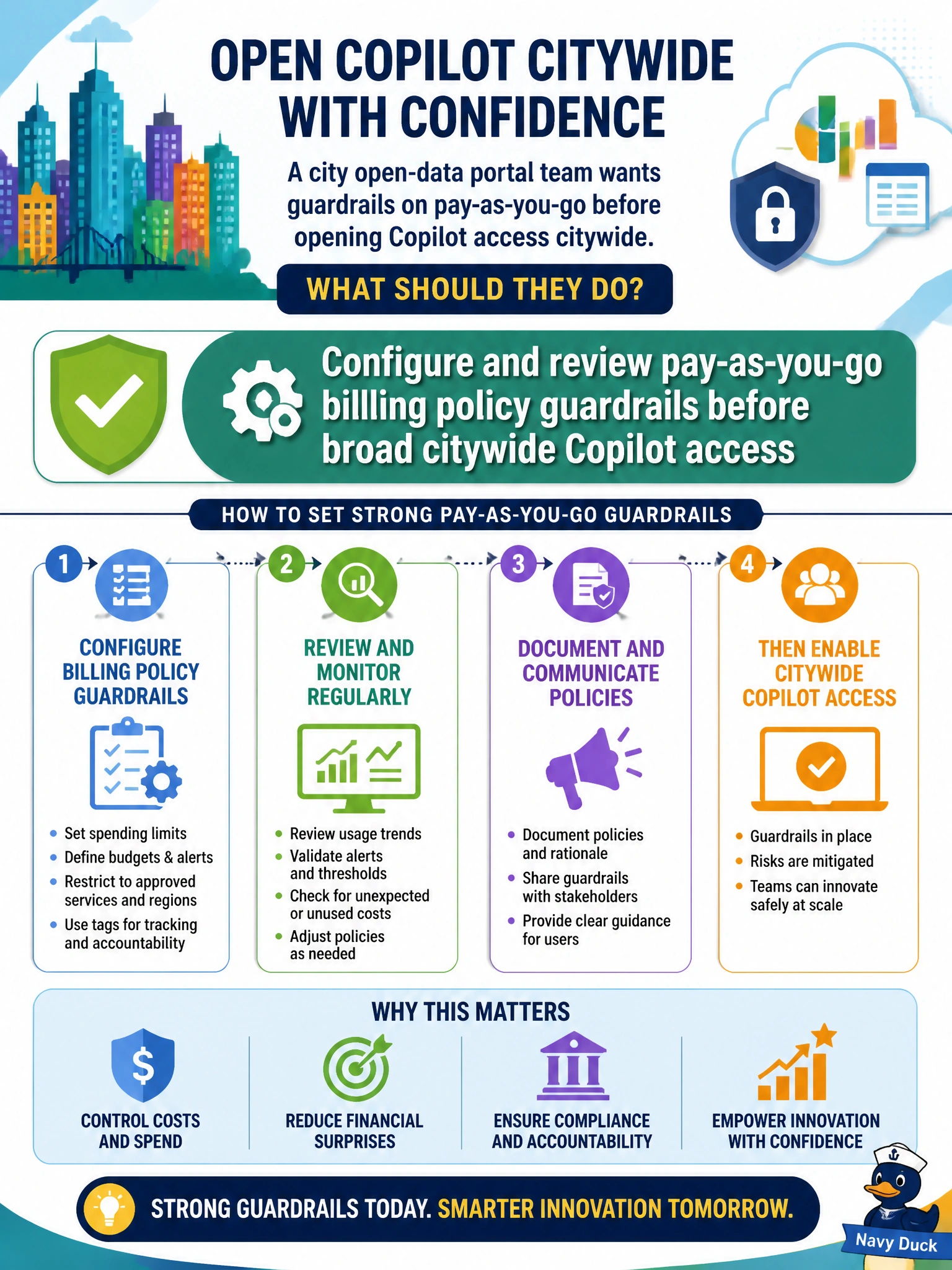
A city open-data portal team wants guardrails on pay-as-you-go before opening Copilot access citywide. What should they do?
Select an answer to reveal the explanation.
Short Explanation
Citywide Copilot on PAYG without guardrails is how budgets get surprised. Set billing policy limits first, then open access. Linking them to a Power Platform subscription won't work because you've got the wrong subscription type — PAYG needs an Azure subscription.
Full Explanation
City open-data portal teams should configure and review pay-as-you-go billing policy guardrails before opening broad citywide Copilot access. Guardrails first means finance and IT agree on caps, scopes, and owners while the blast radius is still small; citywide enablement without policies is how metered pilots become fiscal incidents.
Linking the pay-as-you-go billing policy guardrails to a Power Platform subscription before citywide rollout fails the billing setup—it links to the wrong subscription type instead of an Azure subscription, so there is no valid metered billing path before broad access. Reviewing pay-as-you-go department chargeback reports as billing guardrails after citywide Copilot access fails pre-access control—it is a retrospective billing activity, not a guardrail set before citywide Copilot is turned on. Enabling Copilot usage analytics in the admin center to set pay-as-you-go billing policy guardrails fails the billing requirement—adoption analytics track usage, they do not configure pay-as-you-go caps, scopes, or owners before broad access.
Exam caveat: Open-data scenarios may invite wide audiences; still separate public website content from internal Copilot metering and never treat Copilot usage analytics as a way to set pay-as-you-go billing policy guardrails.
Operational check: Draft PAYG guardrails (cap, alert, owner, pilot scope), obtain finance sign-off, enable metered Copilot only inside that scope, and re-check policies before any citywide expansion checkbox is flipped.
Prefer to study offline? Printable PDF study book + test engine ($7.50, unofficial). These questions stay free here.