
A fire department IT lead must explain the purpose of SharePoint data access governance reports to leadership. Which explanation is accurate?
Select an answer to reveal the explanation.
Short Explanation
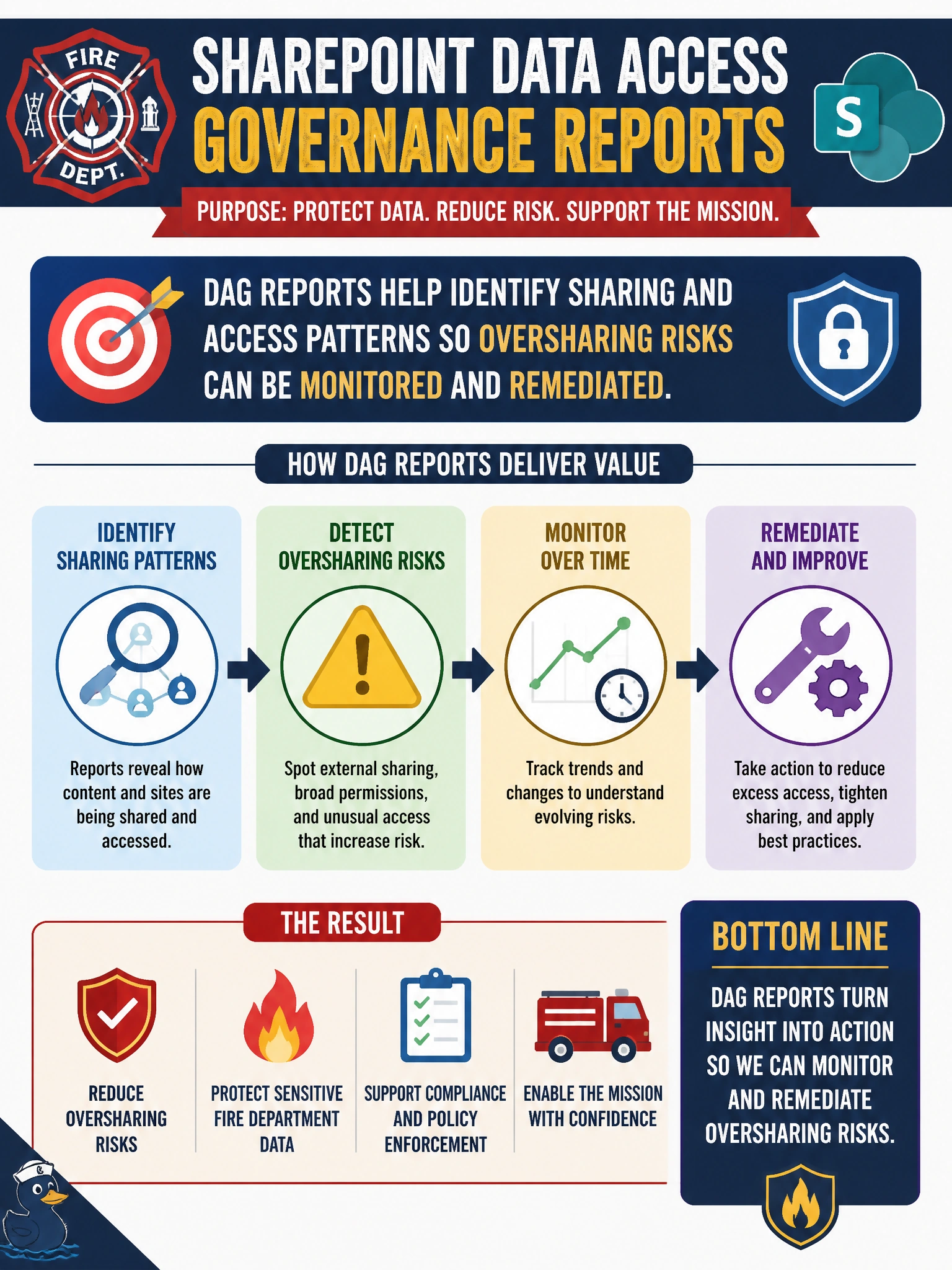
DAG reports are the "how wide is our SharePoint door?" briefing for leadership—sharing and access patterns you can monitor and fix. They don't show retention schedules and disposal trends, track guest lifecycles and reviews, or cover eDiscovery holds and exports. Oversharing visibility is the purpose.
Full Explanation
A fire-department IT lead should tell leadership that DAG reports help identify sharing and access patterns so oversharing risks can be monitored and remediated. That is the purpose of SharePoint data access governance reporting: visibility into how widely content is shared, enabling prioritized cleanup rather than guesswork.
DAG reports do not identify retention schedules and disposal trends to monitor lifecycle risks; retention and disposal is a separate lifecycle management workload governed by retention policies, not sharing and access reporting. They do not identify guest account lifecycles and reviews to monitor identity risks—that is an identity governance and access review task, not a sharing and access reporting task. They do not identify eDiscovery holds and case exports to monitor litigation risks; eDiscovery is a separate compliance and preservation workload. Each distractor fails by assigning DAG an unrelated or dangerous role.
Exam caveat: Distinguish DAG reporting from other reporting workloads — lifecycle retention reporting, identity guest reviews, and eDiscovery preservation reporting. AB-900 expects DAG to be explained as identifying sharing/access patterns for monitoring and remediation—not as a retention schedule and disposal trend monitor, a guest lifecycle and review monitor, or an eDiscovery hold and export monitor.
Operational check: Present leadership a DAG summary for fire-department sites showing counts of broad sharing, pick the top risky sites, assign remediation owners with due dates, keep DLP policies intact during cleanup, and report a follow-up DAG trend showing reduced oversharing before Copilot or agent pilots expand.
Prefer to study offline? Printable PDF study book + test engine ($7.50, unofficial). These questions stay free here.