
An elections office responds when a clerk emails a spreadsheet of taxpayer IDs and a Purview alert appears. What should staff recognize?
Select an answer to reveal the explanation.
Short Explanation
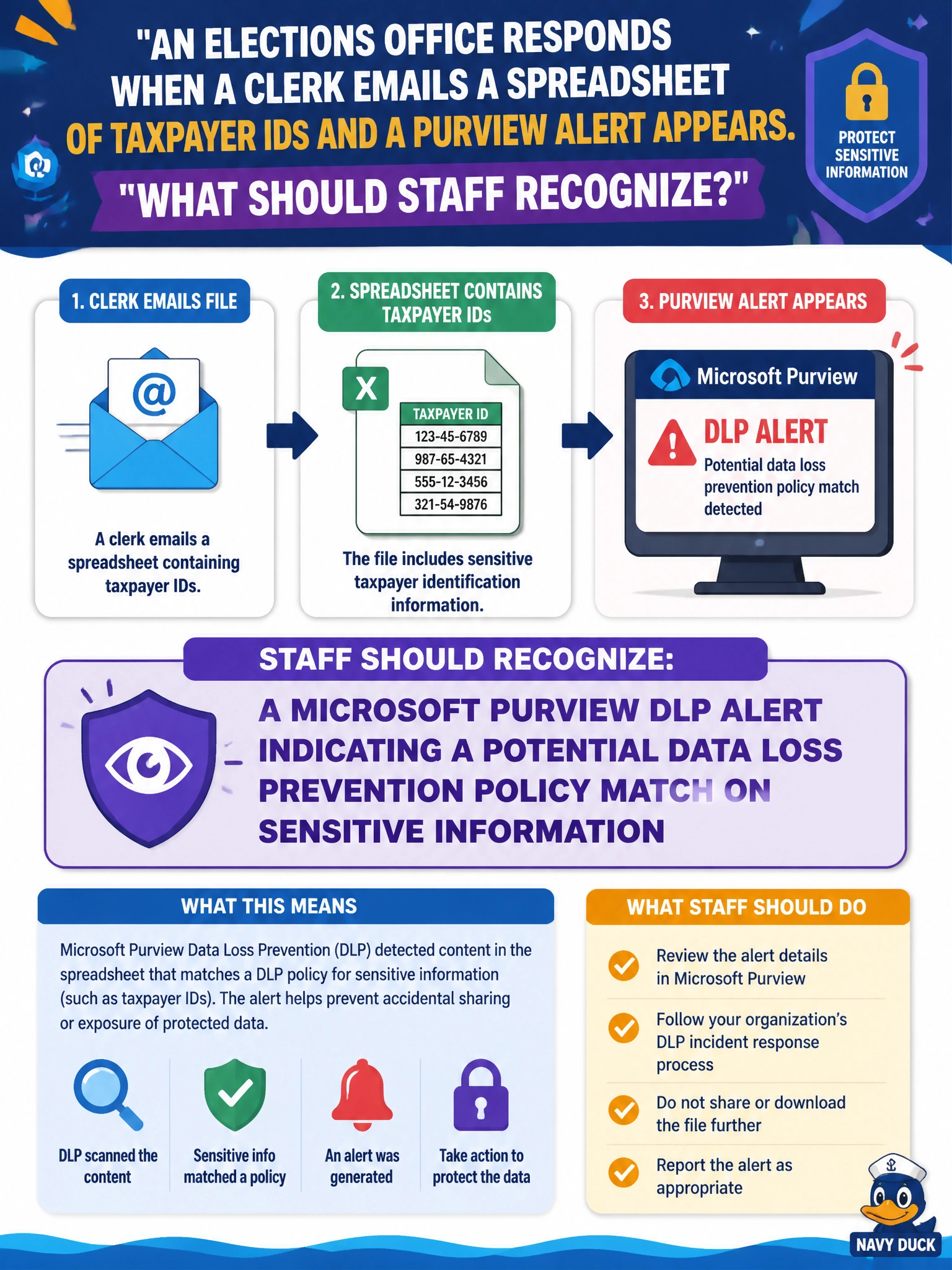
You see a Purview alert after a clerk emails taxpayer IDs? That's a DLP alert on a sensitive-info match. Not a sensitivity label alert, a retention alert, or an audit alert. Treat it as a data-loss prevention signal.
Full Explanation
When an elections clerk emails a spreadsheet of taxpayer IDs and a Purview alert appears, staff should recognize a Microsoft Purview DLP alert indicating a potential data loss prevention policy match on sensitive information. DLP evaluates content and actions against policies that detect sensitive types (such as taxpayer IDs) and can alert, block, or require justification. An alert after emailing that spreadsheet is the classic sensitive-data match signal elections teams must know how to triage.
A Microsoft Purview sensitivity label alert indicating a potential label policy match on the spreadsheet for handling fails the DLP match concept because it reflects classification and handling controls, not a data loss prevention policy match on sensitive taxpayer IDs being transmitted. A Microsoft Purview retention alert indicating a potential retention policy match on mailbox items for compliance review fails: retention alerts concern preservation and lifecycle controls, not data loss prevention alerts on sensitive information. A Microsoft Purview audit alert indicating a potential audit policy match on mailbox access activity for reporting fails: audit alerts concern logged activity for investigation and reporting, not Purview sensitive-information policy matches—even if access activity can sometimes coincide with DLP scenarios, the stem’s Purview alert after taxpayer IDs points to DLP.
Exam caveat: AB-900 expects you to identify DLP alerts as sensitive-information policy matches. You do not need to author advanced predicates. Related Communication Compliance alerts concern risky/inappropriate communications, not primarily taxpayer-ID spreadsheet matches.
Operational check: Open the DLP alert, confirm the sensitive info type and location (email/attachment), follow elections data-handling escalation, remediate the exposure, and document whether policy should block similar sends for clerks going forward.
Prefer to study offline? Printable PDF study book + test engine ($7.50, unofficial). These questions stay free here.